
Make a UK Wishlist in Minutes: Add Links, Avoid Duplicate Gifts

A wishlist comes together in three steps: create a list and name it, add items either by pasting product links or writing clear descriptions, then share one link so friends and family can see it and reserve what they plan to buy. You can build one in a dedicated wishlist tool or a shared document, though a purpose-built option like WantThis handles the fiddly parts, like pulling in prices and letting people privately mark gifts as taken, automatically.
TL;DR:
- Include small treats under £20, mid range gifts from £20 to £75, bigger items above £75, plus experiences or pooled gifts.
- Add sizes, colors, editions, or model numbers, then separate essential items from optional ideas so buyers can choose with confidence.
- Paste product URLs to import titles, images, and current prices; for shop finds, record the retailer, size, color, and product code.
- Share one link and enable private reservations so buyers can mark gifts as taken without revealing their choices to the recipient or duplicating presents.
- Amazon lists are free without Prime but cover Amazon products; WantThis accepts links from UK retailers and lets buyers view lists without accounts.
Table of Contents
- How it works: step-by-step workflow to create and manage a wishlist
- What to put on your wishlist: categories, price tiers and priorities
- How to add items from online stores and when you’re out shopping
- How to share your wishlist and avoid duplicate or spoiled surprises
- Wishlist ideas and inspiration for birthdays, Christmas, weddings and baby showers
- How a dedicated wishlist platform helps
- Author notes: etiquette, a quick anecdote and one pro tip
- Try WantThis: create a free wishlist and share it in minutes
- FAQ
- Sources
How it works: step-by-step workflow to create and manage a wishlist
Building a usable wishlist takes a few minutes once you know the order to do things in.
- Create your list and give it a name tied to the occasion, such as “Emma’s 30th” or “Christmas 2026”, so nobody mixes it up with another one.
- Add items by pasting a product link where you can, or typing a short description with size, colour or model if there’s no link to use.
- Set quantities and priorities, marking which items you’d genuinely love versus which are just nice options, so givers aren’t guessing.
- Share the link with the people buying for you, then check back occasionally to see what’s been reserved.
Each step builds on the last: a clearly named list makes items easier to find later, and priority markers stop a generous aunt from buying you three identical phone cases. Once the list is shared, it does most of the remaining work on its own.
What to put on your wishlist: categories, price tiers and priorities
A good wishlist mixes price points and item types rather than listing ten versions of the same gadget. Spread your choices across a few categories so buyers at any budget have somewhere to look.
- Small treats under £20, like a favourite snack, a paperback or a candle.
- Mid-range items between £20 and £75, such as a kitchen gadget, a game or a clothing piece.
- Bigger-ticket items over £75, for people who want to go further or split the cost.
- Experiences, like tickets, a class or a meal out, rather than only physical objects.
- Group gifts, where you list a single higher-value item and note that contributions are welcome, letting several people club together.
Add specific details wherever they matter: size, colour, edition or model number saves a buyer from guessing and reduces the odds of a return. Label your genuine must-haves separately from the nice-to-haves so people buying early pick something you’ll actually use.
Pro Tip: For a group gift, add one note on the item itself (say, “happy to go halves with someone”) rather than messaging each person separately.
How to add items from online stores and when you’re out shopping
Capturing items the moment you spot them is what keeps a wishlist current instead of half-finished. Most wishlist tools let you paste a product URL and the title, image and price fill in automatically, which saves retyping details from the shop’s page.
- Paste the link from any online retailer’s product page to auto-fill the item’s title, image and current price.
- Use a browser extension or mobile app while you’re browsing so you can save something the instant you see it, rather than hunting for the link later.
- For items spotted in a physical shop, note the store name, size, colour and any product code, then add a link to the same item online if one exists.
- Keep an eye on price tracking, where available, since some platforms will flag when a saved item drops in price.
A product URL dropped into a wishlist maker typically pulls in the title, thumbnail and current price without you lifting a finger, which is handy when you’re adding several things in a short session. Amazon’s own List tools work the same way, letting shoppers add items straight from a product page or even via Alexa.
How to share your wishlist and avoid duplicate or spoiled surprises
Sharing well matters as much as building the list in the first place, since a list nobody can see or use properly defeats the point.
- Choose public or private sharing depending on who needs to see the list and how much surprise you want to preserve.
- Turn on reservation or “mark as bought” features, so each buyer can privately note what they’ve taken without spoiling it for anyone else.
- Send the single list link by text, email or a group chat, with a short line such as “Here’s my list for Christmas, no pressure to buy everything on it!”
- For pooled or group gifts, mention clearly in your message that contributions are welcome on bigger items, so nobody feels awkward asking.
A private wishlist with reservations keeps the guesswork out of gift-giving for everyone involved, and it avoids the classic problem of two people turning up with the same present.
Wishlist ideas and inspiration for birthdays, Christmas, weddings and baby showers
Different occasions call for different mixes of items, and a quick starting list makes populating your own far faster.
- Birthdays: a book from a favourite author, a nice candle, a weekend experience, or a piece of tech on the pricier end.
- Christmas: cosy homeware, a board game, a wellness treat, or a subscription box for the months ahead.
- Weddings: kitchen essentials, home décor, a contribution towards a honeymoon experience, or a bigger shared appliance.
- Baby showers: practical nursery items, clothing in a range of sizes, and a few comfort items for the parents too.
Adding a short note to each item, like why you want it or who it’s for, helps buyers feel more connected to their choice rather than just ticking a box. You’ll find a wider set of gift list ideas by occasion if you want more to work from, and partner guides like Gripnatic’s sustainable gifting ideas are worth a look for anyone wanting lower-waste options on their list.
How a dedicated wishlist platform helps
A purpose-built tool removes most of the manual work from the steps above, which is exactly what we built this tool to do.
- Paste any product link and the tool pulls in the title, image and current price automatically, from any UK retailer.
- Organise lists by occasion, so different lists for separate occasions never get tangled together.
- Reserve items privately, letting a buyer mark something as taken without the recipient seeing who took what.
- Save items on the move using a browser extension or mobile app, so nothing gets forgotten between browsing and buying.
For more detail on how the sharing and reservation side works, our guide on sharing a wishlist online walks through it, and our piece on building a web wishlist covers the link-paste import in more depth.
Author notes: etiquette, a quick anecdote and one pro tip
A little etiquette goes a long way: keep your list’s tone light, with something like “ideas only, no obligation” at the top, so it reads as helpful rather than demanding.

I once watched two separate friends buy the exact same board game for a birthday because neither checked who’d already reserved it. A simple “mark as bought” feature would have saved one of them a return trip to the shop.
Pro Tip: For group gifts, list the pooled item once and let one person coordinate payments, rather than everyone messaging the recipient separately.
— Stuart
Try WantThis: create a free wishlist and share it in minutes
Building a list by hand in a document works, but it means typing out every price and chasing people for updates yourself. By using a tool like this, you paste a link and it fills in the title, image and price, organises everything by occasion, and lets buyers reserve items privately so nothing gets duplicated.
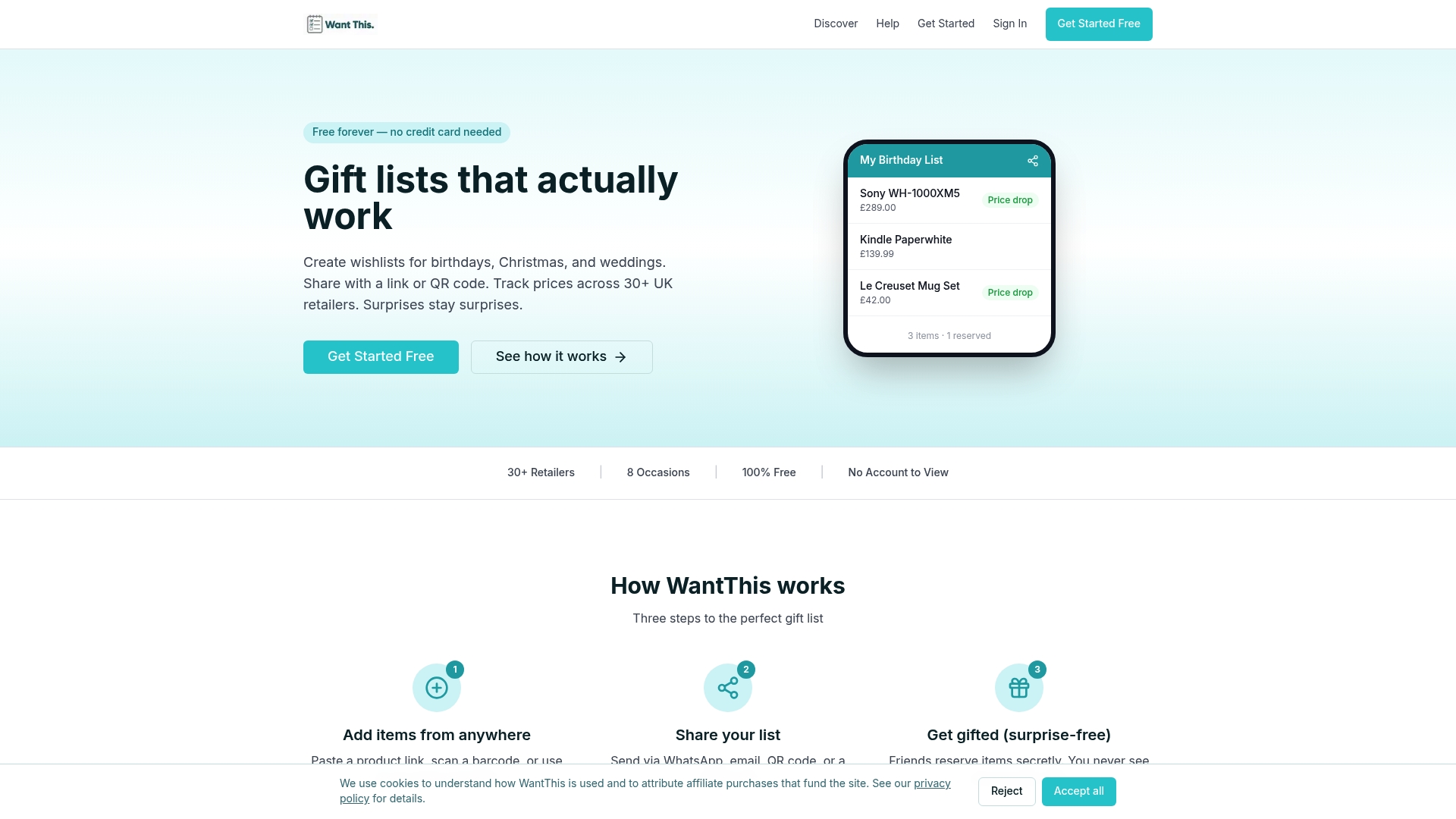
It’s free to use, works with any UK retailer you paste a link from, and runs on various devices, so your list stays current whether you’re at your desk or wandering round the shops. Head to WantThis to start your first list, or browse gift ideas by category if you want a starting point before you build.
FAQ
How to make a shareable wishlist?
Create your list in a wishlist tool, add items by pasting product links or typing descriptions, then copy the single share link the platform gives you. Send that link by text, email or social message, and anyone with it can view the list and reserve items without needing an account themselves.
Do you have to have Amazon Prime to make a wish list?
No, Amazon’s List feature is available to any Amazon account holder, not just Prime members, and lets you add items from product pages or by name. You can create and share a list straight from your account menu with no subscription required.
Where can I create a free gift registry?
Several platforms let you build a gift registry or wishlist for free without requiring buyers to sign up, including dedicated services like WantThis that work across multiple UK retailers rather than one store. Retailer-specific lists, like Amazon’s, are also free but limited to items sold on that retailer.
What do I put on my wish list?
Mix price points and item types: a few small treats, a couple of mid-range items, one or two bigger-ticket wishes, and an experience or group gift if you want something shared. Adding specific details like size, colour or model, and a short note on why you want each item, helps whoever’s buying choose with confidence.