
Work Secret Santa Organiser: Set It Up in 6 Steps

The easiest way to organise a work Secret Santa is to ask who wants in, agree a firm budget and a date, draw names with an online organiser so nobody sees the full list, and leave a week or two for shopping. That is the whole job. The rest of this guide covers the details that stop it turning awkward: who can opt out, what the cap should be, how the draw works with five people or fifty, how to include remote colleagues, and what to buy.
TL;DR
- Make it opt-in and collect replies privately, so nobody is pressured or singled out for declining.
- Set a cap as a maximum, not a target. UK workplace guides typically suggest £10 to £15, and some HR advisers use £5 to £10.
- Draw names in mid-to-late November and swap gifts in early-to-mid December, before people go on leave.
- Use an online draw so the organiser never sees who has whom, and add exclusions for partners or direct reports if needed.
- Post gifts to remote colleagues and open them together on a video call.
Table of Contents
- Step 1: Ask who wants to take part
- Step 2: Agree the budget before anything else
- Step 3: Set the dates
- Step 4: Draw the names online
- Step 5: Set the ground rules for gifts
- Step 6: Include remote and hybrid colleagues
- What to buy a colleague
- Make the wish list do the work
- Our approach to work Secret Santa
- Run your work Secret Santa with WantThis
- FAQ
- Sources
Step 1: Ask who wants to take part
Don’t add the whole team to a list and announce it. Paperstone’s UK guide says to check first that colleagues want to take part, by email, a conversation or an office notice, and not to assume anyone does. Gabe O Creative goes a step further: collect replies privately and never name colleagues who decline.
There are good reasons beyond manners. Peninsula Business Services, an HR adviser, says a workplace Secret Santa should stay optional. Someone may be short of money in December, may not celebrate Christmas, or may simply dislike forced fun.
A simple way to do it: send one short message to the team, ask people to reply to you alone, and give a clear deadline for replying. A message such as “Optional Secret Santa, £10 limit, reply to me by Friday if you’d like to join” does the job. Nobody needs to explain a “no”, and you never mention who said it.
Step 2: Agree the budget before anything else
The budget is where most office Secret Santas wobble. The figures UK sources give vary:
| Source | Suggested budget |
|---|---|
| Gabe O Creative | A firm £10 to £15 cap |
| Peninsula Business Services | £5 to £10, given as an example |
| UK Commercial Property News | 58% of responding workplaces set limits at £20 or under |
The honest takeaway is that there is no single right figure. The right one is the amount everyone on your team can spend without noticing it. The Daily Telegraph’s etiquette guide quotes Debrett’s advice to get buy-in from the least well-remunerated colleagues before setting the price. In practice, that means asking the lowest-paid people, or proposing a low figure and letting the team vote it up, not the reverse.
Frame the cap as a maximum. Gabe O Creative points out that one person overspending puts pressure on everyone else, and the Telegraph’s guide warns about accidental over- and under-spending. Saying “up to £10, and £8 is perfectly fine” takes the sting out. If you want help choosing a number, our guide to setting a spending limit for Secret Santa walks through it.
Step 3: Set the dates
Working back from the party or last day before leave gives you a sensible timetable. The pattern Gabe O Creative recommends is to draw names in mid-to-late November, exchange gifts in early-to-mid December before leave starts, and ask each person for three ideas under budget plus one thing to avoid. UK Commercial Property News reports that workplaces responding to its survey generally allowed at least two weeks to prepare, with one week the absolute minimum.
If the exchange is tied to a Christmas party, Paperstone suggests simply using that as the reveal date. Put it in the invitation so everyone knows the deadline when they say yes.
A workable timeline for most offices:
- Mid November: ask who wants to take part and set the budget.
- Late November: close sign-ups and run the draw.
- Early December: people add their three ideas and one “please avoid”.
- A week before the reveal: gentle reminder to buy and wrap.
- Reveal day: swap gifts in person or on a call.
Step 4: Draw the names online
Pulling names from a mug works for a table of six. Beyond that, an online organiser is faster, fairer and keeps the secret better.
How an online draw works
You enter each participant’s name and email address. The organiser shuffles the list and gives every person exactly one other person to buy for, and exactly one Secret Santa buying for them. Each person then gets a private message telling them only who they have. As the organiser, you don’t see the matches, which is the point: you can take part yourself without spoiling it for anyone.

What about five people?
Five is fine. A draw needs at least three people, and with five, the tool assigns a single loop: A buys for B, B for C, and so on, ending with E buying for A. Nobody gets themselves. The catch is that small groups have few valid combinations, so every exclusion you add (say, two colleagues who are a couple) cuts the options quickly. Our guide to preventing a broken Secret Santa draw explains how exclusions and feasibility interact, and why a very small group with many exclusions can leave no valid draw at all.
Keep it confidential and fair
- Don’t let the organiser see results. Choose a tool that emails each person privately, rather than showing a full list on screen.
- Don’t swap. The Telegraph’s etiquette guidance says to avoid swapping or revealing names. Once people trade names, the draw is no longer random and someone ends up with a leftover they feel awkward about.
- Use exclusions sparingly. Keep partners, and where it matters, line managers and their direct reports, apart. Beyond that, let the draw be random.
- Keep everyone in. Add every person who said yes, including part-timers and new starters, and check nobody was missed before you run it.
You can run the draw with our free Secret Santa generator, which needs no sign-up.
Step 5: Set the ground rules for gifts
A Secret Santa is a small, light-hearted exchange, but workplace rules still apply. Acas explains that unwanted behaviour related to a protected characteristic can amount to harassment if it violates someone’s dignity or creates an intimidating, hostile, degrading, humiliating or offensive environment, and that this can include jokes, pranks, words or imagery. A “funny” gift about someone’s age, weight, religion or relationship status is exactly that risk.
Peninsula’s HR guidance makes the same point: a gift that seems humorous to the giver can distress the person who receives it, so existing bullying, harassment and conduct policies still apply. Put one sentence in your invitation: “Keep gifts kind, work-appropriate and inside the budget.”
Our common Secret Santa problems guide covers other situations that tend to crop up, such as a no-show, a gift that misses the mark, and someone who forgets.
Step 6: Include remote and hybrid colleagues
Secret Santa works fine across home and office, as long as you plan for the post. Paperstone recommends posting gifts to remote colleagues who can’t come in, and joining a video call to watch them open their presents. Wishes Made Easy’s remote-team guide suggests agreeing a few things before names are assigned: the budget, whether taking part is optional, how postage is treated, whether digital gifts are allowed, the deadline and the reveal call.
The postage question deserves a decision upfront. Two simple options:
- Postage inside the budget. Everyone spends the same total, but the giver has less to spend on the gift itself.
- Postage on top, or paid by the organiser or employer. Fairer to the giver, but only if the company agrees to it.
Either is fine. What matters is that it is said before names go out, so a remote colleague isn’t quietly out of pocket. Gifts that are light and easy to post, such as socks, tea, notebooks or chocolate, make the whole thing easier. Send the address privately to the giver through whoever runs the draw, not to the group.
What to buy a colleague
You will often know very little about the person you draw, and that is fine. Laughing Sisters suggests useful or light-hearted work-appropriate gifts such as notebooks, sticky notes, coasters, candles, socks or coffee-related items, and advises steering clear of anything overly personal, sweary or edgy. Their view is that a colleague gift should be useful and mildly amusing, not dependent on knowing the person well.

British Vogue’s Secret Santa gallery shows what the same categories look like in practice: reusable cups, coffee equipment, candles, bottles, coasters and kitchen accessories, with example prices from £7.95 to £55. The top of that range is well above a typical office cap, so use it for ideas, not for pricing.
A few ways to stay safe and look thoughtful:
- Read the wish list. If you asked everyone for three ideas and one thing to avoid, your job is already half done.
- Pick one good thing, not several small things. A decent candle beats five novelty items.
- Think about the desk. Mugs, notebooks and snacks get used. Joke gifts get left in a drawer.
- Mind dietary and cultural differences. Chocolate and alcohol are not for everyone, so check the wish list before buying either.
If you collect small collectables, trading-card tins, for example, are a compact, low-cost option for a colleague who is into games, and this guide to Pokémon mini tins shows what is inside and what they cost. For more general ideas, see our office Secret Santa ideas, our Secret Santa gifts under £10 and our Secret Santa gifts under £20.
Make the wish list do the work
The most useful thing an organiser can do is ask everyone for a short list: three ideas under the cap and one thing to avoid. It removes the guesswork for the giver, and it means the recipient actually gets something they’ll use.
People rarely remember to send that list, or they send it in a dozen different ways. That is where a shared wishlist helps: each person saves a few products in one place, and their Secret Santa sees them without anyone knowing who is looking.
Our approach to work Secret Santa
We built WantThis to take the admin out of gift-giving, and Secret Santa is one of the things people use it for most in the run-up to December. Here is what we think matters most, from watching how these exchanges go right and wrong.
The organiser’s job is to make it feel easy and safe to join. That means opt-in, privacy and a budget nobody has to defend. Most office Secret Santa problems come from one of three things: pressure to take part, a cap that quietly stretches, or a draw that wasn’t really random. A good tool deals with the last one. People and policy handle the first two.
We also think the wish list matters more than the draw. A draw takes ten seconds. The part that decides whether the gift lands is whether the giver has anything to go on. So we suggest asking for three ideas and one “no thanks” with the invitation, and keeping the cap small enough that nobody has to think about it.
Finally, keep it light. A work Secret Santa should be the least stressful thing on your December list. If a rule makes it feel like a chore, drop the rule.
— Stuart
Run your work Secret Santa with WantThis
Our free Secret Santa organiser handles the draw automatically, so you can add your team, assign names and keep the matches private from everyone, including you. It is built for UK users and costs nothing to use.
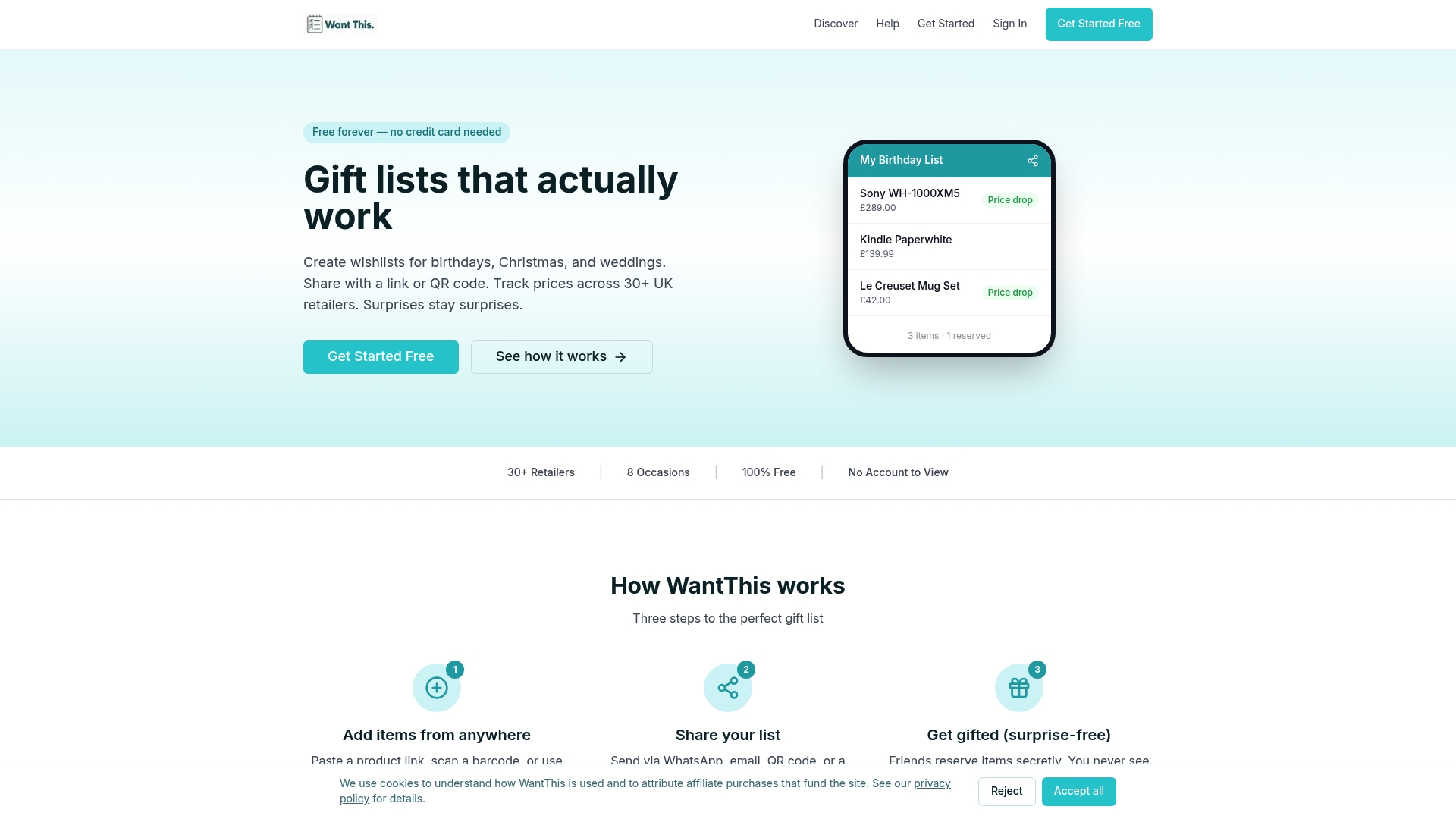
Once the draw is done, people can save ideas to a wishlist by pasting a product link from any online retailer, and we pull in the title, image and current price. Their Secret Santa can then see it without the recipient knowing. If you would like to browse first, our gift guides group ideas by budget, person and occasion, and you can start on our homepage.
FAQ
How do you set up a Secret Santa at work?
Ask colleagues privately whether they want to take part, then agree a budget and an exchange date. Draw names with an online tool, invite everyone to share a few gift ideas, and pick a reveal date such as the Christmas party or the last day before leave. Allow at least a couple of weeks between the draw and the exchange.
How does a five-person Secret Santa work?
It works like any other draw: each person is given one other person to buy for, and nobody draws themselves. With only five people there are few valid combinations, so keep exclusions to a minimum. An online organiser handles this automatically and tells each person only their own match.
What is a sensible budget for an office Secret Santa?
UK sources suggest anywhere from £5 to £15 as typical caps, and a survey reported by UK Commercial Property News found 58% of responding workplaces set limits at £20 or under. Choose the figure the lowest-paid person on the team is happy with, and present it as a maximum.
Can colleagues opt out of Secret Santa?
Yes, and they should be able to without explaining themselves. HR advisers recommend making participation optional, collecting replies privately and never naming anyone who declines. That keeps it fun and avoids pressure.
What is a good gift for a work Secret Santa?
Something useful and a little cheerful: a notebook, candle, coasters, socks, a good coffee or tea. Avoid anything too personal, rude or edgy, since a joke that lands badly can become a conduct issue. If the person has shared a wish list, buy from that.
Sources
- Paperstone: guide to a successful Secret Santa at work
- Gabe O Creative: Secret Santa, running one people enjoy
- Peninsula Business Services: essential HR rules for a workplace Secret Santa
- The Daily Telegraph: the guide to Secret Santa etiquette
- UK Commercial Property News: office Secret Santa etiquette
- Acas: harassment, discrimination at work
- Wishes Made Easy: virtual Secret Santa for remote teams
- Laughing Sisters: work Secret Santa presents
- British Vogue: Secret Santa gifts