
How Secret Santa Works: Your Complete 2026 Guide

Secret Santa is a gift exchange tradition where each participant is secretly assigned one other person to buy a gift for, keeping the giver’s identity hidden until reveal day. The format works for offices, families, friend groups, and school classes alike. Understanding how secret santa works from setup to reveal helps you run a smooth, stress-free exchange that everyone actually enjoys. This guide covers group size, draw methods, wishlists, exclusion rules, and the reveal event itself.
How to organize a Secret Santa group and set clear rules
Good organization is the difference between a memorable exchange and a chaotic one. The first decision is group size. Secret Santa requires at least 3 participants to maintain anonymity, but the sweet spot is 6–15 people. Groups under that size can feel too easy to guess. Groups over 20 benefit from automated tools to manage assignments without errors.

Budget clarity matters just as much as group size. Typical budgets range from $20 to $50, with family groups often preferring $30–$40 and office exchanges settling around $25. Stating the budget upfront removes guesswork and keeps everyone on equal footing.
Timeline is the piece most organizers skip, and it causes the most last-minute stress. Professional organizers recommend sending invitations 3–6 weeks before the event, drawing names 2–3 weeks ahead, and leaving 1–2 weeks for shopping and shipping. That window matters especially for online orders or custom gifts.
A clear set of rules should go out with the invitation. Cover these four points:
- Budget limit — state the exact range, not a vague “around $30.”
- Exchange date and location — or confirm the virtual format if the group is remote.
- Wishlist deadline — give participants a firm date to submit their preferences.
- Anonymity rules — remind everyone not to reveal their assignment before the event.
Pro Tip: Assign one organizer who is not participating in the draw. That person manages the list, handles redraws, and knows all assignments without being a player. It removes the conflict of interest entirely.
What are the best methods for the Secret Santa draw?
The draw is the core mechanic of how secret santa assignments work, and the method you choose affects both fairness and privacy. Each approach has real trade-offs.
Manual draws work well for small, in-person groups. Everyone writes their name on a slip of paper, drops it in a hat, and draws. The problem is that someone might draw themselves, requiring a full restart. Couples or close colleagues drawing each other can also create awkward situations that manual draws handle poorly.
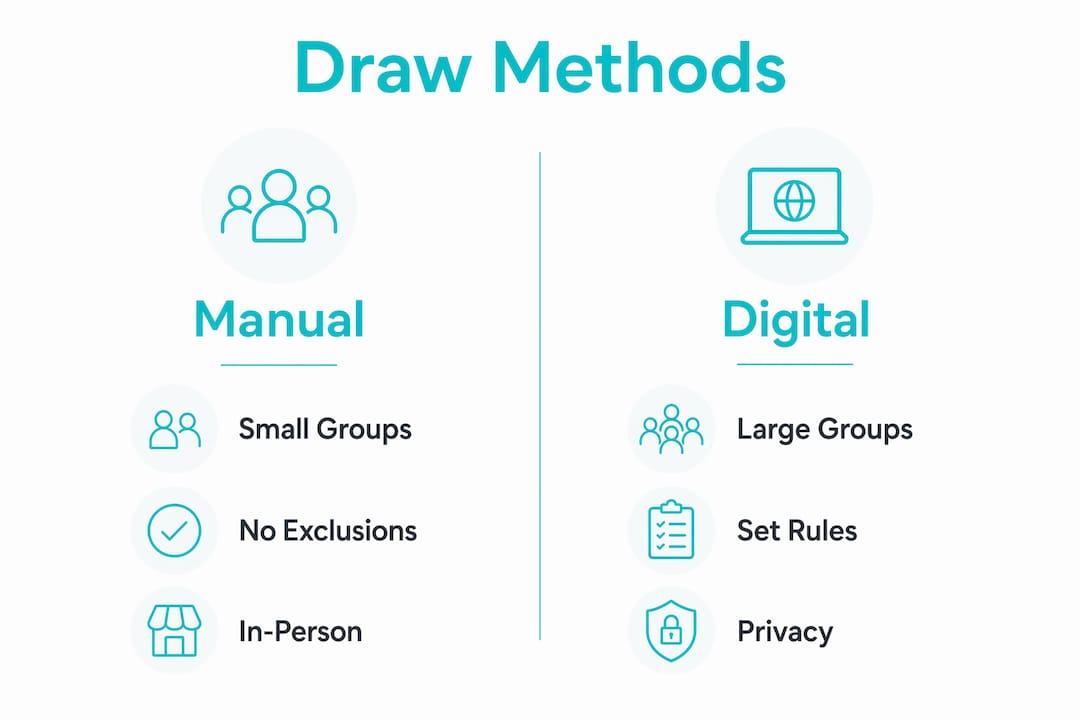
Digital draw tools solve those problems automatically. They let you set exclusion rules, send assignments privately, and handle redraws without the organizer seeing who got whom. Exclusion rules ensure certain pairings, such as couples or close family members, do not gift each other. That preserves the surprise and keeps the exchange fair.
Privacy is a genuine concern in digital draws. Organizers improve privacy by using tools with a link-only join process, avoiding email collection or spreadsheet handling entirely. Participants join via a shared link, and assignments go directly to each person without the organizer seeing the full pairing list.
Here is a quick comparison of draw methods by group need:
| Draw method | Best for | Key limitation |
|---|---|---|
| Hat draw | Small in-person groups (3–8) | No exclusion support; redraws are manual |
| Shared spreadsheet | Groups comfortable with tech | Organizer sees all assignments |
| Digital draw tool | Groups of any size | Requires internet access |
| Wantthis organizer | UK groups wanting wishlists + draw | Built for UK shoppers |
Pro Tip: If you use a digital tool, send the shared join link via a group chat rather than individual emails. It is faster, and participants join at their own pace without the organizer chasing anyone.
How do wishlists improve Secret Santa gift satisfaction?
Wishlists are the single most effective way to reduce bad gifts. Participants who list 3–5 specific gift ideas within budget report far higher satisfaction than those who leave their giver with no guidance. The giver still chooses which item to buy, so the element of surprise stays intact.
A good wishlist entry is specific enough to be useful but not so narrow that it forces one exact purchase. Compare these examples:
- Too vague: “Something for the kitchen”
- Too specific: “The exact Le Creuset 5.5-quart Dutch oven in Marseille blue from this one retailer”
- Just right: “A good quality cookbook, preferably baking or Italian cuisine, under $35”
The middle ground gives the giver real direction without removing their choice. That balance is what makes the exchange feel personal rather than transactional.
Sharing wishlists openly within the group also helps givers who feel stuck. Platforms like Wantthis let participants create and share gift lists by pasting product links from any retailer. The platform pulls in the title, image, and current price automatically. Friends and family can privately mark items as reserved, so two people do not buy the same thing.
Price tracking is a practical bonus. If a wishlist item drops in price before the exchange date, the giver gets more value for their budget. That feature is particularly useful when the exchange date is weeks away and deals are likely to shift.
Pro Tip: Ask participants to add at least one item under the budget floor, not just at the ceiling. It gives givers a safe, affordable option and avoids anyone feeling pressured to spend at the top of the range.
How to run the exchange and reveal event
The exchange event is where all the planning pays off. Getting the execution right makes the difference between a fun memory and a forgettable afternoon.
- Set a firm date and format early. In-person exchanges work best with a shared meal or gathering. Virtual exchanges need a video call link sent in advance, with gifts shipped directly to recipients beforehand.
- Tag gifts correctly. Use descriptive but anonymous tags such as “To: Sarah, From: Your Secret Santa.” The tag identifies the recipient without revealing the giver. Avoid handwriting that people might recognize.
- Open gifts one at a time. Going around the room or call one person at a time keeps everyone engaged. It also gives each giver a moment to watch their recipient’s reaction, which is often the best part.
- Run a guessing game before the reveal. Gift exchange reveals often include guessing games where participants try to identify their Secret Santa after opening. It adds an interactive layer and extends the fun beyond just unwrapping.
- Have a backup plan for missing gifts. If someone drops out last minute, the organizer should have a small neutral gift ready. A gift card at the agreed budget covers the gap without embarrassing anyone.
Closing the event well matters too. A quick group photo, a thank-you message in the group chat, or a poll asking everyone to rate their gift anonymously all help the tradition feel complete and worth repeating next year.
Key Takeaways
Secret Santa works best when organizers set clear rules, use the right draw method for their group size, and encourage participants to share specific wishlists.
| Point | Details |
|---|---|
| Group size matters | Aim for 6–15 participants; use digital tools for groups over 20. |
| Set the budget clearly | State an exact range ($20–$50) in the invitation to align expectations. |
| Use exclusion rules | Digital draw tools handle couple and colleague exclusions automatically. |
| Wishlists reduce bad gifts | Ask participants to list 3–5 specific ideas within budget for better matches. |
| Plan the reveal event | A guessing game before the reveal adds fun and keeps everyone engaged. |
What actually makes a Secret Santa exchange worth doing
The exchanges I have seen go wrong share one thing: the organizer assumed everyone understood the rules. They sent one message with a budget and a date, then were surprised when someone spent three times the limit or forgot to submit a wishlist. Clear, repeated communication is not overkill. It is the job.
The other mistake I see often is skipping exclusion rules in tight-knit groups. Couples gifting each other in a group exchange defeats the whole point. The awkwardness of a manual redraw in front of everyone is worse than just setting the rule upfront. Groups with tight social dynamics genuinely benefit from exclusion rules, and digital tools make this a two-minute setup rather than a logistical headache.
What I find most underrated is the social value of the exchange itself, separate from the gifts. A well-run Secret Santa gives a group a shared ritual. It creates a reason to gather, a conversation starter, and a memory. The gift is almost secondary. Focus on the experience, and the gifts take care of themselves.
If you are running one for the first time, use a digital tool, set a wishlist deadline, and appoint someone who is not in the draw to manage logistics. Those three decisions alone will put you ahead of most organizers.
— Stuart
Wantthis makes Secret Santa planning easier
Running a Secret Santa exchange involves more moving parts than most people expect. Wantthis brings the draw, the wishlists, and the gift tracking into one place, so you spend less time chasing people and more time enjoying the event.
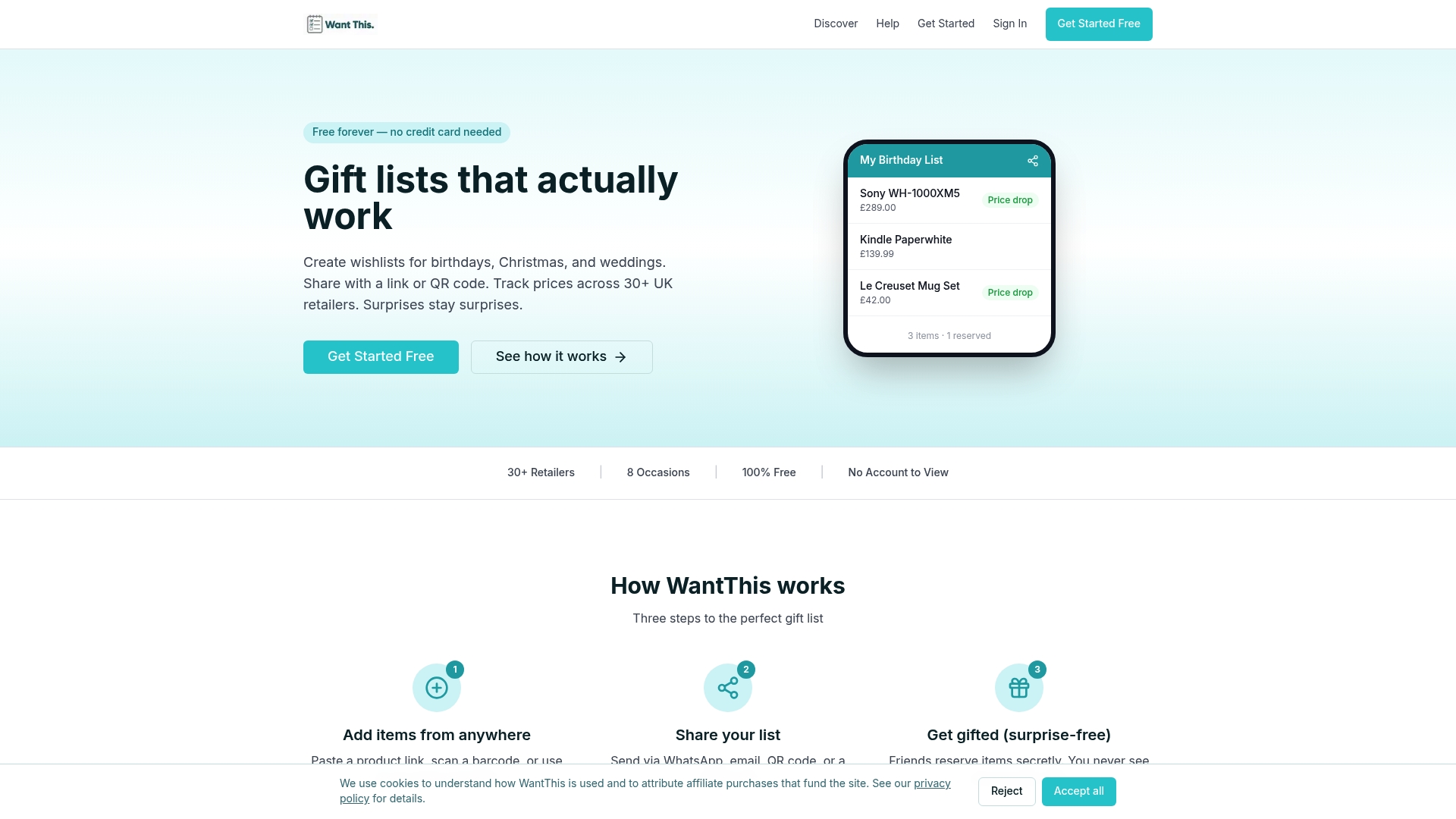
The free Secret Santa organizer on Wantthis handles the automated draw with exclusion rules built in. Participants join via a shared link, no email collection required. Each person can build a wishlist by pasting product links from any UK retailer, and Wantthis pulls in the title, image, and current price automatically. Friends can privately reserve items so nothing gets bought twice. Price tracking alerts givers when a wishlist item drops in price before the exchange date. For anyone coordinating a group exchange this year, it is a practical starting point that covers the whole process from draw to delivery.
FAQ
What is a Secret Santa draw?
A Secret Santa draw is the process of randomly assigning each participant one other person to buy a gift for. It can be done manually with slips of paper or digitally using an online generator with exclusion rules.
How many people do you need for Secret Santa?
Secret Santa requires at least 3 participants to maintain anonymity. Groups of 6–15 work best for a balanced, fun exchange.
How do Secret Santa exclusion rules work?
Exclusion rules prevent specific pairings, such as couples or close colleagues, from being assigned to each other. Digital tools support exclusions automatically, removing the need for manual redraws.
How does Secret Santa work digitally?
Participants join a digital draw via a shared link, receive their assignment privately, and can share wishlists online. Digital tools reduce organizer workload by automating assignments and protecting participant privacy.
What budget should you set for Secret Santa?
Most groups set a budget between $20 and $50. Family groups often prefer $30–$40, while office exchanges typically settle around $25 to keep things comfortable for everyone.