
Prevent a Broken Secret Santa Draw: UK exclusions and feasibility

Yes: you can set exclusions to stop specific people drawing one another, and most online Secret Santa generators let organisers build these rules in before the draw runs. Exclusions can be mutual or one-way, and they help you dodge awkward or repeat pairings. The catch is that too many rules can make a draw impossible, which is why a good tool checks feasibility first and flags conflicts before anyone gets left out.
TL;DR:
- Exclusions should be limited to avoid making the draw impossible, as adding too many can leave some participants without valid recipients.
- Using a quality generator that checks feasibility with matching algorithms prevents dead-end conflicts and multiple failed attempts.
- Clarifying mutual versus one-way exclusions helps maintain flexibility, especially when trying to avoid repeating last year’s pairings.
- Relaxing or converting non-essential exclusions and splitting large groups are practical steps if the draw becomes infeasible.
- Privacy best practices include collecting only necessary personal data, securely storing it, and deleting it promptly after the exchange.
Table of Contents
- What exclusions are and the main types organisers use
- Why too many exclusions can break the draw
- Step-by-step: setting exclusions in an online organiser
- Privacy and consent basics for organisers
- What to do if exclusions or the generator fail
- Getting the balance right between fairness and feasibility
- Running your exclusions through WantThis
- FAQ
- Sources
What exclusions are and the main types organisers use
An exclusion is simply a rule that stops two people being matched as giver and receiver. Organisers reach for them for a handful of recurring reasons: couples who already buy each other presents, housemates who’d rather not double up, managers paired with their own direct reports, or someone who drew the same colleague last year and wants a change this time round.
The key distinction is mutual versus one-way. A mutual exclusion blocks the pairing in both directions, so neither person can draw the other. That’s the right choice for couples or close housemates. A one-way exclusion only blocks a single direction, which is handy when you want to stop last year’s giver from drawing the same recipient again without restricting the reverse pairing.
Most tools accept these rules in one of a few formats:
- A free text box where you type names separated by commas or arrows.
- Checkboxes next to each participant’s name for quick toggling.
- Group tags, so everyone in “Finance team” is automatically excluded from drawing each other.
Knowing which format your chosen tool expects saves a fair bit of back-and-forth once you start entering names.
Why too many exclusions can break the draw
Every exclusion you add narrows the pool of valid pairings left over. Add enough of them, arranged the wrong way, and you can end up with no valid draw at all: someone is left with nobody they’re allowed to give to.
This is the same underlying puzzle as matching people to jobs or tasks to time slots. Mathematically, a Secret Santa draw with exclusions is a constrained matching problem, and whether a complete, valid assignment exists depends on whether every subgroup of participants still has enough people left to give to once the exclusions are applied. In a group of five, excluding just two or three pairs can be enough to box someone in with no legal recipient.
Weak generators handle this badly. A naive “shuffle and reject” approach picks a random order, checks it against the rules, and tries again if it fails. When exclusions are tight, that loop can run indefinitely because it keeps stumbling into the same dead ends.
Quality generators test feasibility using a matching algorithm before they sample, searching for a valid pairing and flagging exactly which participant is over-constrained if one doesn’t exist, as described in this explanation of uniform random derangements. That single check is the difference between a tool that tells you “Dave can’t give to anyone” and one that just hangs.

Step-by-step: setting exclusions in an online organiser
Running a draw with exclusions goes smoothly if you prepare before you touch the generator.
- Agree a spending limit with the group and collect everyone’s name, plus email addresses if the tool sends automatic reveals.
- Decide which exclusions genuinely matter. Couples and housemates are usually essential; “I don’t want Auntie Sue again” is a preference, not a rule.
- Enter the full roster into the tool, then add each exclusion in whatever format it expects, such as “Alex, Jamie” for a mutual block or “Alex to Jamie” for a one-way rule.
- Choose mutual or one-way for each pair, then run the feasibility check before confirming the draw.
- If the tool flags a conflict, loosen a non-essential rule or ask the blocked participant whether they’re willing to relax one restriction.
WantThis’s free Secret Santa generator walks through this same sequence, letting you add names, set mutual or one-way exclusions, and check the draw before anyone is notified.
Pro Tip: Run the draw once privately before sharing results, so you can confirm the pairings look sensible and nobody’s left guessing why their exclusion didn’t work as expected.
Privacy and consent basics for organisers
Collecting names and email addresses for a Secret Santa, even an informal office one, counts as processing personal data, and UK GDPR and the Data Protection Act 2018 apply regardless of how small or casual the exchange feels, as this GDPR compliance guide for workplace gift exchanges sets out.
A few habits keep things tidy:
- Tell participants in one sentence how their name and email will be used and roughly how long you’ll keep the list.
- Collect only what the draw needs: names, and emails only if the tool sends automatic reveals.
- Store the roster securely, in a passworded document or within the tool itself, rather than an open spreadsheet anyone can edit.
- Delete the list once the exchange is finished, rather than letting it sit in a shared drive indefinitely.
For workplace exchanges specifically, a short internal privacy note covering who sees the list and how long it’s kept is usually enough; anything more detailed can point colleagues towards your organisation’s own data protection policy. Some generators, including browser-only tools, never send the roster to a server at all, which is worth checking if privacy is a priority for your group.
What to do if exclusions or the generator fail
If the tool reports an infeasible draw, you’ve got several practical ways forward.
- Remove or relax the least essential exclusion first, rather than the one protecting a genuinely awkward pairing.
- Convert a mutual rule to one-way where only one direction actually matters.
- Split a large, heavily constrained group into two smaller exchanges, which often resolves conflicts that a single big pool can’t.
- If the software still can’t find a valid match, fall back to a manual method: a blind paper draw, a chain reveal where each person passes a name along, or an organiser assignment with a short note explaining the reasoning.
Once you’ve adjusted the rules, rerun the tool and let everyone know plainly that the exclusions changed, rather than leaving people to wonder why the pairings look different from what they expected.
Getting the balance right between fairness and feasibility
I’ve organised enough of these to know that exclusions feel essential right up until they start fighting each other. The instinct is to protect everyone’s comfort, but a long list of “please nots” can quietly make a fair draw impossible. The fix isn’t more rules, it’s fewer, better ones, and a willingness to ask a participant to compromise on a minor preference. Being upfront with the group about why a pairing changed does more for goodwill than any clever algorithm.
— Stuart
Running your exclusions through WantThis
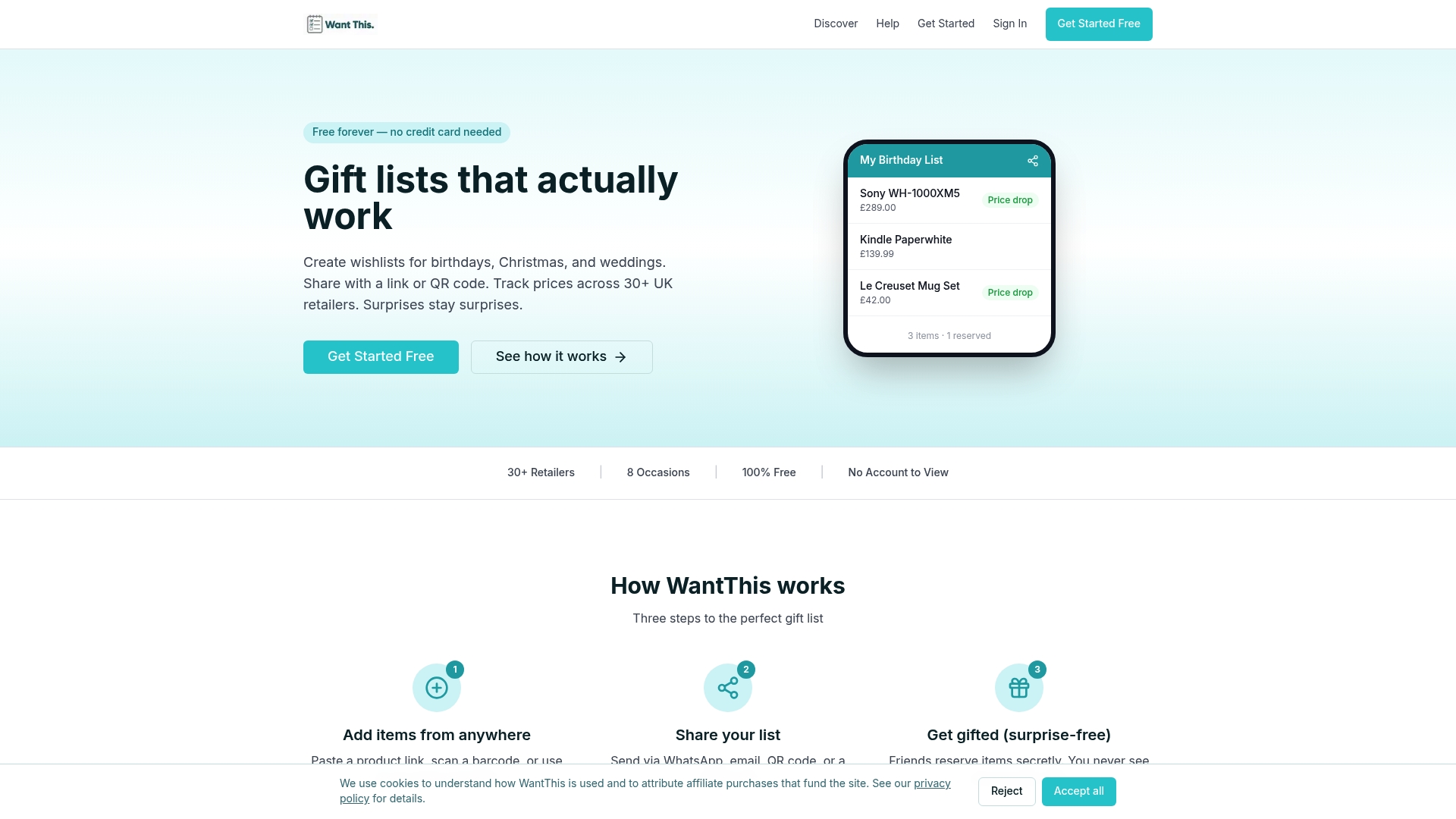
Beyond the draw itself, WantThis is built for the whole gift-giving side of the exchange:
- Browse gift ideas by category across tech, home, beauty, fashion, books, experiences, kids and fitness.
- Check out budget-friendly Secret Santa ideas under £10 for participants working to a strict limit.
- Keep a personal wishlist going year-round so your own Secret Santa giver has something concrete to work from.
If a tag or card is part of your tradition, personalised stamps from Stamp Design 4U add a nice finishing touch once the gift itself is sorted.
FAQ
What is Dirty Santa compared with Secret Santa?
Dirty Santa is a variant where gifts are exchanged openly: participants take turns picking, opening, or stealing wrapped presents from each other in full view of the group. Secret Santa, by contrast, keeps the giver anonymous until the recipient opens their gift, with pairings decided by a private draw.
Can you do Secret Santa with only 5 people?
Yes, five people is a perfectly workable group size for Secret Santa, though exclusions bite harder in small groups because there are fewer valid pairings to begin with. One or two exclusions among five people can already make a draw infeasible, so it’s worth keeping rules to the essentials and letting a feasibility check confirm the draw before you share results.
What are the basic rules for a Secret Santa?
Each participant is randomly assigned one other person to buy a gift for, usually within an agreed spending limit, and the pairing stays secret until gifts are opened. Organisers often add exclusions to prevent couples, housemates, or last year’s pairings from being matched again, which a generator like WantThis’s Secret Santa tool can apply automatically.
Does Secret Santa work with an uneven number of people?
Secret Santa works fine with any group size above two, odd or even, since the draw just needs to assign every participant exactly one other person to give to. The main risk with an odd number combined with several exclusions is a tighter feasibility margin, so it’s worth checking the draw before finalising names.
What happens if my exclusions make the draw impossible?
A well-built generator will flag the conflict and identify which participant is over-constrained rather than failing silently or looping endlessly. From there, relaxing a non-essential rule, switching a mutual exclusion to one-way, or splitting the group into subgroups usually resolves it.