
How Consumers Find Deals with Wishlists in 2026

A wishlist is defined as a saved collection of desired products that consumers use to monitor prices, track availability, and time purchases for maximum savings. The role of wishlists in online deal hunting has grown well beyond simple gift reminders. Today, UK shoppers use wishlist platforms to set target prices, receive deal alerts, and coordinate gift buying across occasions like Christmas, birthdays, and Black Friday. Platforms like Amazon and WantThis give consumers a structured way to find deals without the stress of last-minute browsing. This article explains how consumers find deals with wishlists, why the approach works psychologically, and how to get the most from it.
How consumers find deals using wishlists
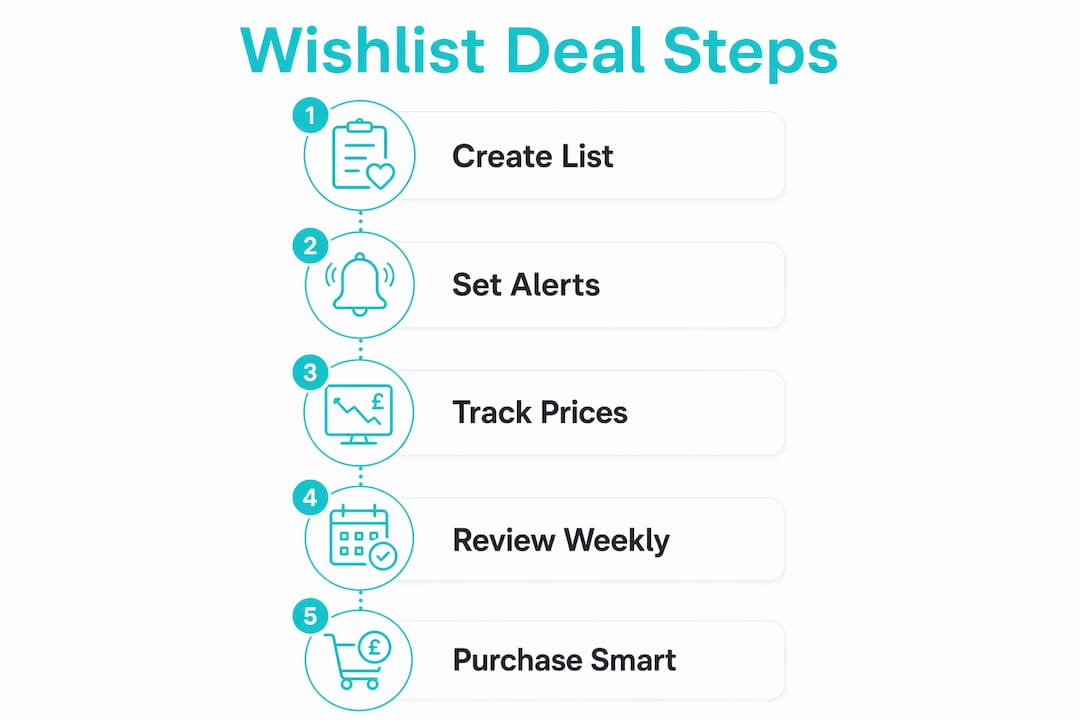
The most effective deal-finding method is pairing a saved wishlist with price drop alerts tied to specific items. Deal alerts on saved items get significantly higher engagement and click rates than generic promotional emails. That gap exists because the alert is personal. You already want the item. The notification simply tells you the moment to act has arrived.
Amazon uses this model directly. Amazon notifies users of Lightning Deals and target price hits on wishlist items, which improves deal-hunting efficiency during events like Prime Day. The key difference from browsing sale pages is intent. A wishlist alert reaches you at the right moment for a product you already researched.

Beyond retailer alerts, multi-step savings strategies combine wishlist price tracking with promo code stacking at checkout. Stacking a discount code on top of an already-reduced wishlist item produces savings that neither method achieves alone.
Here is how the core deal-finding process works in practice:
- Save items to a wishlist as soon as you identify them, not when you are ready to buy.
- Set a target price for each item so alerts only fire when the drop is meaningful.
- Enable stock notifications for items that sell out quickly, like limited-edition electronics or toys.
- Layer promo codes at checkout once the wishlist alert confirms the price is right.
- Review your wishlist weekly to remove items that no longer interest you and add new ones.
Pro Tip: Use a dedicated email address for deal alerts. This keeps your main inbox clean and makes it easy to batch-review notifications once or twice a week without feeling pressured to buy immediately.
Why consumers prefer platform wishlists over unstructured deal hunting
Wishlists act as zero-pressure research folders that reduce decision fatigue and keep shoppers engaged without immediate purchase pressure. This is the core psychological advantage over ad hoc deal hunting. A shopping cart implies commitment. A wishlist implies curiosity.
“A wishlist provides a critical middle action between casual browsing and purchase, increasing the likelihood of eventual conversion without forcing a decision.”
That middle ground matters for gift shopping in particular. When you are building a Christmas list or coordinating a baby shower registry, you need time to compare options, check budgets, and consult family members. A wishlist holds your research without expiring.
Platform wishlists also reduce impulsive buying. Structured wishlist workflows with target prices reduce impulse buys and buyer’s remorse. Regular weekly checking replaces panic buying, which also reduces the hassle of returns.
The sharing and collaboration features of dedicated platforms add another layer of value:
- Gift reservation: Family members can mark items as claimed privately, so surprises are not spoiled and duplicates are avoided.
- Shared lists: A couple planning a wedding or a parent building a baby shower list can share one organised list across multiple contributors.
- Occasion-based organisation: Separating a birthday list from a Christmas list keeps priorities clear and prevents overspending in one category.
WantThis is built specifically around these collaboration needs. Shoppers paste a product link from any UK retailer, and WantThis automatically pulls in the title, image, and current price. Friends and family can then reserve items privately, keeping the gifting element intact.
How to create and manage wishlists effectively
Effective wishlist management starts with structure. One general list covering everything from tech to fashion produces noise. Multiple categorised lists, one for electronics, one for gifts, one for home items, keep priorities visible and alerts relevant.
Follow these steps to build a wishlist that actively finds deals for you:
- Create separate lists by category or occasion. A Christmas gift list, a birthday list, and a personal wish list serve different purposes and different budgets.
- Set a target price for every item. Decide the maximum you are willing to pay before you add the item. This prevents you from rationalising an overpriced purchase when an alert arrives.
- Add notes to each item. Record why you want it, which size or colour, and whether it is a gift for someone specific. Notes prevent impulsive decisions when a deal lands.
- Review your lists every week. Weekly wishlist reviews help avoid panic buying and the return hassles that follow rushed purchases.
- Audit before major UK sale events. Check your lists before Black Friday in November and Boxing Day in December. Remove items you no longer want and confirm target prices are still realistic.
- Save items the moment you see them. With WantThis you paste a product link from any retailer and the details fill in automatically, so adding an item takes seconds.
Pro Tip: Schedule a 10-minute wishlist review every Sunday evening. Treat it like a weekly budget check. You will catch deals you missed and remove items that no longer fit your priorities.
The table below shows how different wishlist management habits affect deal-finding outcomes:
| Habit | Effect on deal-finding |
|---|---|
| Setting target prices per item | Filters out alerts for insignificant discounts |
| Weekly list reviews | Reduces panic buying during flash sales |
| Categorised lists by occasion | Keeps budgets clear and prevents overspending |
| Adding notes to each item | Prevents impulsive purchases when alerts arrive |
| Using a browser extension | Speeds up saving items before prices change |
Comparing wishlist tools for UK shoppers
The right platform determines how much work your wishlist does for you. Amazon’s wishlist feature is widely used and integrates directly with its deal ecosystem. Amazon deal alerts notify users of Lightning Deals and price hits on saved items, making it effective during Prime Day and seasonal sales. The limitation is that Amazon wishlists only cover Amazon products.
WantThis solves that problem. It works across any UK retailer. You paste a product link from John Lewis, Argos, ASOS, or any other site, and WantThis pulls in the product details and current price automatically. The price tracking feature then monitors that item and alerts you when the price drops.
Guest or anonymous wishlists allow preference gathering without account friction, which is useful for gift surprises and prevents duplication across devices. WantThis supports sharing with friends and family, who can reserve items privately so the recipient never sees what has been claimed.
| Feature | Amazon wishlist | WantThis |
|---|---|---|
| Retailers covered | Amazon only | Any UK retailer |
| Price drop alerts | Yes, for Amazon items | Yes, across all saved items |
| Sharing and gift reservation | Basic sharing | Private reservation by friends and family |
| Browser extension | Yes | No (paste a link instead) |
| iOS/Android app | Yes | No (works in mobile browsers) |
| Secret Santa organiser | No | Yes |
| AI integration | No | Yes, via ChatGPT |
WantThis also offers a ChatGPT integration that helps users manage wishlists, get gift suggestions, and organise lists by occasion. For UK shoppers coordinating gifts across multiple people and events, that combination of features is difficult to match with a single-retailer tool.
What are common pitfalls when using wishlists for deal-finding?
The biggest pitfall is treating a wishlist as a static “items to buy” list rather than an active monitoring tool. Shoppers who treat wishlists as static lists tend to abandon them. The initial desire fades, the list becomes outdated, and the deal alerts lose relevance.
Evolving and curating wishlists retains shopper engagement. Curation and rearrangement encourage return visits and raise the probability of purchase. Think of your wishlist as a living document, not a filing cabinet.
Other common mistakes include:
- Checking too frequently. Constant price monitoring creates artificial urgency. You start to feel that every small dip is a buying signal, which leads to impulsive purchases.
- Ignoring deal context. A 10% discount on an item you were never truly committed to is not a deal. It is a nudge toward spending you did not plan.
- Overloading one list. Fifty items on a single list makes it impossible to prioritise. Separate lists by occasion or category keep focus sharp.
- Skipping the notes field. Without notes, you forget why you saved an item. When the alert arrives, you buy on reflex rather than intention.
The sniper shopping strategy is the most effective counter to these pitfalls. A sniper shopper researches calmly, sets a target price, and waits. They do not browse sale pages looking for inspiration. They act only when a specific item hits a specific price. This approach reduces stress and eliminates the flash sale panic that leads to regret.
Pro Tip: When a deal alert arrives, wait 24 hours before buying. If you still want the item the next day, the purchase is intentional. If you have forgotten about it, the alert was noise.
Key takeaways
Wishlists combined with price alerts and structured management are the most reliable way for UK consumers to find deals on desired products without impulsive buying.
| Point | Details |
|---|---|
| Use item-specific alerts | Deal alerts tied to saved items outperform generic sale emails for engagement and conversion. |
| Set target prices upfront | Defining your maximum spend before saving an item filters out irrelevant discounts. |
| Curate lists regularly | Static wishlists lose engagement; weekly reviews keep lists relevant and deal-ready. |
| Use multi-retailer platforms | Tools like WantThis track prices across any UK retailer, not just one store. |
| Apply the sniper strategy | Calm, planned purchasing with a set target price reduces stress and impulse spending. |
Making a wishlist strategy stick
The most common mistake is building wishlists in a burst of enthusiasm and then ignoring them for months. The list goes stale. The alerts pile up unread. By the time Black Friday arrives, the list is a mess of items they half-remember wanting.
The fix is not a better app. It is a better habit. Treat your wishlist like a short weekly task, not a passive background process. Ten minutes on a Sunday evening is enough to remove dead items, confirm target prices, and check whether anything has already dropped. That small routine is what separates shoppers who consistently find deals from those who buy in a panic every November.
People also underestimate the value of sharing. When you share a Christmas gift list with family, you are not just making gifting easier. You are removing the guesswork that leads to duplicate presents and unwanted returns. The private reservation feature on platforms like WantThis means the surprise stays intact while the coordination happens behind the scenes.
The sniper strategy is worth coming back to. Most deal-hunting advice focuses on finding more deals. The better question is whether you actually need the item at any price. A wishlist with a target price and a 24-hour rule answers that question honestly.
WantThis makes wishlist deal-finding practical for UK shoppers
WantThis is a free UK wishlist platform built for exactly the kind of structured deal-finding this article describes. You paste a product link from any retailer, and WantThis pulls in the title, image, and current price automatically. The price tracking and alerts feature then monitors each saved item and notifies you when the price drops.
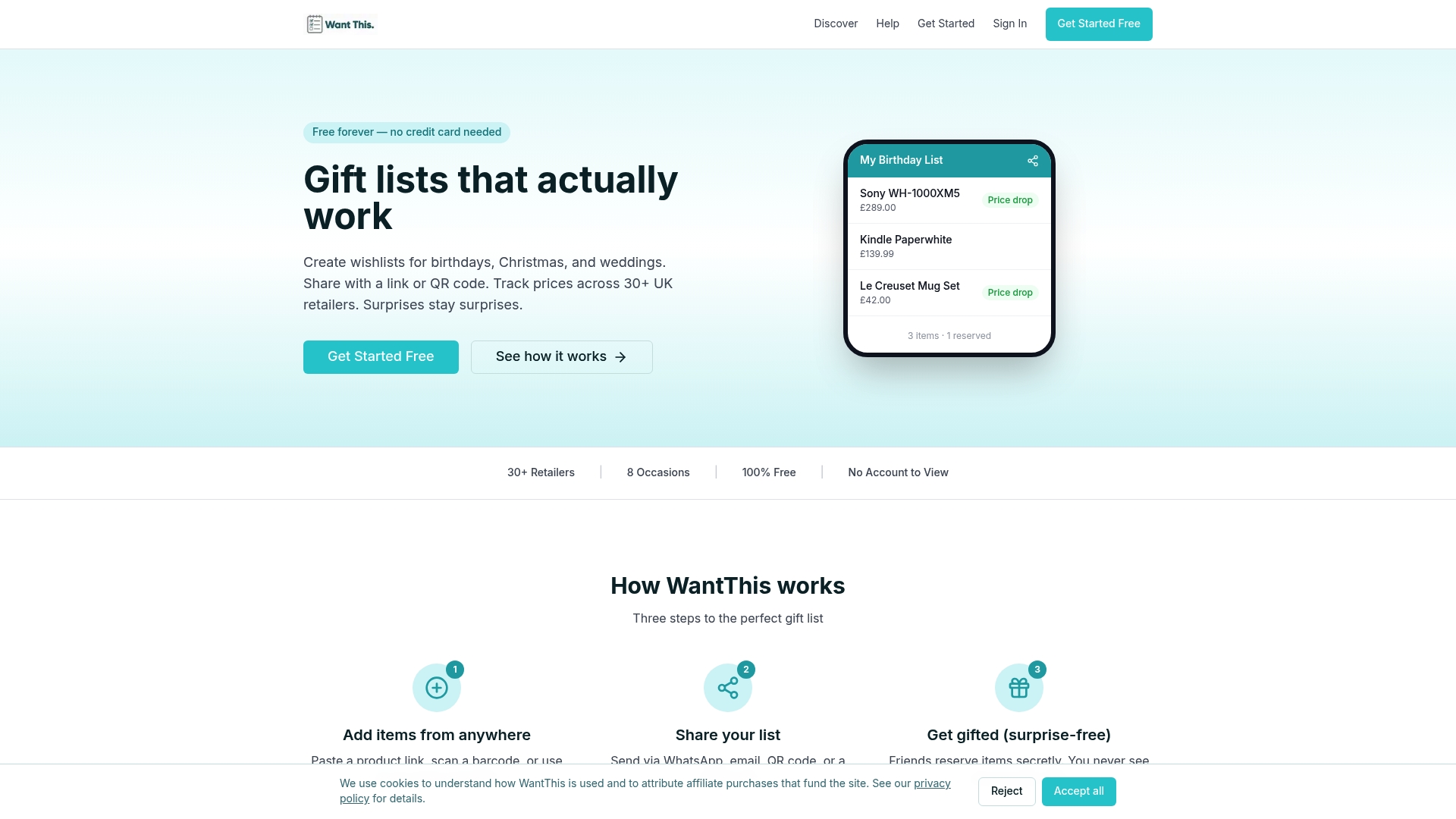
Sharing is built in from the start. Friends and family can view your list and privately reserve items, so gifts are not duplicated and surprises are not spoiled. WantThis also includes a Secret Santa organiser with an automatic draw. For UK shoppers managing gift lists across Christmas, birthdays, weddings, and baby showers, WantThis brings all of it into one free, organised place.
FAQ
How do wishlists help consumers find better deals?
Wishlists let consumers set target prices and receive alerts when specific items drop in price. Deal alerts tied to saved items get higher engagement than generic promotional emails because they are relevant to products the shopper already wants.
What is the sniper shopping strategy?
The sniper strategy means researching an item calmly, setting a target price, and waiting until that price is reached before buying. It reduces flash sale panic and impulse purchases.
Can I use a wishlist across multiple UK retailers?
Amazon wishlists only cover Amazon products. Platforms like WantThis work across any UK retailer, pulling in product details and tracking prices from sites like John Lewis, Argos, and ASOS.
How often should I review my wishlist?
A weekly review is the most effective cadence. Regular wishlist checking helps avoid panic buying and keeps your list current before major sale events like Black Friday and Boxing Day.
Do I need an account to use a wishlist for gift surprises?
Guest or anonymous wishlists allow preference gathering without account registration, which is useful for maintaining gift surprise privacy. Account-based lists on platforms like WantThis add private reservation features so family members can claim items without the recipient seeing.