
What Is Collective Gifting? A Complete Group Gift Guide

Collective gifting is defined as the practice of multiple people pooling their contributions to purchase one shared, meaningful gift for a recipient. Also called group gifting, it shifts the giving experience from a solo transaction to a shared gifting experience that carries far more emotional weight. Research shows 53% of participants in collective gifting cite meaningful social connection as their primary motivation. That number tells you this is not just about splitting a cost. It is about creating a moment that everyone involved remembers. Platforms like WantThis make the coordination side far easier, letting groups align on a gift from a shared wishlist without the usual back-and-forth chaos.
What are the main benefits of collective gifting?
Collective gifting benefits go well beyond the obvious financial advantage of splitting a cost. The real power lies in what the gift represents: a unified expression of appreciation from an entire group. Recipients consistently recall pooled gifts as more meaningful than a collection of smaller, unrelated presents.

The behavioural economics behind group giving are worth understanding. When a gift shifts from a transaction to a shared narrative, every contributor feels ownership over the outcome, regardless of how much they gave. A £10 contribution toward a £200 experience gift carries the same emotional significance as a £50 one, because the story of the gift belongs to everyone. That inclusion is what makes collective gift giving so effective at strengthening group bonds.
Here are the core benefits that make group gifting worth organising:
- Higher perceived value. One well-chosen, high-value gift lands better than five generic ones.
- Lower individual pressure. Smaller contributions feel accessible to more people, which widens participation.
- Contribution privacy. Keeping individual amounts private removes social judgment and awkwardness.
- Stronger group connection. Coordinating together creates a shared experience before the gift is even given.
- Recipient satisfaction. People appreciate explicitly requested pooled gifts more than surprise collections of small items.
Pro Tip: Frame your invitation as a low-pressure option, not an obligation. A line like “No set amount, any contribution is welcome” increases participation and keeps the group dynamic positive.
How do you organise a collective gift successfully?
Organising a group gift well requires one person to take clear ownership of the process. Without a designated organiser, contributions stall, communication fragments, and the gift arrives late or not at all. The organiser does not need to contribute more money. They just need to manage the timeline and communication.
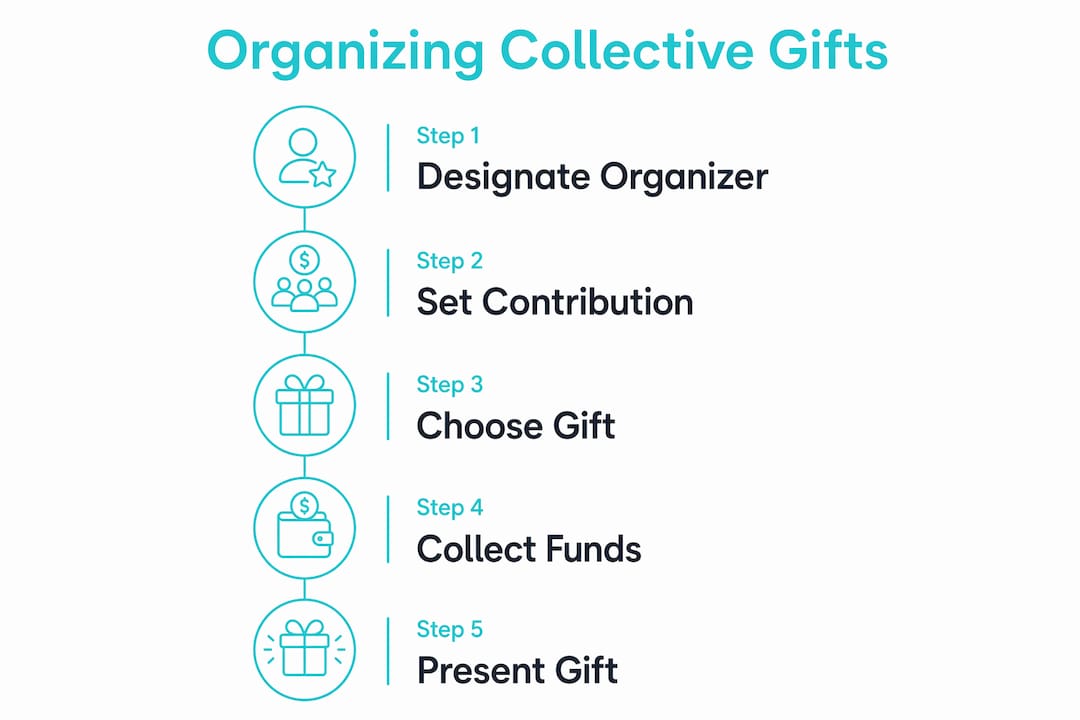
Best practices recommend setting a hard contribution deadline at least seven days before the gift event. That buffer gives the organiser time to purchase the gift, arrange delivery, and handle any last-minute issues without stress. A single tracking platform keeps everything in one place and prevents the confusion of multiple spreadsheets or group chats.
Follow these steps to run a smooth collective gifting process:
- Choose one organiser. This person manages contributions, communication, and the final purchase.
- Select the gift early. Use a wishlist or registry to confirm what the recipient actually wants before collecting money.
- Set a contribution range, not a fixed amount. Suggesting a range rather than a fixed figure respects different budgets and increases participation. Typical ranges run £5–£10 for acquaintances, £10–£20 for colleagues, and £15–£25 for close friends.
- Send a clear initial invite. Include the gift idea, the contribution range, the payment method, and the deadline in one message.
- Use a single payment method. Bank transfer, PayPal, or a digital payment link all work. Pick one and stick to it.
- Track contributions privately. Keep a simple list of who has paid. Never share this publicly.
- Send polite reminders individually. A direct, private message to non-contributors works far better than a public nudge in a group chat.
- Purchase and present the gift. Collect a short message from each contributor to include with the gift for added personal touch.
Pro Tip: For remote or hybrid groups, a shared wishlist platform removes the guesswork entirely. Contributors can see exactly what is being purchased, which cuts down on coordinating across multiple channels.
Handling geographically dispersed groups is where digital platforms genuinely change the game. Online payment links and shared wishlists mean a colleague in Edinburgh and a friend in London can both contribute to the same gift without a single phone call.
What are popular collective gifting ideas and occasions?
Group gift options work best when the occasion calls for something bigger than any one person would reasonably buy alone. The most common occasions for collective gifting are birthdays, weddings, baby showers, retirements, and farewell parties. Each occasion has a natural gift category that suits pooled contributions.
Big-ticket gifts funded collectively are often more impactful than several small presents. A recipient who receives a £300 stand mixer from twelve colleagues will remember it far longer than twelve separate £25 gift cards. The pooled gift also signals coordinated effort, which adds emotional weight.
Here are popular collective gifting ideas by occasion:
- Birthday. Experiences like a spa day, concert tickets, or a weekend trip. High-value items from the recipient’s birthday wishlist also work well.
- Wedding. Honeymoon fund contributions, luxury kitchen appliances, or items from a wedding gift list.
- Baby shower. Prams, nursery furniture, or a full baby shower gift list bundle.
- Retirement. Travel vouchers, a personalised keepsake, or a high-end leisure item.
- Farewell. Personalised gifts, experience vouchers, or a curated gift basket.
| Occasion | Best gift type | Suggested contribution range |
|---|---|---|
| Birthday | Experience or big-ticket item | £10–£25 per person |
| Wedding | Registry item or honeymoon fund | £15–£30 per person |
| Baby shower | Nursery or practical item | £10–£20 per person |
| Retirement | Travel or leisure | £15–£25 per person |
| Farewell | Personalised or experience | £10–£20 per person |
Using a wishlist or registry removes the guesswork from gift selection entirely. When the recipient has shared what they actually want, the group can pool contributions toward a specific item rather than guessing. WantThis lets recipients build a list from any UK retailer, which gives organisers a clear, confirmed target to work toward.
What challenges can arise in collective gifting?
The most common problem in group gifting is social pressure. Some contributors feel obligated to give more than they can afford, especially in workplace settings where hierarchy creates unspoken expectations. The fix is simple: always frame participation as optional and never disclose individual contribution amounts to the group.
Managing different budgets is the second major challenge. Not everyone in a group has the same financial flexibility, and a fixed contribution amount excludes people who cannot meet it. Offering a contribution range solves this directly. It also opens the door for non-monetary contributions, such as writing a heartfelt card, organising the logistics, or wrapping the gift.
Late payments create real problems when the organiser needs to purchase the gift before the event. Setting the contribution deadline a full week before the occasion gives enough buffer to chase stragglers without panic. If someone misses the deadline entirely, the organiser can either cover the shortfall and collect later or proceed with what has been gathered.
Keeping the gift a surprise adds another layer of complexity, particularly in digital groups where messages can leak. The organiser should communicate through private channels rather than a shared group chat, and avoid posting updates where the recipient might see them.
Pro Tip: Never publicly call out non-contributors. Direct, polite private follow-ups preserve goodwill and are far more effective than a public reminder that embarrasses people into paying.
Key Takeaways
Collective gifting works best when one person leads the process, contributions stay private, and the gift is chosen from a confirmed wishlist rather than guessed at.
| Point | Details |
|---|---|
| Define the concept clearly | Collective gifting means a group pools contributions to buy one shared, meaningful gift. |
| Lead with social value | 53% of participants join group gifts primarily for social connection, not just to save money. |
| Assign one organiser | A single person managing the process prevents confusion and keeps contributions on track. |
| Use contribution ranges | Suggesting a range instead of a fixed amount increases participation and reduces pressure. |
| Align on a wishlist | Choosing from a recipient’s wishlist removes guesswork and guarantees the gift lands well. |
Why collective gifting is more than just splitting a bill
Collective gifting has evolved from an awkward envelope passed around an office to a genuinely well-organised social ritual. The shift happened when people stopped treating it as a cost-splitting exercise and started treating it as a coordinated act of appreciation.
The most memorable group gifts are often not the most expensive ones. They were the ones where the organiser took the time to gather a short message from every contributor and present them alongside the gift. That extra step transforms a financial transaction into something the recipient keeps thinking about. The gift becomes a record of who showed up for them.
Technology has removed most of the friction that used to make group gifting feel like a chore. Shared wishlists, digital payment links, and private contribution tracking mean you can coordinate twenty people across three cities without a single awkward conversation about money. The coordination overhead is now low enough that there is no good reason to default to a generic gift card.
It is also worth pushing back on the idea that collective gifting is only for big occasions. A pooled gift for a colleague’s work anniversary or a friend’s exam results can carry just as much meaning as a wedding present. The occasion does not need to be grand. The intention does.
How WantThis makes group gifting easier
Coordinating a group gift is much simpler when everyone can see exactly what the recipient wants. WantThis is a free UK platform where recipients build a wishlist from any online retailer, and friends or family can privately reserve items so nothing gets duplicated.
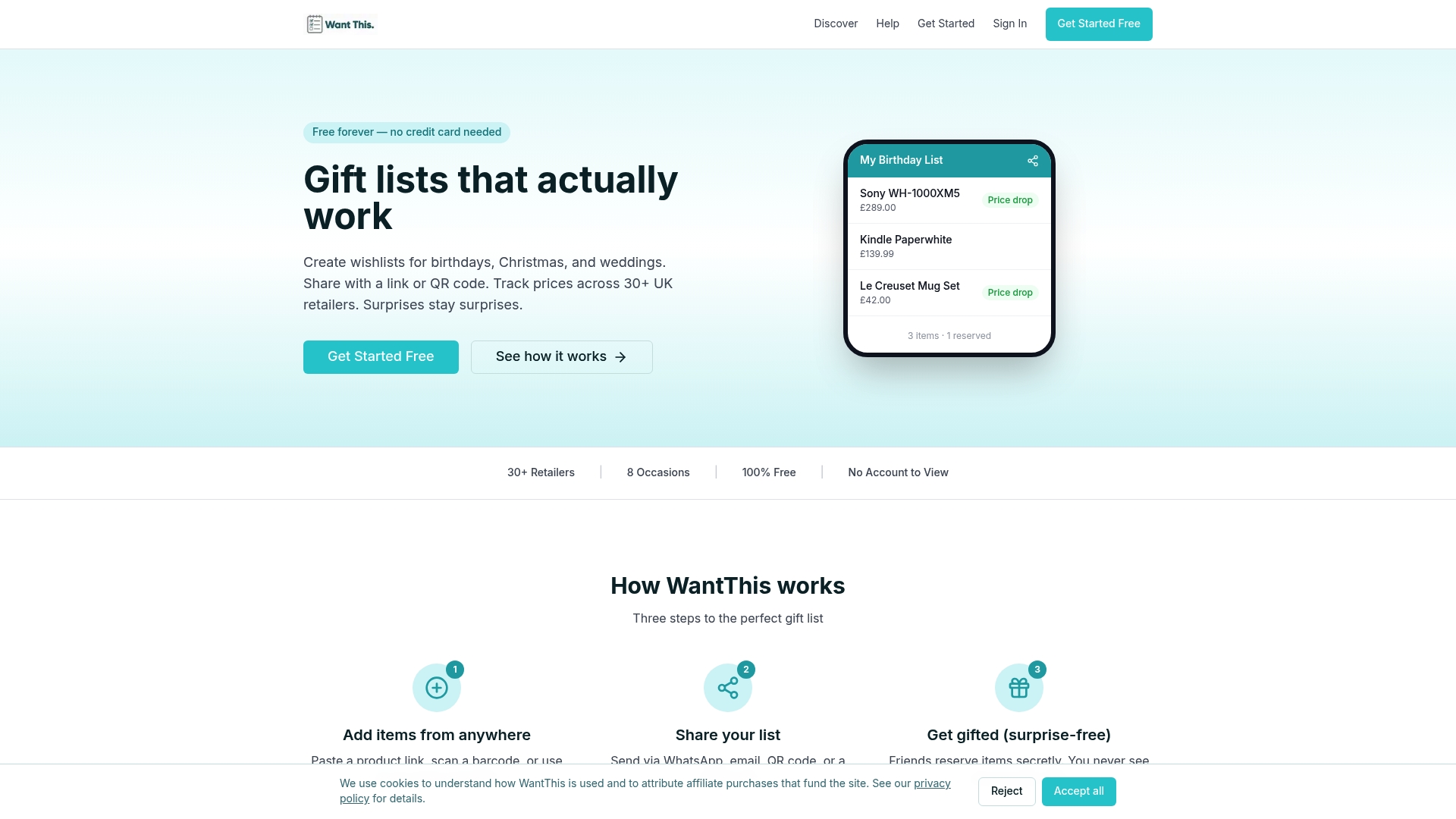
For group gifting specifically, the wishlist sharing feature lets the organiser point every contributor to one confirmed list rather than fielding ten different suggestions. WantThis also tracks price drops on saved items, so the group can time the purchase for the best value. Whether you are organising a birthday, a baby shower, or a Christmas gift, WantThis gives you the tools to coordinate without the chaos. You can also browse gift list ideas for every occasion to find inspiration before the group even agrees on a direction.
FAQ
What is collective gifting in simple terms?
Collective gifting is when a group of people each contribute a portion of money to buy one shared gift for a recipient. It allows the group to give something more meaningful or high-value than any individual could afford alone.
How much should each person contribute to a group gift?
Typical contribution ranges run £5–£10 for acquaintances, £10–£20 for colleagues, and £15–£25 for close friends. Suggesting a range rather than a fixed amount increases participation and respects different budgets.
What are the best occasions for collective gifting?
Birthdays, weddings, baby showers, retirements, and farewell parties are the most common occasions. These events naturally call for a more significant gift than one person would typically buy alone.
How do you keep a group gift a surprise?
Communicate through private messages rather than shared group chats, and ask contributors not to mention the gift to the recipient. Setting a contribution deadline well before the event gives the organiser time to purchase and wrap the gift discreetly.
What is the difference between collective gifting and crowdfunding?
Collective gifting is a private, social arrangement among people who know the recipient personally. Crowdfunding is typically a public campaign open to anyone. Both involve pooled contributions, but collective gifting is relationship-driven and closed to a specific group.