
What Is a Friends Gift Pool? Your UK Group Gifting Guide

A friends gift pool is a collective gifting arrangement where a group of people each contribute money toward a single, shared gift for one recipient. The term “group gifting” is the more widely recognised name for this practice, and both phrases describe the same idea. Gift pools solve a real problem: they let friends give something genuinely meaningful without any one person carrying the full cost.
Group gifting has grown popular for birthdays, weddings, baby showers, and leaving parties across the UK. Instead of five friends each buying a £20 item the recipient may not want, those same five friends pool £100 and buy something the person actually asked for. Platforms like Pooled and wishlist tools like WantThis have made the process far less painful than passing an envelope around.

What is a friends gift pool and how does it work?
A friends gift pool works by having one organiser collect contributions from the group and then purchase a single gift on everyone’s behalf. The process is straightforward when you follow a clear sequence.
- Choose the gift and set a goal. Decide what you want to buy and how much it costs. Knowing the target amount upfront keeps everyone aligned from the start.
- Appoint one organiser. One person manages the collection, tracks contributions, and makes the purchase. This avoids confusion and keeps the process moving.
- Set a deadline. Setting a contribution deadline earlier than the event gives the organiser time to buy the gift and handle any last-minute issues. A deadline set three to five days before the occasion works well for most groups.
- Share one link or payment request. Digital tools like Pooled or a simple bank transfer request let contributors pay on their own schedule. Digital tools eliminate the need for the organiser to chase individuals, since contributors pay asynchronously and progress is tracked automatically.
- Track contributions. Good platforms show a running total and a list of who has contributed. That list becomes useful later when writing the card.
- Purchase the gift and list all contributors on the card. The organiser buys the gift, and every contributor’s name appears on the card or gift message. This step matters because it gives everyone recognition and makes the recipient feel the full warmth of the group.
Pro Tip: If you use a wishlist platform like WantThis, you can link directly to the recipient’s saved items. This removes all guesswork about what to buy and guarantees the gift is something they actually want.
What are the benefits of a gift pool vs. individual gifting?
Group gifting consistently outperforms individual gifting on three fronts: cost, quality, and social experience. Here is why the model works so well.
- Higher-value gifts become possible. Pooling funds allows for meaningful, thoughtful gifts that better suit the recipient’s preferences. A group of eight friends can comfortably buy a £200 experience or appliance that no single person would spend alone.
- Less awkward money chasing. When one link handles all contributions, the organiser never has to corner someone at a party or send three follow-up messages. The process is self-contained.
- Privacy around contribution amounts. Keeping contribution amounts private reduces social pressure and makes participation more comfortable. Not everyone can give the same amount, and a good system respects that without making it obvious.
- Shared recognition. Every contributor’s name on the card creates a moment of collective generosity. The recipient sees the full group behind the gift, which adds real emotional weight.
- Fewer duplicate or unwanted gifts. When the group agrees on one item, nobody wastes money on something the recipient already owns or does not need.
“One organiser buying with group contributions and a card listing everyone reduces confusion, focuses on the recipient, and enhances the social gratitude experience.” — Weddings Hub
Gift pool etiquette for UK friends groups
UK gift pool etiquette follows a few clear conventions that keep things fair and comfortable for everyone involved.
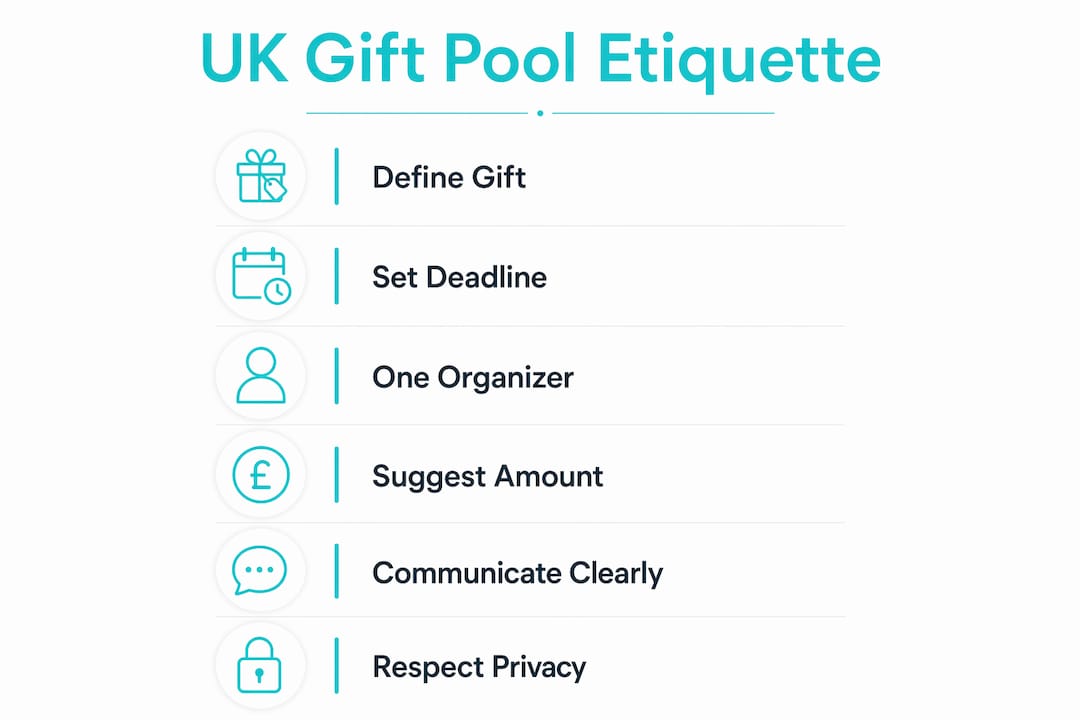
UK gift etiquette recommends that one person buys the group gift while others contribute by bank transfer, with the card listing all contributors. Suggested per-person contribution ranges vary by relationship. Close friends typically give £50–150, good friends £40–80, colleagues £20–60, and acquaintances £20–40. These are guidelines, not rules, and affordability always takes priority.
| Relationship | Suggested range | Notes |
|---|---|---|
| Close friend | £50–150 | For milestone occasions like weddings or big birthdays |
| Good friend | £40–80 | Standard for most social occasions |
| Colleague | £20–60 | Depends on workplace culture and closeness |
| Acquaintance | £20–40 | A smaller contribution is always welcome |
When you suggest an amount, frame it as a guide rather than a demand. “We’re aiming for around £30 each, but anything you can contribute is great” works far better than a fixed figure with no flexibility. People give more generously when they feel trusted rather than pressured.
Pro Tip: When you share the payment link, include a short note explaining what the gift is, who it is for, and the deadline. One clear message upfront prevents the questions that slow everything down.
Communication should be direct and warm, not transactional. Send one message with all the details, set a firm deadline, and follow up once if needed. After the deadline, proceed with available funds rather than continuing to chase late contributors. The organiser’s role is coordinator, not debt collector.
Creative gift ideas for a friends gift pool
The best group gifts fall into categories that benefit from a higher budget. Here are the options that consistently deliver the most satisfaction.
Experiences are the top choice for most friend groups. Concert tickets, spa days, cooking classes, and weekend breaks all become accessible when costs are shared. Experiences also create memories, which outlast any physical item.
Electronics and tech work well for friends who have shared a wishlist. A quality pair of wireless headphones, a smart speaker, or a tablet is the kind of purchase most people delay for themselves. A group gift removes that barrier entirely.
Homeware and kitchen items suit occasions like weddings, housewarmings, and baby showers. A KitchenAid stand mixer, a high-end coffee machine, or a quality bedding set are all items people want but rarely buy for themselves.
Luxury personal items cover beauty, fashion, and accessories. A designer bag, a premium skincare set, or a cashmere jumper all land well when the recipient’s taste is known.
| Gift category | Best occasion | Why it works for group gifting |
|---|---|---|
| Experiences | Birthdays, leaving parties | High cost, high impact, memorable |
| Electronics | Birthdays, Christmas | Specific, wanted, easy to buy online |
| Homeware | Weddings, housewarmings | Practical, high value, registry-friendly |
| Luxury personal | Milestone birthdays | Personal, indulgent, budget-dependent |
| Gift cards | Any occasion | Flexible when preferences are unknown |
Choosing gifts from recipient wishlists removes guesswork and improves satisfaction for everyone. When the recipient has saved items on a platform like WantThis, the group can see exactly what they want, at what price, and buy with confidence. Gift cards and vouchers work as a fallback when preferences are genuinely unknown, but a wishlist is always the better starting point.
For groups of ten or more, experiences and gift cards scale the most cleanly. For smaller groups of three to five, a single high-quality physical item tends to feel more personal and considered.
Key Takeaways
A friends gift pool works best when one organiser manages a single payment link, sets a clear deadline, and buys from the recipient’s wishlist to guarantee the gift lands well.
| Point | Details |
|---|---|
| Define the gift and goal first | Agree on what to buy and the total cost before collecting any contributions. |
| Use digital tools to collect funds | Platforms like Pooled remove the need to chase individuals and track progress automatically. |
| Set deadlines before the event | A deadline three to five days early gives the organiser time to buy and handle late payments. |
| Keep contribution amounts private | Concealing individual amounts reduces social pressure and encourages comfortable participation. |
| Buy from a wishlist when possible | Recipient wishlists guarantee the gift is wanted and eliminate guesswork for the group. |
Why the logistics matter more than the gift itself
Gift pools fail far more often because of poor organisation than because of the wrong gift choice. Groups with genuinely good intentions can fall apart over a missing £15 contribution or a deadline nobody took seriously. The gift ends up late, the organiser is exhausted, and the recipient senses the chaos even if nobody says anything.
The fix is almost always the same: one link, one deadline, one organiser. When you reduce the number of decisions and touchpoints, the whole thing runs itself. Groups using a shared wishlist alongside a payment tool tend to have the smoothest experience by far. The recipient’s saved items do the gift-choosing work, and the payment link handles the money. The organiser just needs to confirm the deadline and make the purchase.
The etiquette piece matters too. Suggesting a contribution range without making it mandatory is the difference between a group that feels generous and one that feels obligated. People give more when they feel the choice is theirs. Being firm about the deadline while staying warm in your communication keeps relationships intact even when someone pays late or not at all.
The joy of a group gift is real. When someone opens a gift that clearly took coordination and care, they feel it. That feeling is worth the extra ten minutes of setup.
How WantThis makes group gifting easier
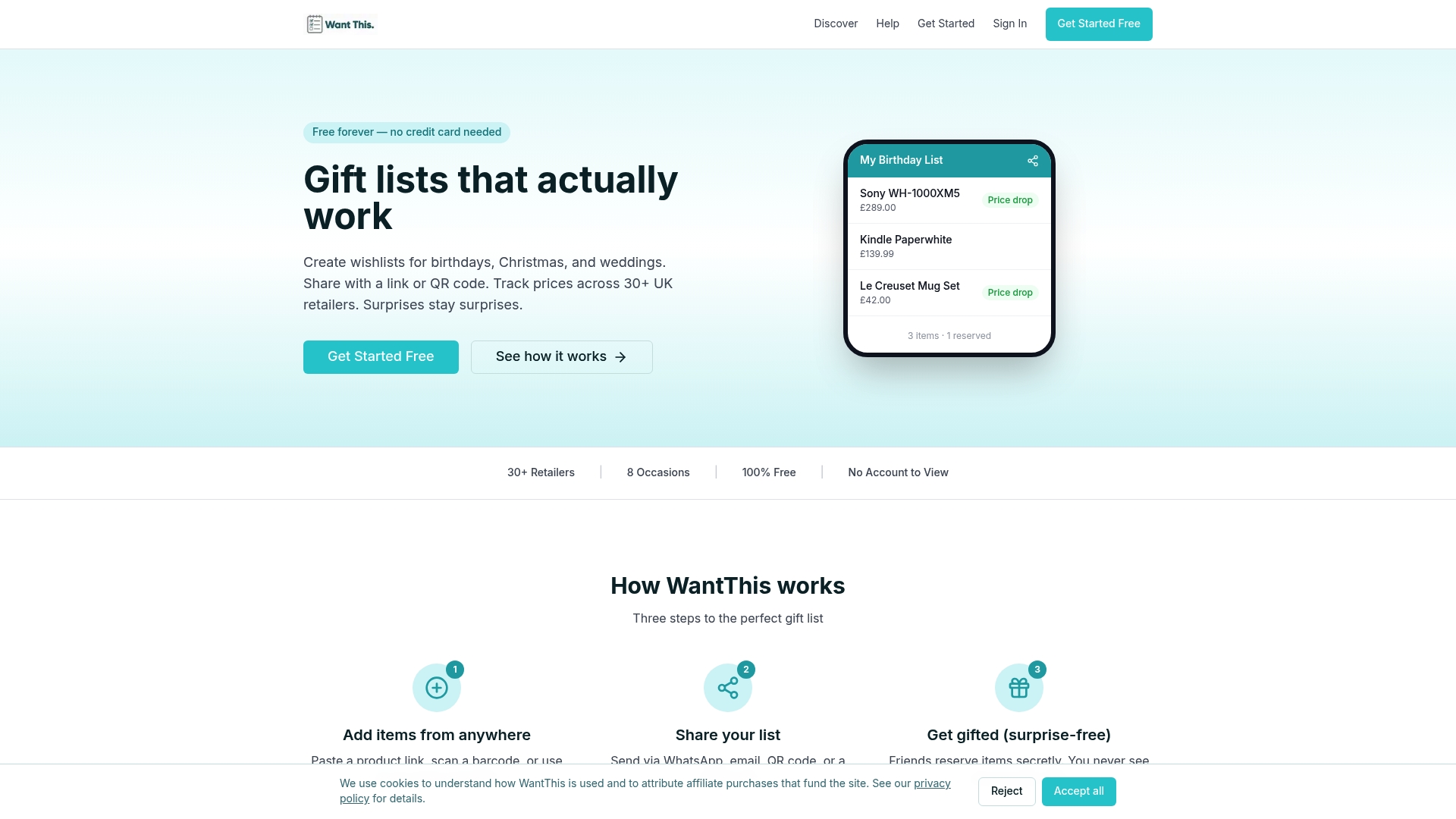
WantThis is built for exactly this kind of occasion. You can create a free gift list by pasting any product link from any UK retailer, and WantThis automatically pulls in the title, image, and current price. Friends and family can privately mark items as reserved so nothing gets bought twice and surprises stay intact. The wishlist sharing feature lets you send one link to the whole group, so everyone sees the same list and can coordinate contributions around real, wanted items. WantThis also tracks price drops on saved items, which is handy when the group is waiting for the right moment to buy. For occasions like birthdays, weddings, or Christmas, it removes the guesswork from group gifting entirely.
FAQ
What is a gift pool for friends?
A friends gift pool is a group arrangement where each person contributes money toward one shared gift for a single recipient. It is also called group gifting and works best when one organiser manages the collection and purchase.
How do I create a gift pool for a friend’s birthday?
Choose the gift, set a total cost, appoint one organiser, and share a payment link with a clear deadline. Using the recipient’s wishlist from a platform like WantThis makes the gift choice straightforward and guaranteed to please.
How much should I contribute to a friends gift pool in the UK?
Contribution amounts depend on your relationship with the recipient. Close friends typically give £50–150, good friends £40–80, colleagues £20–60, and acquaintances £20–40, though affordability always comes first.
Should contribution amounts be kept private in a gift pool?
Keeping individual contribution amounts private reduces social pressure and encourages more comfortable participation. Digital signup tools can conceal individual amounts while still tracking the overall total.
What happens if someone does not contribute before the deadline?
The organiser should proceed with the funds already collected after the deadline passes. Treating the deadline as firm and buying with available funds avoids delays and keeps the organiser out of the role of ongoing debt collector.