
Ways to Discover Gift Ideas Online for UK Shoppers

Ways to discover gift ideas online refers to the full range of digital methods, tools, and platforms that help shoppers find thoughtful presents matched to a recipient’s interests, budget, and occasion. 49% of shoppers now use AI tools to generate gift ideas, and 27% research gifts more carefully than they did two years ago. The shift is real: gift discovery is no longer a single Google search. It is an omnichannel process that combines AI prompts, social media observation, curated marketplaces, and personal note-taking. This guide covers the most effective methods for UK consumers shopping for birthdays, Christmas, weddings, and every occasion in between.
1. How can AI tools transform finding the perfect gift?
AI chatbots are the fastest-growing gift research tool available. ChatGPT and Google Gemini can generate tailored suggestions in seconds when you give them the right context. The quality of the output depends entirely on the quality of your prompt.
A strong AI prompt includes four elements:
- Recipient description: age, gender, relationship to you, and personality traits
- Occasion: birthday, Christmas, wedding anniversary, or baby shower
- Interests: hobbies, favourite brands, recent purchases, or life changes
- Budget: a specific range, not just “affordable”
For example: “Suggest five birthday gifts for a 35-year-old woman who loves hiking and cooking. Budget is £40–£80. Available from Amazon UK or John Lewis.” That level of detail produces specific, buyable results rather than generic lists.
Filtering AI results for UK retailers like John Lewis, Marks and Spencer, and Amazon UK is the step most shoppers skip. Without it, AI suggestions often include products unavailable in the UK or sold only through US retailers. Always specify your preferred UK stores in the prompt.

Pro Tip: Run a follow-up query after your first AI response. Ask: “Which of these would suit someone who already has a well-equipped kitchen?” Follow-up prompts narrow results faster than starting over.
2. What role do social media and online wishlists play in discovering gift ideas?
Social media is a live feed of what people actually want. Social media influences 18% of all gift purchases, and 38% of shoppers have bought a gift based on a trend they spotted online. That number reflects real behaviour, not aspirational marketing.
Ethical “gift stalking” uses publicly available information to identify genuine preferences without breaching privacy. The most useful sources include:
- Pinterest boards: People organise boards around things they genuinely want. A board titled “Dream Kitchen” or “Outdoor Gear” is a direct window into their taste.
- Instagram follows and saves: The brands and accounts someone follows reveal their aesthetic and interests far more reliably than asking them directly.
- Public wishlists: Platforms like WantThis let users create and share gift lists with friends and family. A shared list removes all guesswork.
- Facebook event RSVPs and group memberships: These signal hobbies, causes, and communities the recipient cares about.
The key distinction is using public data only. Avoid reading private messages or asking mutual friends to extract information the recipient has not chosen to share.
Pro Tip: Check the recipient’s most recent Instagram saves or Pinterest activity in the two weeks before their birthday. Recent saves reflect current wants, not old interests.
3. Which curated marketplaces and websites help find unique and practical gifts?
Curated online marketplaces consolidate quality gift options in one place, with filtering tools that make narrowing down by price, category, and recipient type straightforward. Online marketplaces account for 25% of e-commerce gifting sales, and 51% of shoppers choose online channels for convenience. The UK market has strong options across different needs.
| Platform type | Best for | Price range | Key feature |
|---|---|---|---|
| Large general retailer | Broad selection, trusted returns | £5–£500+ | User reviews, next-day delivery |
| Department store online | Quality and presentation | £20–£300+ | Gift wrapping, curated edits |
| Handmade marketplace | Unique, personalised items | £10–£200 | Customisation options |
| Experience platform | Memory-based gifts | £30–£500+ | Vouchers, flexible dates |
57% of consumers prefer experience-based gifts over physical items. That preference pushes shoppers toward experience platforms offering cookery classes, spa days, and adventure activities. These are worth including in any search alongside traditional product retailers.
For UK shoppers, Amazon UK, John Lewis, Marks and Spencer, and Etsy cover most categories. John Lewis is particularly strong for home and kitchen gifts with clear return policies. Etsy excels for personalised and handmade items that feel genuinely unique. For gift ideas by occasion, WantThis curates popular UK suggestions across electronics, beauty, books, and more.
4. How can personal data tracking reduce gift-guessing stress?
Maintaining a running digital note of gift ideas year-round is the single most underused strategy in gift buying. Keeping a permanent digital note of recipient interests and gift ideas reduces last-minute stress and improves the quality of the final choice. The logic is simple: you notice the best clues at random moments, not when you are actively shopping.
Practical ways to capture ideas throughout the year:
- Notes app on your phone: Create one note per person. Add ideas whenever they mention something they need or admire.
- Screenshots: When someone shares a product link in a group chat, screenshot it immediately.
- Voice memos: If you are driving and someone mentions a wish, record a quick voice note before you forget.
- WantThis lists: Save items from any UK retailer directly to a gift list by pasting the product link.
The “Three Clues” method structures this process effectively. Identify the recipient’s daily routine, personal aesthetic, and current life season. A new parent’s daily routine, minimalist aesthetic, and “survival mode” life season points directly toward practical, time-saving gifts rather than decorative ones.
Pro Tip: Set a recurring calendar reminder two months before each person’s birthday. Review your notes at that point and you will almost always find a strong idea already waiting.
5. What practical strategies combine these methods for effective gift discovery?
Gift discovery is now omnichannel and rarely linear. Most shoppers use multiple sources before making a final purchase. Combining methods produces better results than relying on any single approach.
A practical combined approach works in three stages. Start with AI to generate a broad list of categories and specific products. Then cross-reference those suggestions against the recipient’s social media activity and any shared wishlists. Finally, check curated marketplaces to compare prices, read reviews, and confirm UK availability before buying.
| Method | Best situation | Time required | Confidence level |
|---|---|---|---|
| AI prompt | Any occasion, any budget | 5–10 minutes | High with good prompts |
| Social media observation | When you know the recipient well | 10–20 minutes | Very high |
| Curated marketplace search | Last-minute or budget-constrained | 5–15 minutes | Medium to high |
| Personal notes | Year-round planning | Ongoing | Very high |
The biggest mistake shoppers make is treating gift buying as a single session. 35% of holiday shoppers prioritise practical gifts, which means the bar for “good enough” has risen. A gift that solves a real problem or connects to a genuine interest lands better than one that simply looks impressive in the moment.
For birthday gift planning or Christmas lists, WantThis lets you organise saved items by occasion so nothing gets lost between discovery and purchase.
Key Takeaways
The most effective approach to finding gifts online combines AI prompts, social media observation, curated UK marketplaces, and year-round personal note-taking to produce thoughtful, practical choices.
| Point | Details |
|---|---|
| AI tools need specific prompts | Include recipient details, occasion, interests, budget, and preferred UK retailers for useful results. |
| Social media reveals real preferences | Public Pinterest boards, Instagram follows, and shared wishlists show what people genuinely want. |
| Curated marketplaces cover most needs | Amazon UK, John Lewis, Marks and Spencer, and Etsy each serve different gift categories and budgets. |
| Year-round notes reduce stress | Capturing ideas throughout the year produces better gifts than last-minute searches. |
| Combining methods works best | Start with AI, validate with social media, then confirm availability on UK retail platforms. |
Lessons on online gift discovery
Gift-giving is shifting from material objects to stories and shared moments, and the tools for finding those gifts have shifted too. AI has moved from a novelty to a genuinely useful starting point, but only when you treat it as a first draft, not a final answer.
The shoppers who get the most out of AI tools are the ones who already know something about the recipient. They use AI to expand a category they have already identified, not to replace the thinking entirely. “She likes cooking” becomes “sous vide equipment under £60 available from Amazon UK.” That is a productive use of the technology.
Surprisingly few people check a recipient’s public wishlist before buying. If someone has taken the time to build a shared gift list and made it visible, ignoring it in favour of guessing is a missed opportunity. The list exists precisely to help you.
The year-round note habit is the one change that makes the biggest difference over time. The best gift ideas surface in ordinary conversations, not in shopping sessions. Capturing them in the moment costs almost nothing and pays off every time a birthday comes around.
WantThis makes UK gift discovery easier
WantThis is built for exactly the kind of gift research this article describes. You paste a product link from any UK retailer, and WantThis pulls in the title, image, and current price automatically. Lists are organised by occasion, whether that is a birthday, Christmas, wedding, or baby shower.
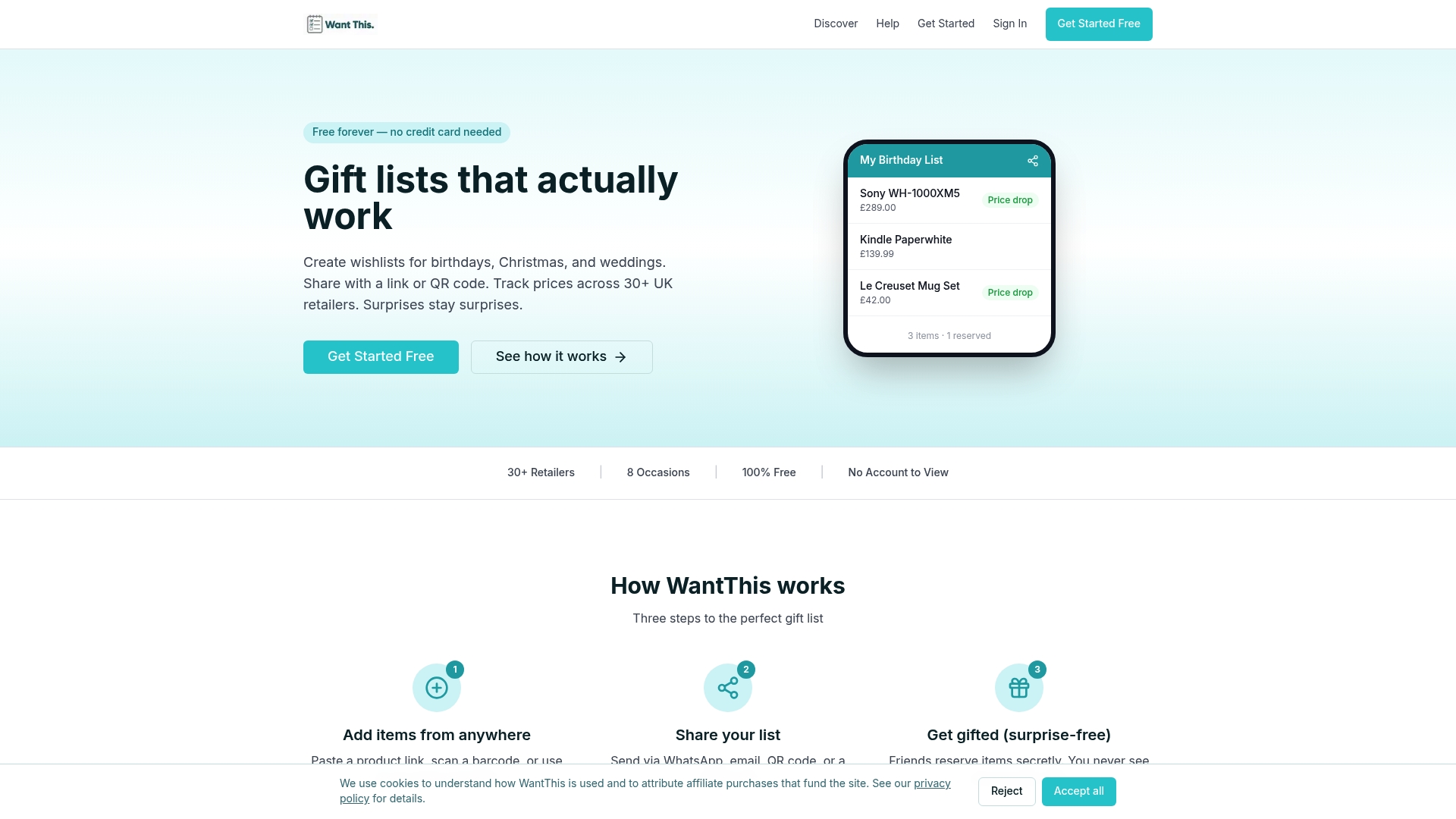
The price tracking feature monitors saved items and alerts you when the price drops, which is handy for deciding whether to buy now or wait. Friends and family can privately reserve items on a shared list, so gifts are never duplicated and surprises stay intact. Adding an item takes just a pasted link, so nothing gets lost between discovery and purchase. Visit WantThis to create your first free gift list.
FAQ
How do I use AI to find gift ideas?
Give the AI tool a detailed prompt that includes the recipient’s age, interests, occasion, budget, and your preferred UK retailers. Follow up with narrowing questions to refine the results.
What is the best website for gift ideas in the UK?
The best site depends on the occasion and budget. Amazon UK and John Lewis cover broad categories, Etsy is best for personalised items, and WantThis helps you organise and share gift lists across any retailer.
How does social media help with finding unique gifts?
Public Pinterest boards, Instagram follows, and brand saves reveal genuine preferences without requiring you to ask directly. Ethical gift stalking uses only publicly available information.
How can I avoid last-minute gift stress?
Maintaining a digital note of gift ideas year-round is the most effective method. Capture ideas whenever they surface in conversation or on social media, then review your notes two months before each occasion.
Are experience-based gifts more popular than physical gifts?
Yes. 57% of consumers now prefer experience-based gifts over material items, making cookery classes, spa days, and adventure experiences worth including in any gift search.