
How Gift Lists Reduce Stress in Gift Planning

A gift list is a curated record of items a recipient wants, shared with the people buying for them. Understanding how gift lists reduce stress starts with money: financial worries are one of the biggest sources of holiday stress, and that is a problem with a practical fix. Gift lists give both givers and recipients a shared framework, replacing guesswork with clear choices, realistic budgets, and zero duplicate presents. Whether you’re planning for a birthday, Christmas, a baby shower, or a Secret Santa, a well-built gift list turns a stressful process into a manageable one.
How gift lists reduce stress through organisation and clarity
Gift lists cut decision fatigue by narrowing an open-ended question down to a short, specific set of options. Without a list, a gift giver faces hundreds of possible choices with no signal about what the recipient actually wants. A list removes that paralysis entirely.
The organisational benefits go beyond the giver’s peace of mind. Gift lists prevent duplicate gifts by showing which items have already been claimed. That single feature eliminates one of the most common frustrations in group gift-giving: three people buying the same book.

Shared digital gift lists take this further. When a list lives online and updates in real time, every family member or friend group sees the same information. Nobody buys something already purchased. Nobody has to make awkward phone calls to coordinate. The communication happens automatically through the list itself.
The benefits of gift lists for organisation include:
- Fewer duplicates. Claimed items are marked, so no one accidentally buys the same thing.
- Clearer preferences. Recipients list exactly what they want, removing the pressure on givers to guess.
- Better coordination. Shared lists let groups split costs on larger items without confusion.
- Reduced back-and-forth. One shared link replaces multiple texts, emails, and phone calls.
- Surprise protection. Private reservation features let buyers claim items without spoiling the gift.
Pro Tip: Create your gift list at least four weeks before the occasion. Early lists give buyers more time to shop thoughtfully, which reduces rushed decisions and last-minute spending.
Gift registries transform gift-giving into a straightforward exchange with clear options on both sides. That clarity is the foundation of stress-free gifting.
Do gift lists actually help control budgets?
Financial stress is the most cited source of holiday anxiety, and gift lists directly address it. Gift lists align intentions with real budgets, reducing the financial hangover that often follows the holiday season. When a recipient includes items across a range of price points, every buyer can find something that fits their budget without feeling embarrassed or underprepared.
The data on post-holiday returns reinforces this point. Returns spike 25%–35% after major gift-giving holidays, according to Adobe Analytics data. That spike represents wasted money, wasted time, and avoidable frustration. Gift lists reduce return rates because buyers choose from items the recipient has already confirmed they want.
The table below shows how gift list planning compares to unplanned gift buying across key financial stress factors.
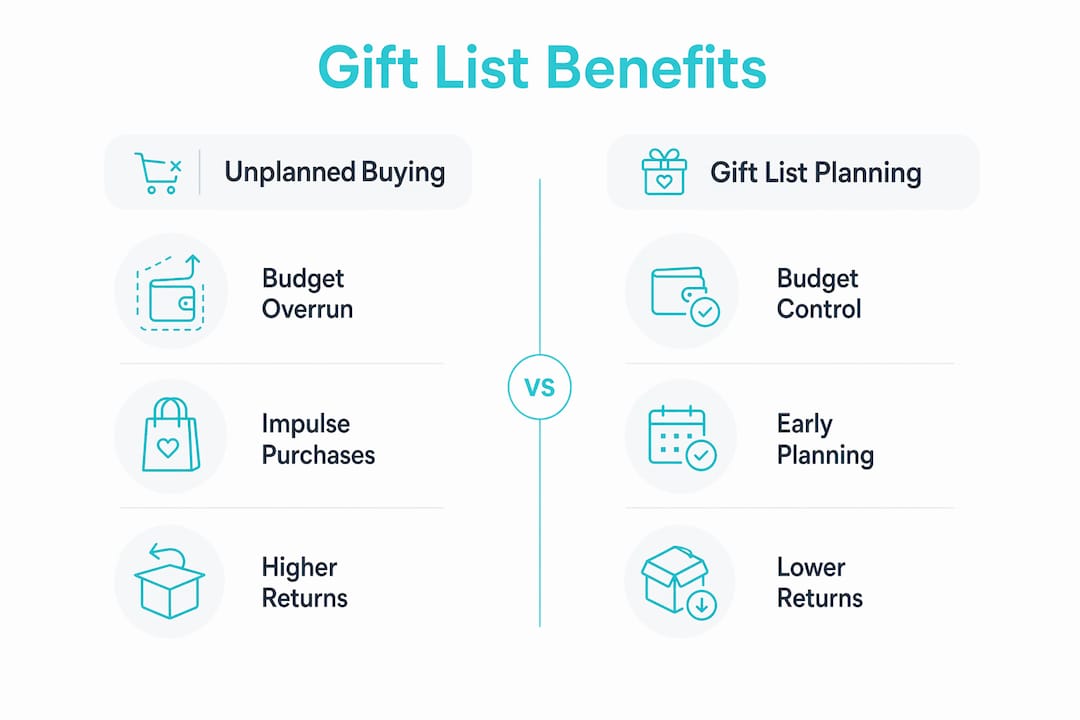
| Factor | Unplanned gift buying | Gift list planning |
|---|---|---|
| Budget alignment | Often exceeds budget | Recipient sets price range |
| Duplicate purchases | Common in groups | Prevented by claimed items |
| Last-minute costs | High (express shipping, backup gifts) | Reduced with early claiming |
| Return rates | 25%–35% spike post-holiday | Significantly lower |
| Impulse spending | Frequent | Reduced with clear options |
Shared digital lists encourage early claiming, which cuts last-minute impulse buys and expensive express shipping. Buying early from a list is almost always cheaper than panic-buying a week before the event.
Pro Tip: When building your list, include items at three price levels: under £20, £20–£50, and over £50. This gives every buyer a comfortable entry point and removes the awkwardness of budget mismatches.
How gift lists lower emotional and social pressure
The pressure to find the “perfect” gift is one of the most draining parts of any celebration. Gift lists remove that pressure by replacing the impossible standard of perfection with a practical, recipient-approved set of options.
Mental health professionals are direct on this point. Consciously adjusting expectations lowers holiday stress. Experts at Gate Healing advocate setting “good enough” expectations rather than chasing perfection. A gift list puts that advice into practice. When the recipient has already said what they want, the giver’s job becomes execution, not mind-reading.
“Gift lists function as an effective boundary-setting tool, aligning expectations and preventing overcommitment. When both sides of a gift exchange share the same information, the social pressure to impress or guess correctly disappears.” Gate Healing PLLC
The emotional benefits extend beyond the individual buyer. Group gift-giving situations, like office Secret Santas or large family Christmases, carry their own social dynamics. Nobody wants to be the person who gave something unwanted or wildly off-budget. A shared list levels the playing field and removes that social risk entirely.
Using lists for gift planning also protects mental energy by reducing repetitive decision-making. Therapists recommend digital organisational tools specifically because they reduce the cognitive load of gift-giving. That preserved energy goes toward actually enjoying the occasion rather than stressing about it.
The psychological shift is significant. Gift-giving stops feeling like a performance and starts feeling like a gesture of care. That change in framing reduces anxiety for everyone involved.
Practical tips for making an effective gift list
Building a gift list that actually reduces stress requires more than writing down a few product names. The most effective lists are specific, organised by occasion, and shared early enough for buyers to act without rushing.
-
Start with occasions, not items. Create a separate list for each event: birthday, Christmas, wedding anniversary. This keeps your gift list for events organised and prevents confusion when multiple occasions overlap.
-
Add specific product links. Vague entries like “a nice candle” create the same guesswork a list is meant to eliminate. Link to the exact product, including the colour, size, or variant you want.
-
Include a range of prices. A list with only high-ticket items puts pressure on buyers with smaller budgets. Mix in affordable options so everyone can participate comfortably.
-
Share the list early. Balancing time for rest and social activities is critical during busy seasons. Sharing your list weeks ahead gives buyers time to plan without rushing, which reduces stress on both sides.
-
Use a platform with reservation features. When buyers can privately mark an item as claimed, surprises stay intact and duplicates are avoided. This is the single feature that makes shared lists work in practice.
-
Update the list regularly. Remove items you’ve already received or no longer want. An outdated list creates confusion and undermines the whole system.
Pro Tip: Add items to your list as soon as you spot them. With WantThis you paste a product link from any retailer and the title, image and price fill in automatically, so keeping your list current takes seconds.
Key Takeaways
Gift lists reduce stress by replacing guesswork with clear choices, protecting budgets, and removing the social pressure to find a perfect gift.
| Point | Details |
|---|---|
| Organisation eliminates confusion | Shared lists prevent duplicate gifts and reduce coordination effort for groups. |
| Budget control reduces financial stress | Lists with varied price points help buyers stay within budget and cut return rates. |
| Expectation management lowers anxiety | Clear recipient preferences replace the pressure to guess the “perfect” gift. |
| Early sharing saves time and money | Lists shared weeks ahead reduce last-minute impulse buys and express shipping costs. |
| Digital tools make lists practical | Platforms with reservation and price-tracking features handle the logistics automatically. |
Why the gift list is underrated
People resist gift lists for one reason: they feel transactional. There’s a cultural idea that a “real” gift comes from knowing someone well enough to surprise them. It is an understandable instinct, but it causes a lot of avoidable stress.
The reality is that most gift-giving anxiety comes from uncertainty. You don’t know if they already have it. You don’t know if it’s the right size. You don’t know if you’re spending too much or too little. A gift list answers all of those questions at once. The gesture of care is still there. The stress is not.
Often the people who resist lists are usually the ones buying, not the ones receiving. Recipients almost universally appreciate them. They get what they actually want, and they don’t have to fake enthusiasm over something they’ll return. That’s a better outcome for everyone.
One idea worth pushing back on is that a list has to be exhaustive. The most useful lists tend to have eight to twelve items across a range of prices. They’re specific enough to be useful but short enough to leave room for a buyer to feel like they made a choice. That balance keeps the personal element intact while removing the anxiety.
If you’ve been putting off making a list because it feels awkward, start small. Add five items for your next birthday. Share it with one or two people. The reaction will almost certainly change your mind about the whole practice.
WantThis makes gift list planning straightforward
WantThis is a free UK platform built for exactly this kind of organised, stress-free gifting. You paste a product link from any online retailer, and WantThis pulls in the title, image, and current price automatically. You can organise lists by occasion, whether that’s a Christmas gift list, a birthday, or a baby shower.
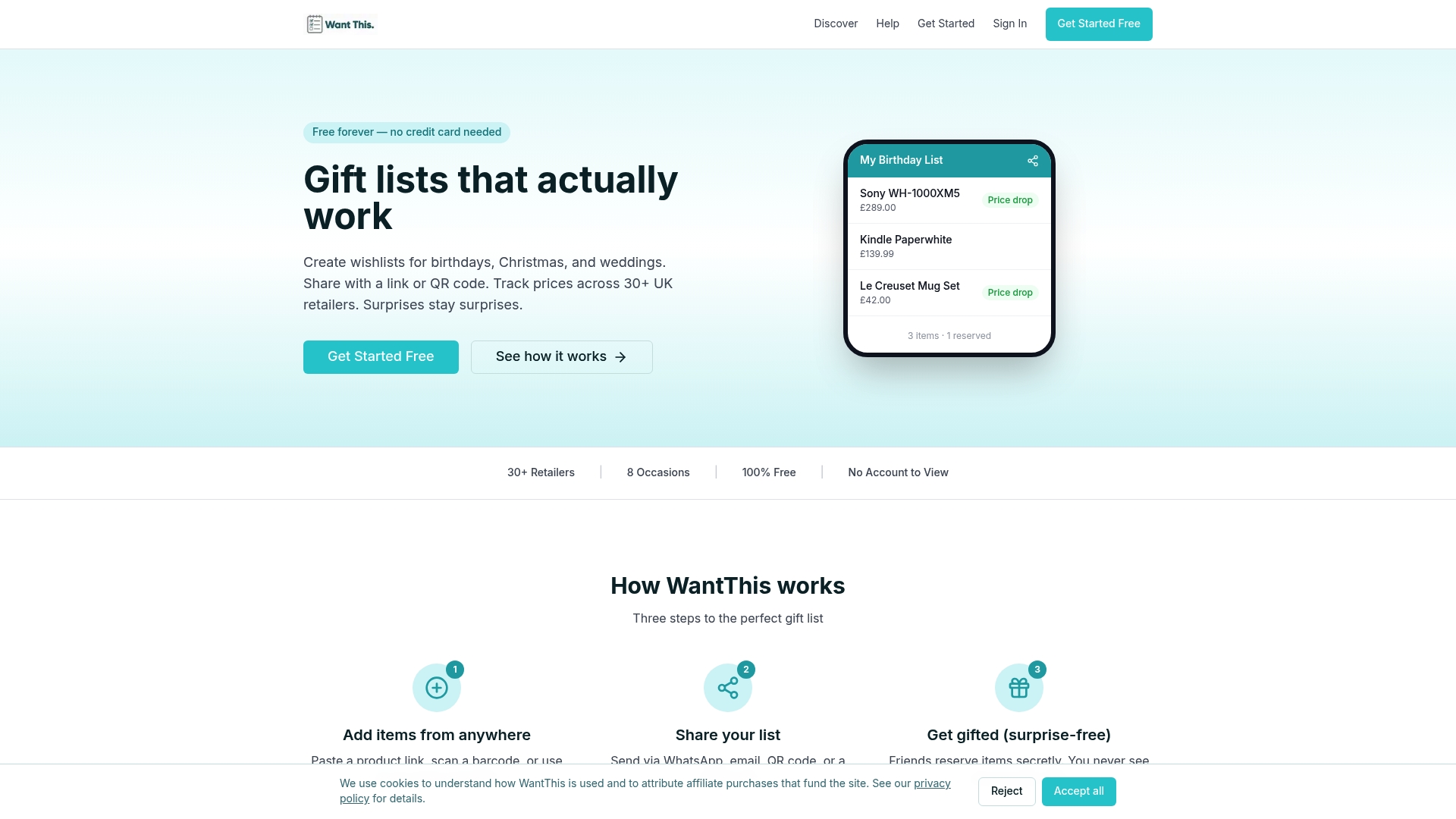
The sharing and reservation features let friends and family privately mark items as bought, so surprises stay intact and no one doubles up. Price tracking alerts you when a saved item drops in price, which is handy for deciding whether to buy now or wait. WantThis also runs a Secret Santa organiser with an automatic draw, which removes the coordination headache from group exchanges entirely. Create your free gift list and start planning without the stress.
FAQ
How do gift lists reduce stress for the gift giver?
Gift lists replace open-ended guessing with a specific set of recipient-approved options. That clarity eliminates decision fatigue and removes the fear of buying something unwanted.
Do gift lists help with holiday financial stress?
Yes. Gift lists align purchases with real budgets and reduce post-holiday return rates, which run 25%–35% higher after major gift-giving holidays. Including items at multiple price points helps every buyer stay within their means.
When should I share my gift list?
Share your list at least four weeks before the occasion. Early sharing gives buyers time to plan, reduces last-minute impulse purchases, and cuts express shipping costs.
Are gift lists only useful for Christmas?
Gift lists work for any occasion, including birthdays, weddings, baby showers, and Secret Santa exchanges. Organising a separate list for each event keeps planning clear and prevents confusion when multiple occasions overlap.
Do gift lists take the personal element out of gift-giving?
Gift lists remove anxiety, not thoughtfulness. Mental health experts at Gate Healing note that adjusting expectations reduces holiday stress, and a list does exactly that. Buyers still choose which item to purchase, and the recipient still receives something they genuinely want.