
Why Use Wishlists for Weddings: A Couples’ Guide

A wedding wishlist is a curated, shareable gift list that guides guests to items the couple truly wants while preventing duplicate gifts and reducing gifting confusion. Known formally as a wedding registry, the wishlist format has evolved well beyond a single department store list. Platforms like Zola, MyRegistry, and Wantthis now let couples pull items from any retailer into one centralized list, complete with real-time purchase tracking. The core reason why use wishlists weddings comes down to one simple fact: they make the entire gifting process better for everyone involved. Guests shop with confidence. Couples receive gifts they actually want.
Why do wedding wishlists prevent duplicate gifts?
Duplicate gifts are the most common complaint in wedding gifting, and a properly set up registry solves this problem at the structural level. Modern registry systems update in real time to mark items as purchased or reserved, so the next guest who views the list sees that item is already claimed. This removes the guesswork entirely.
The mechanism works in two stages. First, when a guest adds an item to their cart, the platform places a reservation on it. Second, once the purchase is confirmed, the item is marked as bought and removed from the available pool. Purchase claiming during checkout ensures gift uniqueness even when two guests shop the list on the same day.
- Real-time status updates show guests which items are still available at a glance.
- Reservation locks prevent two guests from buying the same item simultaneously.
- Purchased flags remove items from the active list after checkout is complete.
- Private visibility keeps the surprise intact while still coordinating purchases behind the scenes.
The practical result is fewer awkward returns, less wasted money, and a smoother post-wedding experience for the couple. Centralized lists with purchase tracking reduce duplicate gifts effectively. That reduction matters because returning duplicate gifts costs time and can create friction with guests who put genuine thought into their purchase.
Pro Tip: If your platform offers a “reserve” feature separate from “purchased,” encourage guests to use it as soon as they decide on a gift. This prevents collisions even when guests shop weeks before the wedding.

Is one universal wishlist better than multiple store registries?
One universal wishlist link outperforms multiple store registries on every practical measure. Multiple store registries force guests to navigate various links, which lowers purchase rates and increases off-list buying. A single URL removes that friction entirely.
| Feature | Multiple store registries | Universal wishlist |
|---|---|---|
| Number of links shared | One per store (often 3+) | One link total |
| Guest navigation effort | High — must check each registry | Low — one page, all gifts |
| Store selection | Limited to partner retailers | Any online retailer |
| Duplicate prevention | Varies by store | Centralized and consistent |
| Price range coverage | Depends on store inventory | Unlimited, across all budgets |
| Cash fund support | Rarely included | Supported on most platforms |
The inventory argument is the one most couples miss. Universal registries eliminate inventory restrictions of single-store registries, which is a structural advantage, not just a convenience. A store registry is limited to what that retailer stocks. A universal wishlist lets you add a Le Creuset Dutch oven from one site, a Patagonia jacket from another, and a Dyson vacuum from a third, all in one place.
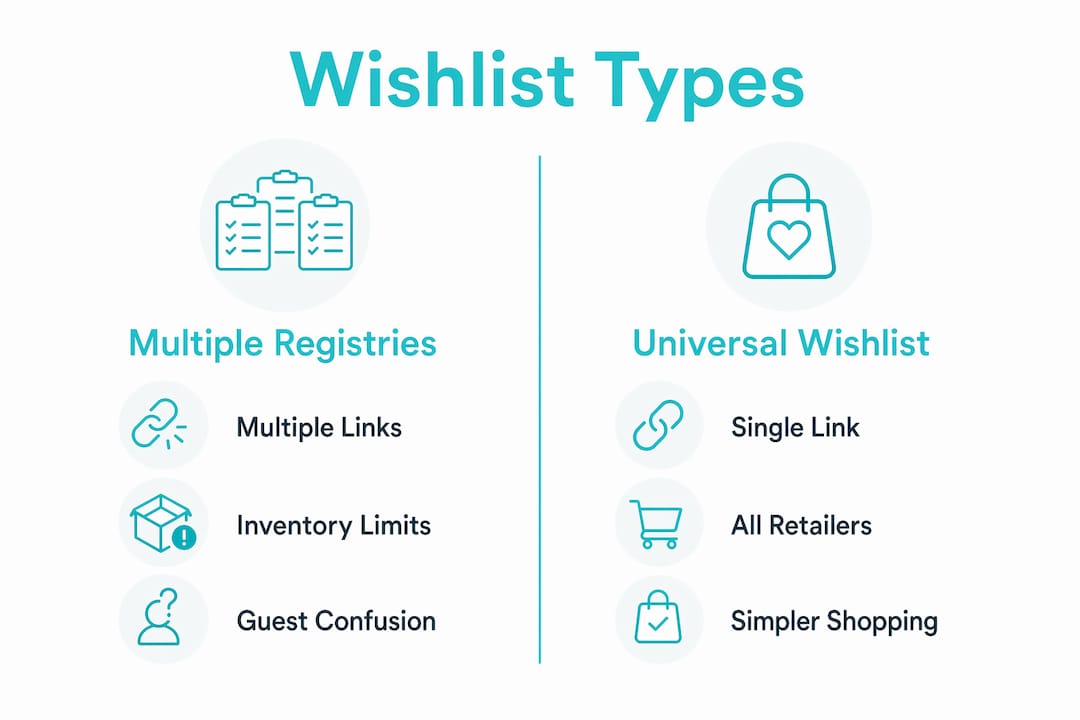
Guests also spend less time deciding when everything is in one place. They can filter by price, see what is still available, and complete their purchase without switching tabs or re-entering shipping details on multiple sites. That ease directly increases the chance they buy from your list rather than picking something off-list.
What are the key benefits of a wedding wishlist beyond gifts?
A wedding wishlist does more than organize physical gifts. The benefits of wedding wishlists extend into how couples experience the entire gifting process before and after the wedding.
-
Personalized gift selection. Couples receive items that fit their actual lifestyle, home, and taste. A couple moving into a small apartment can prioritize kitchen tools and bedding over bulky furniture. Guests stop guessing and start buying things the couple will genuinely use.
-
Cash funds and experience gifts. Platforms like Zola and Wantthis enable couples to include experiences and cash funds alongside physical gifts. A honeymoon fund, a cooking class, or a contribution toward a new sofa all become giftable options. This matters for couples who already own household basics or who prefer experiences over things.
-
Group gifting. Guests can pool contributions toward a single high-value item. A KitchenAid stand mixer or a weekend getaway becomes achievable when five guests each contribute a portion. Without a wishlist platform, coordinating group gifts requires a separate organizer and manual tracking.
-
Flexible shipping and timing. Most registry platforms let guests ship directly to the couple’s address or hold items for later pickup. This removes the logistical burden of transporting gifts from a venue and reduces the risk of items being lost or damaged.
-
Thank-you note tracking. A wishlist with purchase records gives couples a clear log of who bought what. Writing personalized thank-you notes becomes straightforward when the list shows each guest’s contribution.
Pro Tip: Add a mix of physical gifts, a cash fund, and at least one experience option. Guests have different comfort levels with cash gifting, so offering all three types increases the chance every guest finds something that feels right for them.
How do you create and manage an effective wedding wishlist?
Setting up a wedding wishlist well takes about an hour of focused effort, but the timing and structure matter as much as the platform you choose.
When to start. Establishing the registry early gives guests and shower hosts ample time to shop. The standard recommendation is 3–4 months before the wedding, ideally shortly after the engagement announcement. Starting early also means the list is ready when bridal shower invitations go out, which is typically 6–8 weeks before the shower.
How many items to add. Registering roughly twice the number of guests in item options maintains availability across budgets and reduces off-list buying. For a 100-person wedding, that means 200 or more items across all price points. This prevents the list from running empty before the wedding date.
Here is a practical checklist for building your list:
- Cover all price points. Include gifts under $30, between $30 and $100, and above $100. Guests have different budgets, and a list with only expensive items pushes lower-budget guests off-list.
- Choose a platform with universal access. Pick a platform that lets you add items from any retailer, not just one store. Wantthis, for example, lets couples paste any product link and automatically pulls in the title, image, and current price.
- Enable price tracking. Some platforms alert you when a saved item drops in price. This helps guests time their purchases and helps couples update the list if an item goes on sale.
- Share one clear link. Post the wishlist link on your wedding website, include it in digital invitations, and share it directly with close family who will field questions from other guests.
- Update the list regularly. Remove items you no longer want, add new ones as you think of them, and check that high-priority items are still in stock as the wedding approaches.
The sharing features on platforms like Wantthis make distributing a single link straightforward. Guests receive one URL, see the full list, and can reserve or mark items as bought without the couple seeing who bought what before the wedding.
Key Takeaways
A wedding wishlist with real-time purchase tracking is the most effective tool for preventing duplicate gifts and ensuring couples receive items they actually want.
| Point | Details |
|---|---|
| Duplicate prevention | Real-time reservation and purchase flags stop two guests from buying the same item. |
| Universal list advantage | One link beats multiple store registries by reducing guest navigation effort and expanding gift options. |
| Start early | Set up your wishlist 3–4 months before the wedding so shower hosts and guests have time to shop. |
| Item variety matters | Register for roughly twice your guest count across multiple price points to keep the list stocked. |
| Beyond physical gifts | Cash funds, experience gifts, and group gifting options make wishlists work for every guest’s budget. |
The case for wishlists is stronger than most couples realize
Couples often treat the registry as an afterthought, something to set up quickly and forget. That is a mistake. A well-built wishlist is one of the few parts of wedding planning that directly improves the experience for your guests, not just for you.
The emotional side of gift-giving matters too. A well-designed registry maintains the joy of gift-giving while managing logistics like duplicate prevention and shipping tracking. Guests still feel the pleasure of choosing something meaningful. They just do it with better information.
What I have seen consistently is that couples who build a thoughtful, varied list with items across every price point receive fewer off-list gifts and write fewer awkward thank-you notes. The guests who go off-list usually do so because the list felt too thin, too expensive, or too hard to navigate. Those are all solvable problems.
Universal registries are not just a trend. They solve a structural problem that store registries never could. A single-store registry caps your options at whatever that retailer stocks. A universal wishlist is unlimited. That difference compounds when you have guests with wildly different budgets and shopping habits.
My honest advice: spend the time to build the list properly. Add more items than you think you need. Include a cash fund option even if it feels uncomfortable. Share one link everywhere. The couples who do this spend less time managing gift logistics after the wedding and more time actually enjoying being married.
— Stuart
Start your wedding wishlist with Wantthis
Wantthis offers a free wedding gift list that works with any online retailer. Paste a product link from any shop and Wantthis automatically pulls in the title, image, and current price. Guests can privately reserve or mark items as bought, so surprises stay intact and duplicates stay off the table.
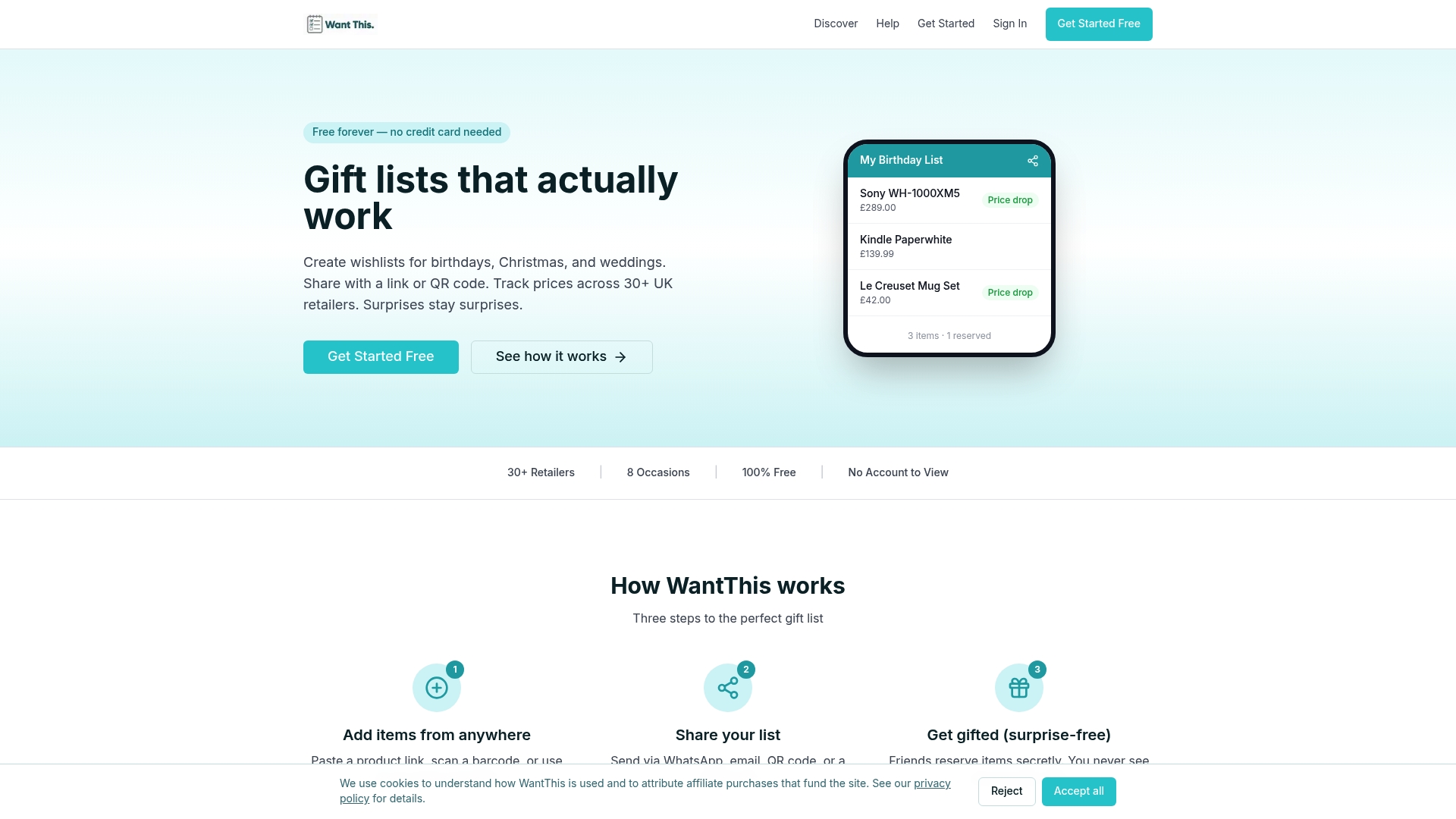
Wantthis also tracks price drops on saved items, so guests can time their purchases and couples can keep the list current. The platform is free to use, with browser extensions and iOS and Android apps for adding items while you shop. Share your list with one link via your wedding website or invitations and let Wantthis handle the coordination.
FAQ
What is a wedding wishlist used for?
A wedding wishlist is a curated, shareable list of gifts the couple wants, used to guide guests toward purchases the couple will actually use. It also prevents duplicate gifts through real-time purchase tracking.
When should couples create a wedding wishlist?
Couples should create their wishlist 3–4 months before the wedding. Starting early gives guests and bridal shower hosts enough time to shop before the event.
How does a wedding wishlist prevent duplicate gifts?
Platforms mark items as reserved or purchased in real time. Once a guest claims an item, it is flagged so no other guest can buy the same thing.
Is a universal wishlist better than a store registry?
A universal wishlist outperforms a store registry because it consolidates all gifts in one link, covers any retailer, and removes the navigation friction that causes guests to buy off-list.
How many items should a wedding wishlist include?
Couples should register for roughly twice their guest count in items, spread across multiple price points. This keeps the list stocked through the wedding date and gives every guest a suitable option.