
Why Price Drops Matter for Gifting: A 2026 Guide

Price drops in gifting are defined as temporary or permanent reductions in a product’s retail price that directly influence when and what consumers choose to buy as gifts. These savings signals shape purchasing decisions by creating urgency and boosting perceived value, two forces that drive purchase intention more than the actual size of the discount. Understanding why price drops matter in gifting helps you build smarter gift lists, time purchases better, and give gifts that land well with the people who receive them. The gap between what buyers think makes a great gift and what recipients actually appreciate is wider than most people expect.
Why do perceived savings and urgency drive gift purchases during price drops?
Perceived savings and urgency are the primary forces behind gift purchases during sales events, not the raw discount amount. A 2026 study with 300 respondents confirmed that urgency and perceived savings outweigh actual discount size in driving purchase intention. That finding matters because it means a well-timed “limited stock” label or a countdown timer can push you to buy faster than a genuinely deep price cut.

Sales events like Black Friday, Cyber Monday, and post-Christmas clearance trigger predictable spikes in gift buying. Shoppers feel the pull of scarcity, the fear of missing a deal, and the satisfaction of getting something at a lower price. These feelings are real and powerful, but they can also lead to purchases that feel rushed or poorly matched to the recipient.
Retailers know this. They use flash sales, limited-time offers, and “only 3 left” messaging to compress your decision window. Clearance cycles vary by retailer and product category, and the deepest discounts often come with the most limited selection. That trade-off is worth knowing before you commit to a gift just because the price dropped.
- Urgency signals (countdown timers, low-stock warnings) accelerate decisions more than discount size alone.
- Perceived savings feel more valuable when framed as a percentage off rather than a cash amount.
- Flash sales create artificial scarcity that can push impulsive, poorly matched gift choices.
- Seasonal sales events like Black Friday produce the biggest gift-buying spikes of the year.
- Savvy shoppers distinguish genuine discounts from promotional tactics designed to create artificial urgency.
Pro Tip: Set a target price for each gift before a sale begins. That number acts as your anchor, so you buy when the deal is real rather than when the marketing feels urgent.
Why recipients value thoughtfulness over price
Gift givers consistently overvalue price, assuming that spending more signals more care. Recipients, however, prioritise thoughtfulness and personalisation over cost. Research from the NIH and the Journal of Consumer Research shows that givers overvalue price while receivers respond more deeply to gifts that reflect personal knowledge of their tastes and interests.
This mismatch has a name in behavioural economics: the “giver-receiver empathy gap.” Givers focus on the moment of giving, where a high price tag feels impressive. Receivers focus on the ongoing relationship, where a personalised gift signals that the giver paid attention.
“Personalised gifts create what researchers call ‘vicarious pride’ in the recipient. The emotional bond formed by a gift that reflects genuine knowledge of the person outlasts the novelty of any expensive item.”
The practical implication is direct. A £30 book chosen because you know the recipient loves a specific author will land better than a £100 generic gadget bought on impulse during a flash sale. Expensive gifts can even feel transactional, creating a sense of obligation rather than warmth.
- Personalised gifts generate stronger emotional responses than high-price generic items.
- Expensive gifts can feel pressuring or impersonal when they lack a personal connection.
- Lower-cost, thoughtful gifts consistently score higher in recipient satisfaction studies.
- Price drops on the right item combine both advantages: a meaningful gift at a better price.
The last point is the key insight. Price drops matter most when they apply to an item you already identified as the right gift. Chasing a discount on a random product and then justifying it as a gift reverses the logic entirely.
How do price drops affect building and managing gift lists?
Price tracking is the most practical tool for gift shoppers who want to buy the right item at the right time. Timing purchases with price drops is crucial because small discounts can be wiped out entirely by shipping costs or urgency-driven delivery fees. Knowing when a price genuinely drops, rather than reacting to marketing, requires a system.
Here is a practical framework for managing a gift list around price drops:
- Build your list early. Add items to a wishlist or gift list as soon as you identify them. The earlier you track a product, the more price history you accumulate.
- Set a target price for each item. Successful gift buyers maintain a target price per gift to avoid impulse purchases triggered by flash sales.
- Factor in shipping costs. A 10% discount means nothing if an £8 delivery fee erases the saving. 93% of consumers add items to their cart to qualify for free shipping thresholds, which shows how much shipping costs shape buying decisions.
- Watch category-specific cycles. Discount cycles vary by product category. Electronics tend to drop around Black Friday; toys often clear after Christmas; fashion hits its lowest prices at end-of-season sales.
- Avoid impulse buys on flash sales. Impulse buying during flash sales frequently leads to poor gift choices and lower recipient satisfaction.
Pro Tip: Use a price tracking tool that alerts you when a saved item hits your target price. That way you act on data, not on a retailer’s countdown clock.
| Factor | Impact on gift purchase |
|---|---|
| Shipping cost | Can negate small discounts entirely |
| Category sale cycle | Determines when deepest discounts occur |
| Target price discipline | Prevents impulse buys and poor gift matches |
| Price history visibility | Confirms whether a “sale” is a genuine drop |
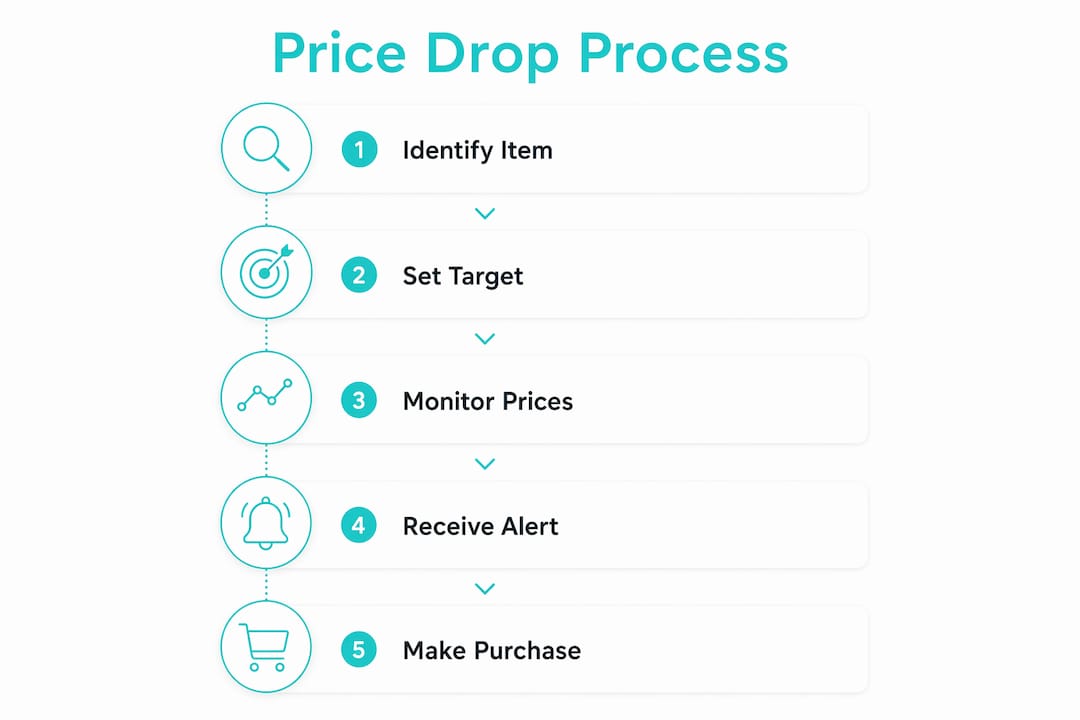
WantThis lets you save items from any UK retailer and track price changes automatically, so you get notified when a gift on your list hits a lower price without having to check manually.
What are the benefits of gift-with-purchase promotions vs. direct discounts?
Gift-with-purchase promotions preserve a product’s reference price while adding perceived value, making them a different tool from a straight discount. Direct discounts reduce the price you pay. Gift-with-purchase deals keep the price the same but add a bonus item, which preserves brand price integrity while creating a stronger sense of value for the buyer.
Behavioural economics explains why “free” feels so attractive. A free item attached to a purchase triggers a stronger positive response than an equivalent cash saving. That is why a “free gift with orders over £50” often converts better than “10% off orders over £50,” even when the maths favours the discount.
For gift shoppers, this distinction matters in two ways. First, a gift-with-purchase deal can make a planned gift purchase feel even more rewarding without requiring you to compromise on the item itself. Second, gift-with-purchase promotions can enhance loyalty and perceived value without eroding the reference price, which means the item retains its perceived worth in the recipient’s eyes.
| Promotion type | Price impact | Perceived value | Best for |
|---|---|---|---|
| Direct discount | Lowers price paid | Moderate | Budget-conscious buyers |
| Gift-with-purchase | Keeps price stable | High | Buyers prioritising perceived quality |
| Free shipping threshold | Reduces total cost | Moderate to high | Buyers adding multiple items |
The practical takeaway is to evaluate gift-with-purchase deals on the bonus item’s relevance. A free item that complements the gift adds genuine value. A free item you will never use is just noise.
Key Takeaways
Price drops matter most in gifting when they apply to items already chosen for the right reasons, not when they drive the choice itself.
| Point | Details |
|---|---|
| Urgency drives purchases more than discount size | Perceived savings and scarcity signals push buying decisions faster than actual price reductions. |
| Recipients value thoughtfulness over price | Personalised, well-chosen gifts consistently outperform expensive generic ones in recipient satisfaction. |
| Target prices prevent impulse buys | Setting a price goal per gift before sales begin keeps purchases disciplined and meaningful. |
| Shipping costs erode small discounts | Factor delivery fees into any deal calculation to confirm the saving is real. |
| Gift-with-purchase beats direct discounts on perceived value | Free bonus items trigger stronger positive responses than equivalent cash savings. |
Chasing deals vs. giving well
The same pattern repeats every gifting season. Buyers get excited about a sale, pivot away from the gift they originally planned, and end up with something cheaper but less personal. The recipient smiles politely. The giver feels vaguely unsatisfied. Neither outcome is what the sale was supposed to produce.
The research backs this up clearly. Price cuts tend to stick in consumer memory, but the emotional impact of a poorly chosen gift sticks longer. A discount on the wrong item is not a saving. It is a misdirected spend.
What actually works is building your gift list before the sales start. You identify the right item first, then you wait for the price to move. That sequence keeps the gift meaningful and lets the discount do its proper job: reducing what you pay for something you already wanted to give. WantThis is built exactly for that sequence. You save the item, set your expectations, and get alerted when the price drops.
It is also worth pushing back on the assumption that expensive gifts signal effort. They often signal the opposite: that you ran out of time and threw money at the problem. A £25 item chosen because you remembered a conversation from six months ago says far more than a £150 gadget bought in a Black Friday panic.
Price drops are a genuine tool for thoughtful gifting. They are not a substitute for thought.
WantThis makes price tracking part of your gift planning
Tracking price drops manually across multiple retailers is time-consuming and easy to get wrong. WantThis solves that by pulling the title, image, and current price from any UK retailer the moment you paste a product link into your gift list.
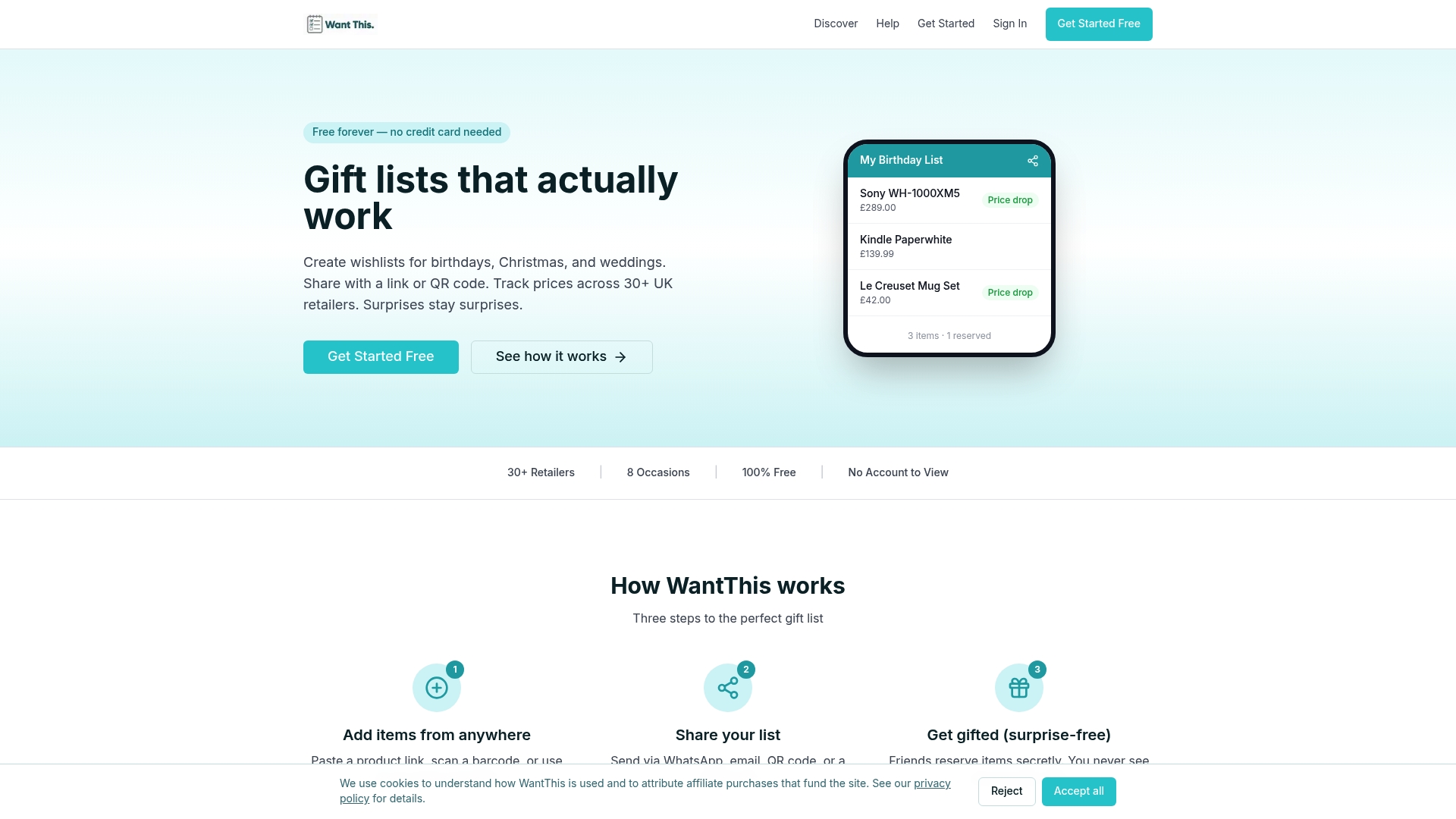
From there, WantThis monitors the price and alerts you when it drops. You can organise lists by occasion, whether that is a birthday, Christmas, wedding, or baby shower, and share your wishlist with friends and family so they can reserve items privately without spoiling the surprise. The result is a gift list that works with the sales calendar rather than against it. Sign up free at WantThis and start building your list today.
FAQ
Why do price drops matter in gifting decisions?
Price drops matter because they influence both timing and perceived value in gift purchases. Research shows that urgency and perceived savings drive purchase intention more than the actual discount size, making well-timed price reductions a powerful trigger for gift buyers.
Do recipients care how much a gift costs?
Recipients consistently prioritise thoughtfulness and personalisation over price. Studies from the NIH and the Journal of Consumer Research confirm that givers overvalue price while receivers respond more positively to gifts that reflect personal knowledge and effort.
How can I avoid impulse buying during gift sales?
Set a target price for each gift before any sale begins and use a price tracking tool to alert you when that price is reached. Expert guidance confirms that planned purchasing discipline produces better gift choices and higher recipient satisfaction than reacting to flash sales.
Are gift-with-purchase deals better than direct discounts?
Gift-with-purchase promotions preserve the product’s reference price while adding perceived value, which behavioural economics shows triggers a stronger positive response than an equivalent cash discount. They are particularly useful when the bonus item complements the gift itself.
How do shipping costs affect gift price drops?
Shipping costs can negate small discounts entirely, making the net saving zero or even negative. Factoring delivery fees into any deal calculation is a standard part of effective gift price drop strategy, and free shipping thresholds influence buying behaviour significantly.