
4 ways to share a private wishlist in the UK and keep gifts secret

Yes, you can share a wishlist privately. Invite-only groups, secret links, email invites and reservation features all let you choose exactly who sees your list and what they can do with it. Before sending anything, check your visibility settings and switch on mark-as-bought so gifts don’t get duplicated. Platforms with built-in privacy controls make this straightforward for UK gift-buyers.
TL;DR:
- Using invite-only groups or secret share links with expiration dates ensures maximum control over who sees and accesses your wishlist.
- Reserving items can hide buyer identities or remove them from view to prevent duplicate purchases and preserve surprise elements.
- Always verify your list’s privacy settings are set to private or invite-only, and test reservations before sharing publicly.
- Many platforms offer cross-retailer item saving, price tracking, and occasion-specific grouping to streamline gift management and surprise preservation.
- Regularly revoke shared links and review group memberships and reservation statuses to prevent unintended disclosures or duplicates.
Table of Contents
- How do I share a wishlist privately?
- Privacy controls to check and what they actually do
- Features to look for in a private wishlist tool
- Step by step: create and share a private wishlist
- Why Wantthis fits this checklist
- Common pitfalls with private wishlist sharing
- Ready to build your first private list?
- Sources
- FAQ
How do I share a wishlist privately?
Most gift-list platforms give you four ways to control who sees a list: invite-only groups, secret share links, direct email invites, and reservation tools that sit on top of whichever method you choose. Picking the right one depends on who you’re sharing with and how much control you need over the guest list.
Invite-only groups work best for recurring situations: a family that swaps gift lists every Christmas, or a group of friends organising several birthdays a year. You add specific people once, and they stay in the group until you remove them.
Secret share links are the quickest option. You generate a link, send it wherever suits (a text message, a family group chat), and anyone with the link can view the list. The catch is that a link is easy to forward on without you knowing, so look for a platform that lets you set an expiry date or require a password if you’re sharing something sensitive, like a baby shower list with a home address attached.
Email invites or direct messages give you more control than a link because you’re sending access to a named person rather than anyone who happens to receive the URL. This also creates a rough paper trail, useful if you ever need to work out who’s seen a list.
Reservations, sometimes called mark-as-bought, sit underneath all three methods. When someone reserves an item, it either disappears from the list for other viewers or gets flagged as claimed, depending on the platform. This industry-standard approach to gift lists prevents the classic problem of three people buying the same toy.
Before you send anything, run through this:
- Confirm the list’s visibility is set to private or invite-only, not public.
- Check whether purchaser names show to other viewers.
- Decide whether a link needs an expiry date.
- Test reservation works by marking a test item as bought.
- Send the invite or link only to the people who need it.
Privacy controls to check and what they actually do
Visibility settings usually come in three flavours: public, friends only, and private (invite-only). Public means anyone with the link, or in some cases anyone browsing the platform, can see item names, prices and sometimes your full name. Private restricts the list to people you’ve specifically added, which matters more than it sounds when a list includes home addresses for shipping or personal notes about sizing.
Reservation behaviour varies more than most people expect. Some platforms remove a reserved item from view entirely, so nobody else even knows it existed. Others simply flag it as claimed while still showing it. The second approach can accidentally reveal who’s buying what if purchaser names are visible by default, so check whether you can keep the buyer anonymous.
There’s also the question of what happens to your data once a retailer link is involved. When a wishlist pulls in prices from an external shop, some information, the item, sometimes your click, passes through to that retailer. The ICO recommends a “layered approach” to privacy information precisely so people can find out who their data goes to without wading through a full legal document. A platform with a clear, layered privacy notice is doing you a favour here, not just ticking a compliance box.
If something feels off after sharing, mitigation is usually quick:
- Revoke the link and generate a new one.
- Switch visibility from public to private.
- Remove or hide purchaser names on past reservations.
- Re-check who’s still in an invite-only group and remove anyone who shouldn’t be.
Pro Tip: Treat a shared wishlist link the same way you’d treat a shared document link. If you wouldn’t post it in a public group chat, don’t send it somewhere it could easily end up there.
Features to look for in a private wishlist tool
Not every gift-list app treats privacy the same way, so it helps to know what to check before you commit to one for a wedding, baby shower or Christmas list.
- Reservation with an anonymous option. You want mark-as-bought that doesn’t automatically reveal who bought what, so surprises survive.
- Invite-only groups with per-item visibility. Being able to hide specific items from specific people matters more than most tools admit, particularly for joint lists.
- Universal saving from any retailer. A browser extension and mobile apps mean you can add items while actually shopping, rather than hunting down links later. Extensions for this kind of tool are typically distributed through official browser stores, so it’s worth checking the listing and reviews before installing.
- Price tracking and drop alerts. Handy for deciding whether to buy now or wait, and useful for gift-givers working to a budget.
- Occasion-based organisation and Secret Santa support. Separate lists for birthdays, Christmas and weddings stop everything blurring into one long scroll.
- A clear privacy policy with affiliate disclosures stated upfront. If a platform earns commission through retailer links, it should say so plainly rather than burying it.
Gift-list platforms across the market commonly offer some version of invite-only groups, secret links and reservations, but the depth of control varies a lot between them. The features above are the ones actually worth comparing rather than taking on faith.
Step by step: create and share a private wishlist
Building a surprise-proof list takes a few minutes if you follow a consistent order.
- Create and name the list for its occasion (Birthday 2026, Wedding Registry, Secret Santa) so it’s obvious to everyone what it’s for.
- Add items by pasting product links, using a browser extension, or adding them on the go through a mobile app while you’re actually browsing shops.
- Set the list to private or invite-only, then add specific people by email, or generate a single-use link for a group chat.
- Enable reservations and decide whether purchaser names show. Test the flow yourself by reserving a spare item before sending invites out properly.
- Check what’s visible to viewers by opening the list from a different device or browser, ideally logged out, which is the fastest way to spot something you didn’t intend to share.
If a link has expired or a price isn’t displaying, it’s usually because the retailer page changed or the link was set with a time limit. Regenerating the link or re-adding the item from the original product page normally fixes both.
Pro Tip: Do the “second device” test every single time, not just once. Settings that were private last month can quietly slip back to a default after an app update.

Why Wantthis fits this checklist
Wantthis lets you save items from any UK retailer by pasting a link, then organise them by occasion, track price drops, and share the finished list privately for reservation. Purchases can be marked as bought without revealing who bought what, so surprises stay intact. A Secret Santa organiser handles the draw automatically, and a browser extension plus iOS and Android apps mean you can add items while you’re actually shopping. If you’re setting up a list for the first time, the sharing help page walks through the private sharing flow step by step.

Common pitfalls with private wishlist sharing
The mistake I see most often is sending a group-wide link into a busy family chat, then forgetting who’s actually seen it. That link outlives the occasion, and it can resurface for the wrong birthday next year. Reservations get forgotten too, someone marks an item bought in their head but not on the list, and a duplicate lands anyway.
Keep the occasion and deadline visible on the list itself, so nobody’s guessing whether it’s still live. And always test your own share flow before you announce it to a group.
— Stuart
Ready to build your first private list?
This type of platform gives you what a spreadsheet or a scattered group chat never quite manages: one private list, reservations that keep surprises intact, and price tracking that tells you when to buy. Rather than juggling links across multiple shops, you paste them into one place and everyone you invite sees exactly the same tidy list, nothing more.
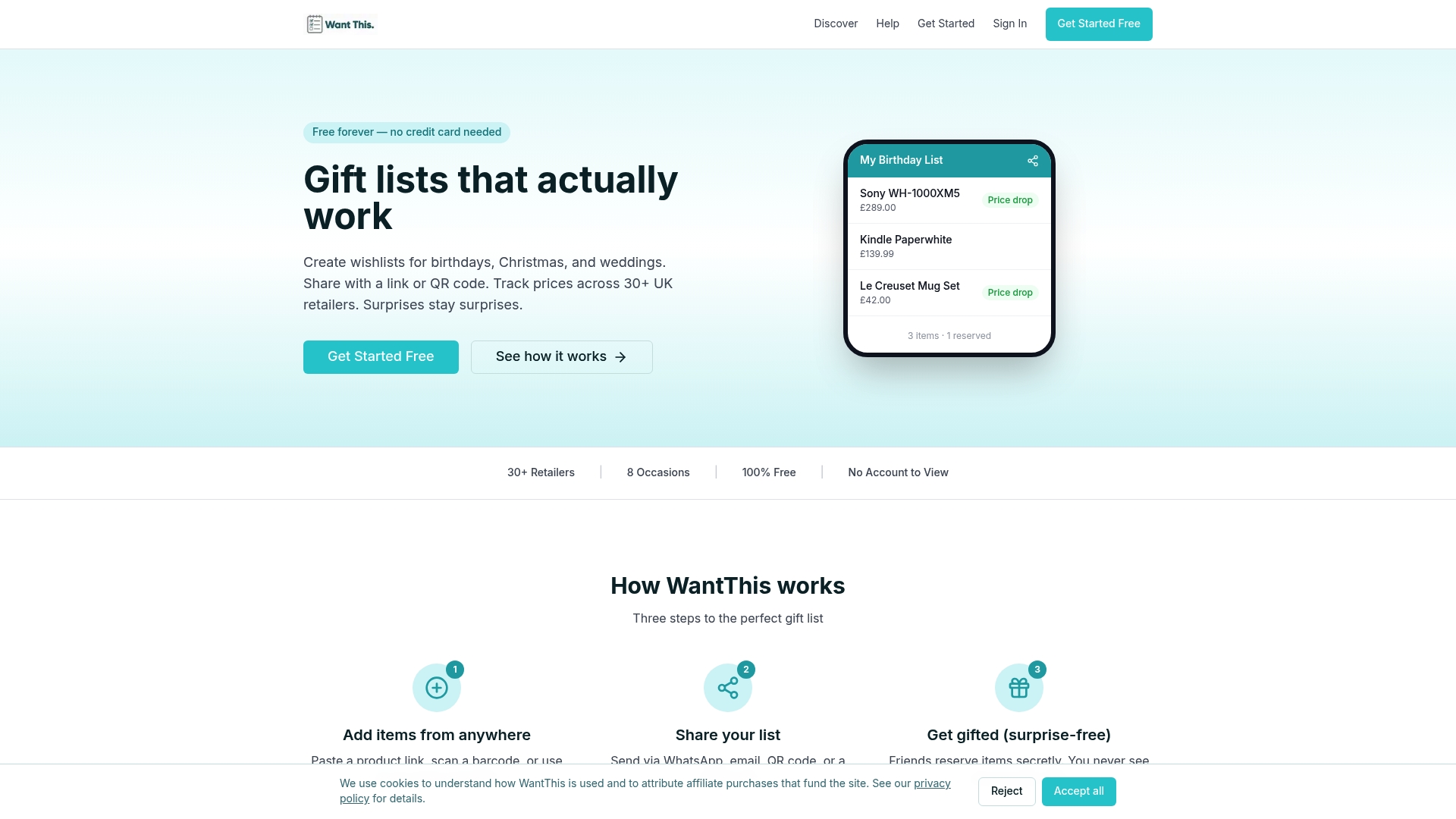
Three sensible next steps: create a free wishlist and add a few items to see how the layout works, install the browser extension so you can save things mid-scroll, or read the sharing feature page if you want to understand the reservation and privacy options before inviting anyone. If you’re stuck for what to add in the first place, the gift ideas by category page is worth a browse, and gift sets like this pregnancy connection set show the kind of thoughtful item people tend to save for baby showers. Whichever you start with, the list stays free to build and share.
Sources
- ICO guidance: The right to be informed – methods for providing privacy information
- Add to Giftster (Firefox extension) listing
FAQ
Can you share a private Amazon wish list?
Yes, Amazon lets you set a wish list to “Shared” or “Private” and generate a link for people you choose, but purchaser names can still show depending on settings. Independent tools such as Wantthis extend this idea across every UK retailer, not just one, with anonymous reservations built in.
How do I make my wish list private?
Look for a visibility setting, usually labelled public, friends only, or private, and switch it to private or invite-only before sharing any link. Then double check reservation settings so purchaser identities stay hidden and surprises aren’t spoiled.
Can family see what I put on a shared gift list?
Only if you’ve added them to the list or shared a link with them directly. Anyone outside your invited group or without the link has no visibility, provided the list isn’t set to public.
How do I share my wishlist with someone?
Send them a secret link, add them to an invite-only group, or invite them by email, then confirm reservations are switched on so gifts don’t get duplicated. Testing the share flow from a second device before sending it round a group catches most privacy mistakes early.
Does Wantthis cost anything to use?
Wantthis is free to use for creating, organising and sharing wishlists. Current details on any additional features are listed on Wantthis.