
Make Gifts Get Read: Book Gift Ideas for UK Readers with Anchor Bundles

The safest bet for any book lover is a short, high-impact novel, a durable bookmark, a cosy ritual item like a mug or candle, and one affordable extra. Together they cover taste, comfort and budget without you needing to know their genre preferences. The categories below break down exactly which books work, how to pair them with accessories, and where to buy them.
TL;DR:
- Short, high-impact books like Claire Keegan’s works are ideal because they leave a lasting impression and are quick to read.
- Gift accessories such as durable bookmarks, reading lights, and personalized notebooks enhance daily reading without cluttering.
- Matching gifts to reading habits and preferences, like a padded sleeve for commuters or a collector’s edition for enthusiasts, increases their value.
- Affordable, thoughtful items under £20, including mugs, bookmarks, and tote bags, can be combined into curated bundles for a considered gift.
- Buying from independent shops, publisher sites, or using shared wishlists supports the trade and helps avoid duplicate or poorly chosen gifts.
Table of Contents
- Top curated picks: standout books and anchor staples
- Giftable book categories: matching genre to person
- Accessories and extras that genuinely upgrade reading time
- Match gifts to how they read: gifts by reader type
- Affordable picks: thoughtful bookish gifts under £20
- How to assemble a small curated bundle
- Where to buy: indie shops, publisher sites and ethical options
- Considerations for recipient age and preferences
- Tips for personalising book gifts
- How to choose books based on genre interests
- Trending and seasonal book gift ideas
- Author’s note: why reader habits beat genre guesses
- Keep every book-gift idea in one shared list with Wantthis
- Sources
Top curated picks: standout books and anchor staples
Booksellers gravitate towards short, high-impact reads for a reason: they suit almost anyone and can be finished in one sitting, which makes them low-risk even for a recipient whose taste you don’t fully know. Claire Keegan’s Foster and Small Things Like These come up again and again on booksellers’ own recommendation lists for exactly this reason, and both work as gifts for someone you barely know as well as someone you know intimately.
Book-prize judges lean the same way when picking Christmas presents. Booker Prize authors and judges have pointed towards short, jewel-like novels and enduring classics as the safest gifting choice, on the logic that a slim, beautifully written book leaves more impression per page than a doorstop novel that sits unread on a shelf for a year.
If you want to widen the net beyond fiction, staff picks from editorial teams tend to favour a mix of styles rather than one safe genre, which is worth copying when you’re choosing for someone whose reading habits you don’t know well. A well-reviewed staff-recommended title with broad appeal beats a niche pick you’re unsure about.
Here’s a compact shortlist that covers most recipients:
- A short literary novel (Keegan-style, under 150 pages) for anyone who says they “don’t have time to read”
- A clothbound or illustrated classic for the reader who already owns the paperback but would love a shelf-worthy version
- A well-reviewed staff pick outside their usual genre to gently expand their shelf
- A leather or fabric bookmark as an anchor accessory that never goes to waste
- A special or collector’s edition of a book they’ve already mentioned loving
Each item works because it solves a different gifting problem: the short novel removes the “I don’t have time” excuse, the special edition rewards someone who’s already a fan, and the bookmark quietly upgrades something they use every single day.
Giftable book categories: matching genre to person
Genre guessing is where most book gifts go wrong, so it helps to think in categories rather than titles.
Fiction. A slim literary novel, a witty contemporary comedy, or a well-loved modern classic tend to travel well across tastes. For someone whose reading habits you don’t know, a paperback keeps things low-pressure; for a confirmed fan, a clothbound or illustrated hardback signals more thought.
Nonfiction. Narrative nonfiction (memoir, history, food writing) reads more like fiction and suits people who claim not to read much. Reference and how-to books are riskier gifts because they depend heavily on a specific hobby or interest you need to already know about.
Poetry. A slim poetry collection is a genuinely underrated gift. It’s short enough to finish in an evening, works well as a bedside book, and rarely feels like homework the way a 400-page novel might.
Children and YA. Picture books with strong illustration work as keepsakes as much as reading material. For teens, look at whichever YA series is currently generating buzz, but check first whether they’ve already started it.
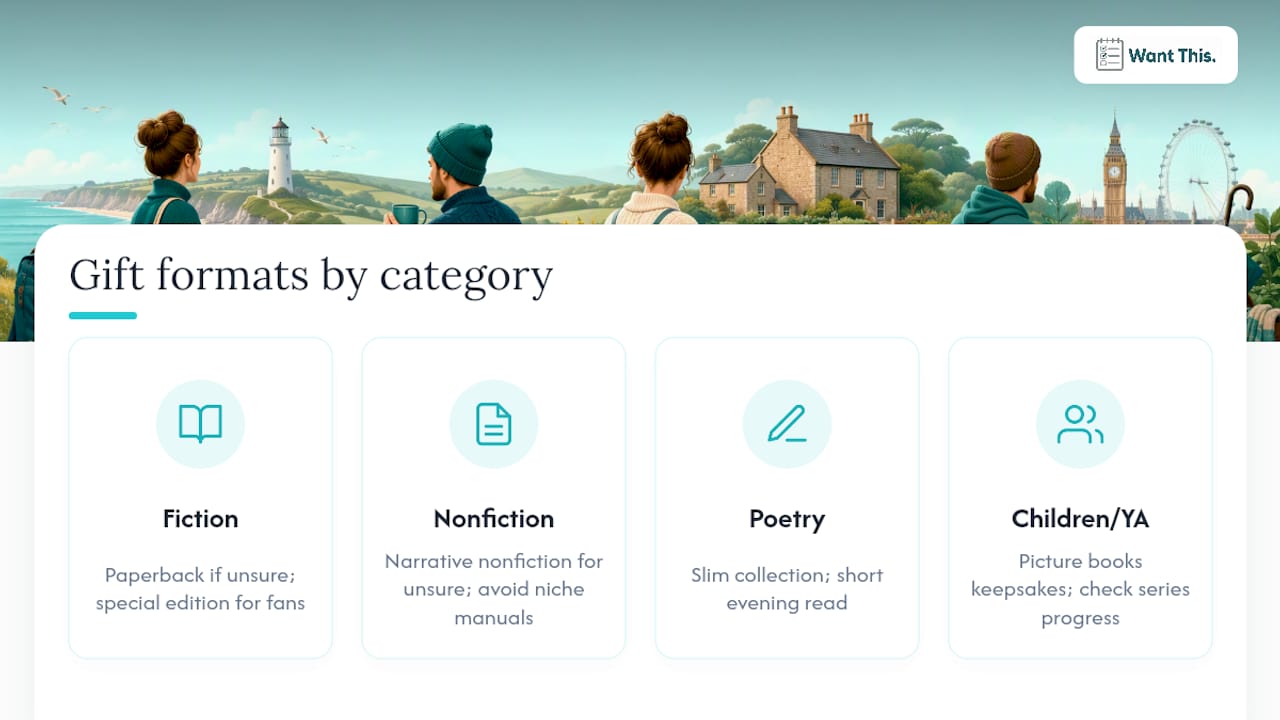
A few practical rules for edition choices: paperbacks suit casual readers and anyone who reads on the move; clothbound or illustrated editions suit collectors, coffee-table display, or anyone who’s already a confirmed fan of the author. And with series, always confirm where the recipient is in the story before buying book four. A standalone novel is the safer choice whenever you’re not certain.
Accessories and extras that genuinely upgrade reading time
Not every bookish gift needs to be a book. The right accessory can improve reading time every single day, while the wrong one becomes drawer clutter within a week.
Bookmarks split into three broad types. Leather ones last for years and feel like a proper gift; magnetic ones are practical for reading in bed or on a train because they won’t fall out; novelty bookmarks look charming in a shop but are the most likely to be binned.
Reading lights matter more than people expect. A clip-on light suits commuters and anyone reading in a shared bedroom; a freestanding book light suits someone who reads at a desk or armchair.

Mugs versus travel tumblers comes down to lifestyle rather than taste. A ceramic mug suits the reader who has a fixed evening ritual at home; a travel tumbler suits the commuter who reads with a coffee on the move.
Candles and book sleeves round out the set. A candle sets the mood for a “cosy reader” but is a poor pick for anyone who reads on public transport, where a padded book sleeve is far more useful for protecting a paperback in a bag.
- Leather or fabric bookmarks for durability
- Magnetic bookmarks for reading in bed
- Clip-on reading lights for commuters
- Ceramic mugs for home reading rituals
- Padded book sleeves for commuters and travellers
- Scented candles for a fixed reading nook
Pro Tip: Personalise the cheap item, not the expensive one. A £6 bookmark engraved with initials feels thoughtful without the commitment of a monogrammed hardback you can’t return if you’ve misjudged their taste.
Match gifts to how they read: gifts by reader type
Reading habits predict a good gift far better than genre does, because habits tell you where and how the book will actually be used.
-
The cosy homebody reads in one fixed spot, usually with tea or a blanket nearby. Give them a scented candle as the anchor and a slim poetry collection or short story anthology as the extra. Fragility isn’t a concern here since nothing leaves the house.
-
The commuter reads in short bursts on trains or buses. A padded book sleeve is the anchor, paired with a compact paperback that survives being shoved into a bag. Durability matters more than presentation.
-
The home librarian already owns hundreds of books and is harder to surprise. A clothbound or illustrated edition of something they don’t already own works as the anchor, paired with a leather bookmark. Presentation matters here more than practicality.
-
The annotator or collector underlines, dog-ears and takes notes. A pocket notebook or a set of reading-response prompt cards makes a genuinely useful complementary gift, alongside a durable paperback they won’t feel precious about marking up.
Affordable picks: thoughtful bookish gifts under £20
Under-£20 gifts don’t have to feel like an afterthought if you pair them thoughtfully. Retailers and gift platforms consistently stock affordable bookish merchandise for exactly this reason, from mugs to tote bags to pocket-sized journals.
- Literary quote mugs
- Leather or waxed-canvas bookmarks
- Pocket-sized reading journals
- Postcard sets featuring classic book covers
- Bookish socks with literary quotes or author portraits
- Small canvas tote bags for carrying library books
- Scented tea-light candles with bookish names
- Enamel pins referencing favourite authors or titles
- Miniature notebooks for jotting down “to read” lists
- A single second-hand paperback from a favourite author
The trick with anything this cheap is pairing, not spending more. A £4 bookmark and a £6 mug together read as a considered gift; either one alone reads as a stocking filler. For quality at this price point, independent bookshops and their own merchandise ranges are usually a better bet than generic novelty shops, since the design tends to be sharper and the money supports the book trade directly.
How to assemble a small curated bundle
The formula behind almost every good bookish gift is anchor plus detail: one practical, often-used item paired with one small, meaningful extra. It’s the same approach editorial gift guides use when they pair a reading light or mug with a smaller accessory to make a modest budget look considered.
- Book + matching bookmark from the same aesthetic or author
- Candle + poetry collection for a cosy-reader bundle
- Travel mug + commuter-friendly paperback
- Book sleeve + short story anthology for train journeys
- Illustrated classic + leather bookmark for a home librarian
- Notebook + prompt cards for an annotator who loves marginalia
For presentation, brown paper with a luggage tag naming the book inside instantly looks more deliberate than a gift bag. Pro Tip: Slip a handwritten note inside the front cover rather than on a card. A one-line inscription turns a shop-bought book into a keepsake, and it costs nothing.
Where to buy: indie shops, publisher sites and ethical options
Buying from an independent bookshop does two things at once: it supports a fragile part of the book trade and it usually gets you better-designed merchandise than a supermarket aisle. Wirecutter’s own gifting research points specifically to indie-store merchandise and blankets as reliably strong non-book presents, precisely because small shops tend to curate rather than mass-stock.
- Independent bookshops for tote bags, enamel pins and staff-picked titles
- Publisher or author websites for signed or special editions
- High-street retailers when you need something today, not in three days
- Gift cards or shop credit as a respectable last-minute option
Choose a publisher or author edition when the recipient already loves that specific writer; choose a high-street retailer when speed matters more than uniqueness. A gift card from a bookshop is never a cop-out. It’s arguably more useful than a book you’re not sure they’ll like.
Considerations for recipient age and preferences
Age changes what “safe” means far more than most gift guides admit. For children, picture books and sturdy board books need to survive being dropped, chewed, or read fifty times in a row, so durability matters more than literary ambition. For teens, the calculation flips: they’re more sensitive to feeling patronised by a “childish” pick, so a currently trending YA title or a beautifully designed edition of something they’ve mentioned wanting works better than anything you choose purely on your own judgement.
Adults split roughly into the categories covered earlier: casual readers, committed fans and collectors. But preference within that group matters as much as age. Someone who reads exclusively on a Kindle has little use for a hardback, however handsome, while someone who reads on a tablet might get real value from a case that doubles as a stand. A tablet case with a built-in pen tray suits a reader who annotates digitally rather than in the margins of a paperback, which is worth knowing before you default to a physical accessory that assumes they read on paper.
The general rule holds across every age band: match the gift to how they actually consume books, not to what a “typical” reader their age is assumed to want.
Tips for personalising book gifts
A handwritten inscription on the title page costs nothing and outlasts almost every other gesture you could add to a book. Keep it short. A date, a one-line reason you chose the book, and your name is enough. Over-writing an inscription can make it feel like a school yearbook entry rather than a gift.

Custom or special editions are the next step up. Some publishers offer signed copies, sprayed-edge editions, or slipcased sets, which suit a recipient who already owns the standard paperback and would appreciate an upgrade rather than a duplicate. Before buying a special edition, check whether they already own the book in any format. Gifting the same story twice, however beautifully bound the second copy is, rarely lands well.
For a lower-cost personal touch, a bookmark or notebook with initials or a short quote adds a bespoke feel without the financial commitment of a monogrammed book. It also sidesteps the biggest risk of personalising books themselves: if you guess their taste wrong, an inscribed book can’t be returned or regifted, whereas a personalised accessory is a much smaller loss.
How to choose books based on genre interests
Start with what they’ve read recently rather than what genre they claim to like, since the two often don’t match. Someone who says they read “a bit of everything” usually has a pattern if you look at their last three or four books: pace, length, and subject matter tend to repeat even when genre labels don’t.
If they’re a committed fan of one author or series, look for adjacent recommendations rather than the obvious next book in the sequence; a “readers who loved X also loved Y” pick shows more thought than book four of a series they’re already halfway through. If you genuinely don’t know their taste, default to the safest category covered earlier: short, well-reviewed literary fiction or narrative nonfiction, since both travel well regardless of usual genre preference.
One further signal worth checking: format preference. A committed genre reader who devours fantasy in paperback may have zero interest in an illustrated hardback of the same story, because the weight and size make it impractical for the marathon reading sessions they actually enjoy. Genre tells you what to buy; format and reading habits tell you how to buy it.
Trending and seasonal book gift ideas
Seasonal gift guides shift their emphasis each year. The current pattern leans towards mixing accessories with books rather than treating them as separate categories. Recent editorial roundups for book lovers pair reading lights, mugs and candles alongside book recommendations rather than listing books alone, which mirrors the anchor-plus-detail approach that works at any time of year.
For Christmas specifically, slim, jewel-like novels and gift-edition classics remain the safest seasonal pick, echoing what Booker Prize judges and authors have pointed towards when naming their own Christmas gift choices. New releases from the past twelve months make a good addition for the recipient who already reads widely and is likely to have exhausted their existing wishlist, but they’re a riskier pick for someone whose taste you’re less sure of, since a brand-new title has no track record of broad appeal the way a modern classic does.
Stocking-filler season is where under-£20 accessories earn their keep: bookish socks, mugs and pocket journals turn up in seasonal guides for a reason, and they pair naturally with a small paperback to round out a Secret Santa or stocking gift without overspending.
Author’s note: why reader habits beat genre guesses
Most bad book gifts come from guessing genre instead of watching habits. A commuter doesn’t need a hardback; a home librarian doesn’t need another paperback of something they own in three editions already. The anchor-plus-detail formula works because it forces you to think about use, not just taste. Once you’ve settled on a pairing, jotting it onto a shared list with a tool like an online wishlist stops you second-guessing yourself at the till three weeks later.
— Stuart
Keep every book-gift idea in one shared list with Wantthis
Wantthis is the practical alternative to juggling screenshots and half-remembered browser tabs when you’re planning book gifts for more than one person. Instead of trying to recall which bookmark you liked for your sister and which candle you spotted for your dad, you paste the product link from any retailer into a wishlist and it pulls in the title, image and current price automatically.
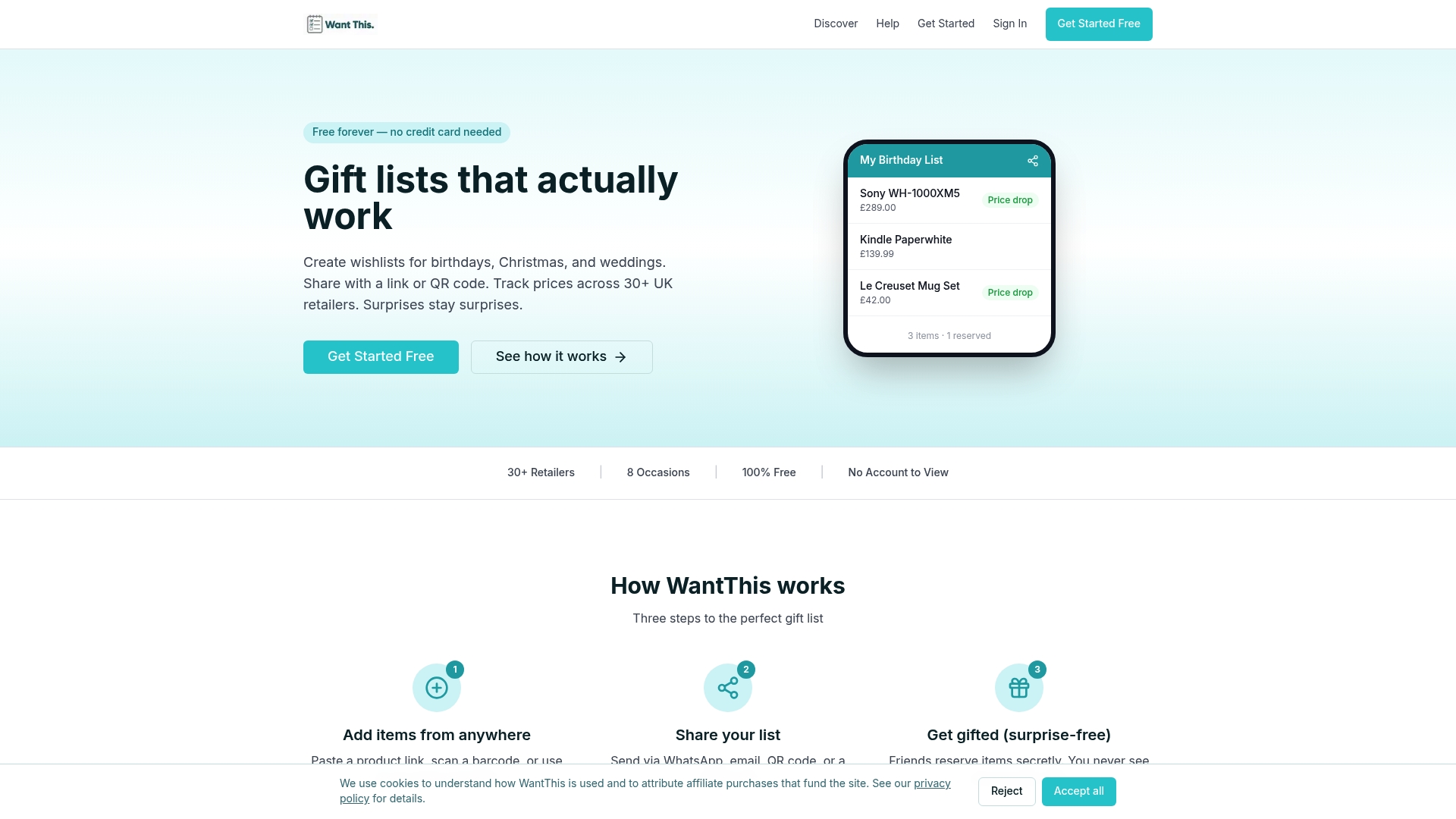
This matters most when several people are buying for the same person, or when you’re the one running a family Secret Santa. Shared lists let relatives privately reserve or mark items as bought, so nobody ends up duplicating a gift or buying the same item twice. Price tracking alerts can notify you when an item drops in price, handy for pricier gifts. And if you’re organising gifts for a whole book club or family group this year, the Secret Santa organiser runs the draw automatically, so nobody has to manage names in a hat. Start by sharing a wishlist with the people buying for your favourite reader this year.
Sources
- The best books to gift this Christmas: Booker authors and judges share their recommendations | The Booker Prizes
- 31 best gifts for book lovers in 2026: Ideas readers will love | CNN Underscored
- 21 Great Gifts for Book Lovers | Reviews by Wirecutter