
How Wishlists Prevent Waste: A Guide for UK Shoppers

Wishlists are defined as curated lists of desired products that create a deliberate pause between wanting something and buying it. That pause is exactly how wishlists prevent waste. When you save an item instead of buying it immediately, you give yourself time to decide whether you actually need it. Behavioral research shows that 73% of paused items are never purchased because the urge fades. Platforms like Wantthis are built around this principle, helping UK shoppers make more deliberate, sustainable choices every time they shop.
How do wishlists function as a healthy delay mechanism?
Wishlists reduce waste by interrupting the impulse buying cycle before it reaches checkout. Impulse purchases are typically triggered by urgency cues: flash sales, “only 3 left” warnings, or a well-placed ad on social media. These triggers bypass rational thinking and push you toward a purchase you may regret within days.

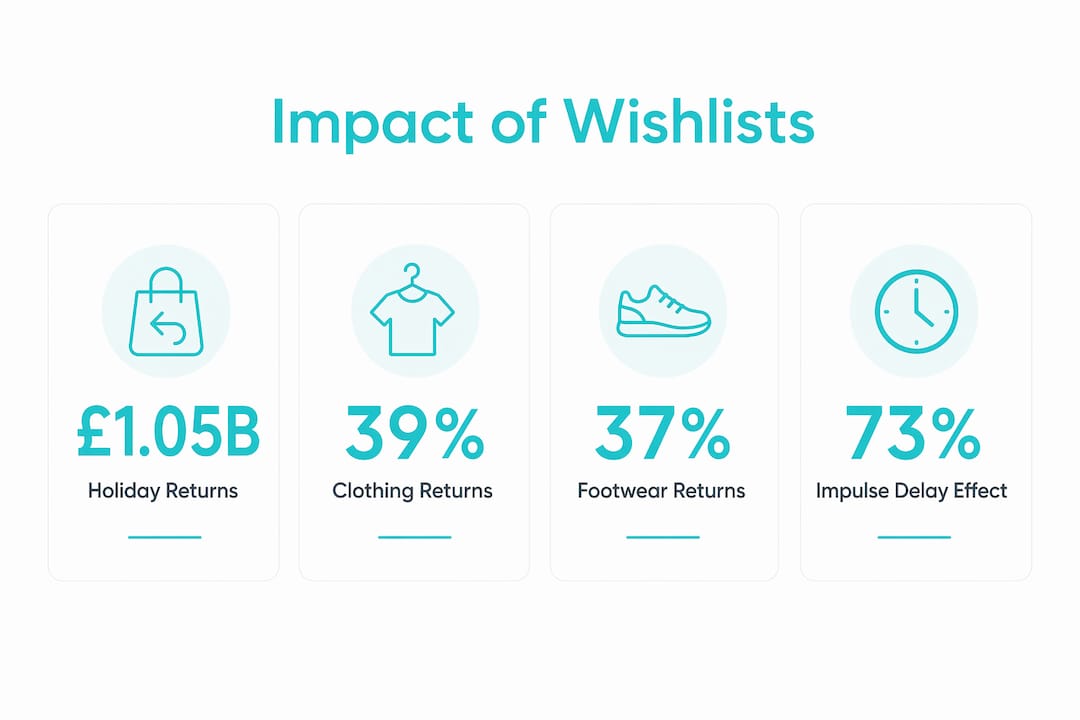
The 72-hour rule is the clearest example of how delay works in practice. When you save an item to a wishlist and wait 72 hours before revisiting it, the emotional charge behind the purchase fades. Research confirms that about 73% of items paused for that period are never bought. That is not a failure of the wishlist. That is the wishlist doing exactly what it should.
The key distinction is between a healthy delay and simply deferring an impulse. A wishlist only prevents waste when you treat it as a reflective tool, not a holding pen for things you plan to buy anyway. Wishlists shift decisions from instant buy triggers to slower, more considered choice architecture. That shift is what behavioral scientists call the “save for later” effect, and it consistently produces better purchasing decisions.
- Add with intention. Save items you genuinely want, not everything that catches your eye in a sale.
- Set a review date. Return to your wishlist after 72 hours or one week and ask whether you still want each item.
- Remove freely. Deleting an item from a wishlist is a win, not a loss. It means you avoided an unnecessary purchase.
- Separate needs from wants. Use separate lists for things you need soon versus things you are simply curious about.
Pro Tip: Schedule a monthly wishlist review in your calendar. Items that survive three review cycles are worth buying. Items that feel less exciting each time you see them are almost certainly impulse saves.
What is the impact of wishlists on UK retail waste?
The scale of waste from unwanted purchases in the UK is significant. Around the 2025 festive season, UK retailers faced a returns challenge worth approximately £1.05 billion, with an estimated 52 million unwanted gifts sent back after Christmas. The average returned gift was valued at around £57. That volume of returns does not just represent wasted money. It represents wasted materials, packaging, transport emissions, and restocking labor.
Clothing and footwear are the most frequently returned categories, at 39% and 37% respectively. These are also the categories most likely to be bought as gifts without the recipient’s input. A shared wishlist removes that guesswork entirely. When gift-givers can see exactly what you want, in the right size and color, the chance of a mismatch drops sharply.
Returns are also resource-intensive for retailers. Reverse logistics, which includes collecting, sorting, and restocking returned items, carries a significant carbon footprint. Many returned items cannot be resold at full price and end up discounted or discarded. Reducing avoidable purchases directly reduces this burden across the supply chain.
| Metric | Figure |
|---|---|
| Total UK Christmas gift returns (2025) | ~£1.05 billion |
| Estimated number of returned gifts | ~52 million items |
| Average returned gift value | ~£57 |
| Most returned category | Clothing (39%) |
| Second most returned category | Footwear (37%) |
Wishlists address this problem at the source. When recipients share a wishlist with friends and family, gift-givers buy with confidence. Fewer wrong gifts means fewer returns, less packaging waste, and fewer unnecessary delivery journeys.
How do wishlists promote more sustainable purchasing behavior?
Impulse buying results in unnecessary spending, clutter, and waste. The average impulse purchase is driven by emotion rather than need. You see something appealing, you feel a spike of excitement, and you buy before that feeling passes. The item often ends up unused, returned, or thrown away.
Wishlist use replaces that emotional spike with a structured decision process. Instead of buying immediately, you save the item, return to it later, and evaluate it with a clearer head. That shift in behavior improves financial wellbeing and reduces environmental impact. Reflective buying is not just better for the planet. It is better for your bank account and your home.
Here is how wishlist-based shopping compares to impulse buying across four key dimensions:
- Decision quality. Impulse buyers act on emotion. Wishlist shoppers evaluate items over time, which leads to purchases they are more satisfied with and less likely to return.
- Financial outcome. Impulse purchases often happen at full price during a moment of excitement. Wishlist shoppers can track price drops and buy when an item hits its lowest price.
- Clutter and waste. Impulse buying fills homes with items that serve no real purpose. Wishlist buying prioritizes items that fit a genuine need or occasion.
- Gift accuracy. Impulse gift-giving produces mismatched presents. Shared wishlists produce gifts the recipient actually wants, reducing the likelihood of returns.
Pro Tip: Use Wantthis to paste product links from any UK retailer and track price changes automatically. When a price drops on a saved item, you get an alert. That means you buy at the right time, not just the first time.
What practical steps can UK shoppers take to use wishlists effectively?
Using a wishlist well requires a small amount of discipline. The tool itself is simple. The habit around it is what produces results.
- Create lists by occasion. Organize your wishlist by birthday, Christmas, or home improvement rather than keeping one long, undifferentiated list. This makes it easier to review and share with the right people.
- Set a review timeline. Pairing wishlists with clear timelines reduces last-minute shopping, emergency shipping, and mismatched buying. Review your lists monthly and remove anything that no longer feels necessary.
- Treat it as an evidence log, not a cart. A wishlist should record considered interest, not capture every passing desire. Curating your wishlist regularly prevents it from becoming a live shopping cart that encourages impulsive purchases when promotional triggers reappear.
- Share your list before key occasions. Send your wishlist to friends and family at least two to three weeks before birthdays or Christmas. Early sharing reduces rushed purchases, duplicate gifts, and the waste that follows both.
- Use price tracking to buy strategically. Wishlist platforms that track prices let you wait for the right moment rather than buying on impulse. This is one of the clearest financial and environmental benefits of wishlist use.
- Avoid adding items during sales. Sales create artificial urgency. If an item was not on your wishlist before the sale started, adding it during the sale is still an impulse decision, just a delayed one.
Wantthis supports all of these habits in one place. You paste a product link from any UK retailer, and Wantthis pulls in the title, image, and current price automatically. You can organize lists by occasion, share them with family, and let friends privately reserve items so gifts are not duplicated. The best wishlist apps for UK shoppers all share one quality: they make the delay mechanism easy to maintain without friction.
Key Takeaways
Wishlists prevent waste most effectively when used as a structured delay tool, not a convenient shortcut to buying more.
| Point | Details |
|---|---|
| Delay reduces impulse buying | About 73% of items saved to a wishlist for 72 hours are never purchased. |
| UK returns represent major waste | Around £1.05 billion in Christmas gifts were returned in the UK after 2025, with 52 million items sent back. |
| Shared wishlists cut gift waste | Sharing your list with gift-givers eliminates mismatches and reduces returns in high-waste categories like clothing. |
| Price tracking improves timing | Tracking price drops on saved items means buying at the right time, not just the first available moment. |
| Regular curation is required | Reviewing and removing items from your wishlist prevents it from becoming a live impulse-buying cart. |
Why I think most people are using wishlists wrong
Most shoppers treat a wishlist like a second shopping cart. They add items during a sale, feel virtuous for not buying immediately, and then buy everything in the list two weeks later when the next promotional email arrives. That is not mindful shopping. That is deferred impulse buying with extra steps.
The wishlists that actually prevent waste are the ones people review critically. I have seen shoppers cut their return rates significantly just by adding one rule: if an item has been on the list for more than 30 days and they have not thought about it since, it gets deleted. That single habit removes a large portion of low-quality purchases before they happen.
The other overlooked benefit is stress reduction. When your friends and family know what you want, gift-giving becomes less fraught for everyone. You get things you will use. They avoid the anxiety of guessing. Nobody wastes money on something that ends up in a charity shop bag by february. That is a sustainability win that rarely gets mentioned in conversations about eco-conscious shopping, but it is one of the most consistent benefits I have observed.
UK retail has a returns problem that is not going away on its own. Consumers who share wishlists before key occasions are doing something genuinely useful for the supply chain, not just for their own convenience. That connection between individual behavior and systemic impact is worth taking seriously.
— Stuart
Wantthis makes wishlist-based shopping practical
Wantthis is a free UK wishlist and gift list platform built for exactly this kind of mindful shopping. You paste a product link from any retailer, and Wantthis pulls in the title, image, and current price. Friends and family can view your list, privately reserve items, and mark gifts as bought so nothing gets duplicated and surprises stay intact.
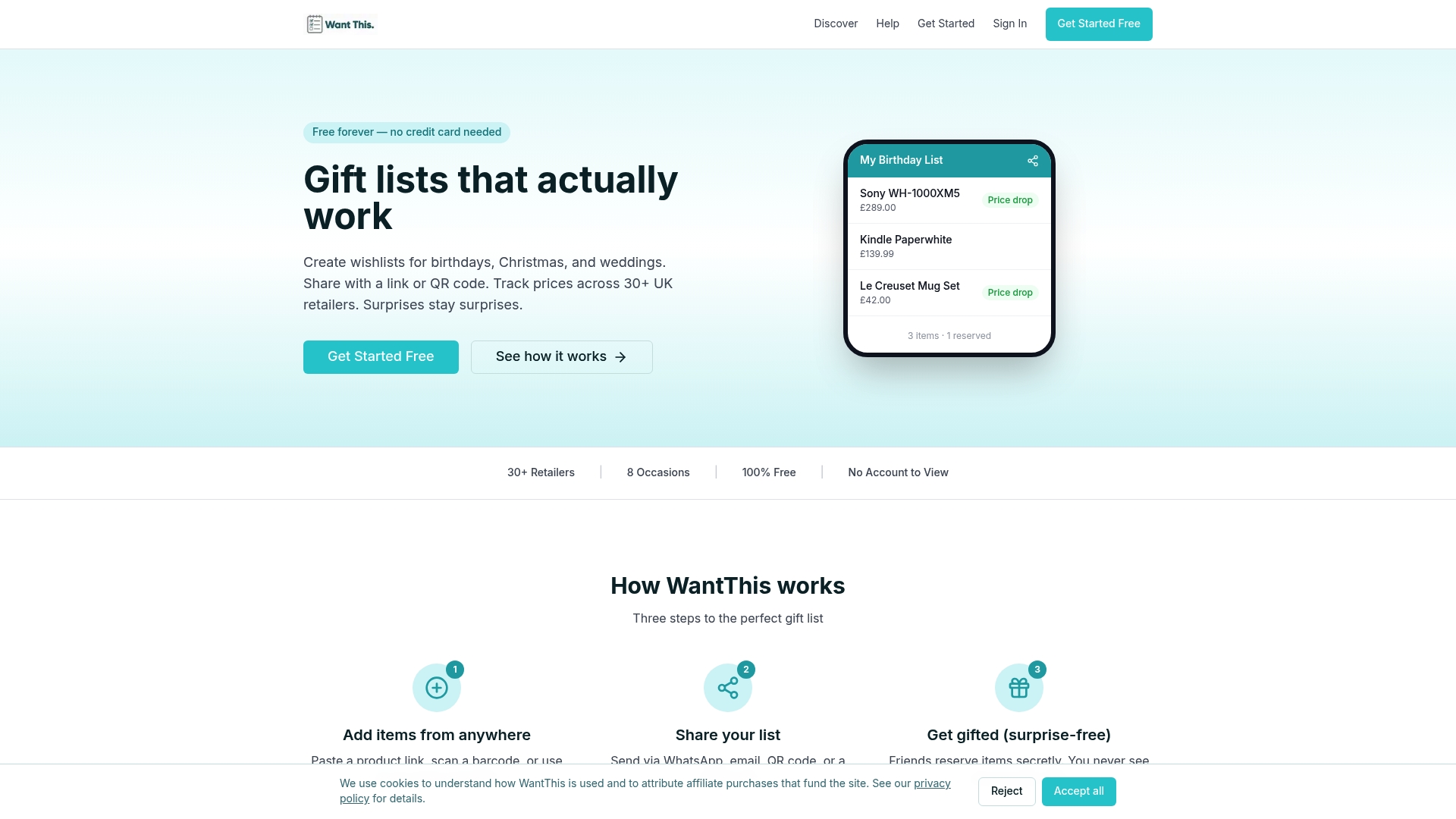
Wantthis also tracks price drops on saved items and sends alerts when a price changes, so you buy at the right moment rather than on impulse. The browser extension and iOS/Android apps let you save items while you browse, without disrupting your shopping flow. Create your free wishlist on Wantthis and start building a more deliberate, less wasteful approach to buying and gift-giving.
FAQ
How do wishlists prevent waste?
Wishlists prevent waste by creating a delay between wanting an item and buying it. Behavioral research shows about 73% of items saved for 72 hours are never purchased, meaning the urge to buy fades before money is spent.
Why do UK shoppers return so many gifts?
UK retailers faced approximately £1.05 billion in Christmas gift returns after 2025, with clothing and footwear the most returned categories. Most returns happen because gift-givers buy without knowing the recipient’s preferences, a problem shared wishlists solve directly.
What is the 72-hour rule for wishlists?
The 72-hour rule means waiting three days after saving an item before deciding to buy it. The waiting period allows the emotional impulse to fade, and research confirms that most paused items are never purchased once that window passes.
How does price tracking on a wishlist save money?
Price tracking monitors saved items and alerts you when the price drops. This means you buy at the item’s lowest price rather than at the moment of peak impulse, which saves money and reduces regret-driven returns.
How often should I review my wishlist?
Review your wishlist at least once a month. Remove any item that no longer feels necessary or that you added during a sale. Items that survive three review cycles are worth buying. Everything else is a potential waste purchase avoided.