
Build a Reserveable UK Housewarming Gift List in 20 Minutes

A housewarming gift list organises practical and personal presents into one shareable place, so guests know what’s genuinely needed and nobody buys the same candle twice. The fastest way to start is simple: pick 3 to 5 categories (kitchen, home comforts, food and drink, plants, and something personal), add a handful of items to each, and share it as a reserveable wishlist link before the invitations even go out.
TL;DR:
- Creating a housewarming gift list should involve defining the recipient’s home type and choosing 3 to 5 practical and personal categories for better matching.
- Including 2-3 inexpensive items under £15 encourages participation from guests with smaller budgets and prevents awkwardness.
- Kitchen essentials like multicookers, frying pans, and casserole dishes tend to be used weekly and are more valued than decorative objects.
- Sharing the list via a platform that allows item reservation, price tracking, and multi-retailer additions helps prevent duplicate gifts and surprises.
- Regularly updating and prioritizing the list post-move ensures it remains relevant as new needs and preferences emerge.
Table of Contents
- How to build a housewarming gift list step by step
- Curated gift ideas by category and budget you can paste into a list
- Etiquette and common pitfalls when sharing a housewarming list
- How wishlist platforms work and what to look for
- Starter checklist and templates for common home types
- How to update or maintain a housewarming gift list over time as needs change
- Examples of unique or creative gift ideas beyond typical categories
- Why organised lists matter more than people think
- Build your housewarming list on Wantthis in minutes
- Sources
- FAQ
How to build a housewarming gift list step by step
Building a proper list takes about 20 minutes once you know the order to do things in. Rushing straight to adding items is the most common mistake, because it skips the thinking that makes a list actually useful.
- Define the recipient and home type. A studio flat needs different things from a three-bedroom family home. Note whether they’re renting or buying, moving alone or with a partner, and how much storage space they have.
- Choose your category buckets. Pick 3 to 5 groups, mixing practical and personal. Curated lists organised by recipient type and budget consistently produce better matches and fewer returns than one long undifferentiated list.
- Add item-level detail. For anything with a size or colour option, note it against the item. Include a link, the price, and who’s likely to chip in if it’s a bigger-ticket gift.
- Set budgets and priority flags. Mark each item as “must-have” or “nice-to-have” so guests on different budgets can still pick something meaningful.
- Decide how you’ll share it. A link in the group chat works better than a printed list, because guests can reserve items privately rather than shouting “I’ve got the towels!” in front of everyone.
- Studio flat: fewer, multifunctional items
- Family home: split by room to avoid overwhelming any single category
- Shared house: flag which items are for communal spaces versus a private room
Pro Tip: Add two or three items under £15 even if the recipient doesn’t need them. Not every guest wants to spend big, and an empty low-budget category is the fastest way to make people feel awkward about what to bring.
Curated gift ideas by category and budget you can paste into a list
Kitchen gear and small appliances are what people actually keep and use, which is why they dominate almost every serious housewarming gift roundup. A decent frying pan or a multicooker gets used weekly; a decorative vase often doesn’t.
Kitchen and cookware
- A multicooker or slow cooker (safe, near-universal pick)
- A heavy-bottomed frying pan
- An oven-safe casserole dish
- A salt pig, a small but genuinely handy kitchen accessory that curated lists keep coming back to
Home comforts
- Throws and cushions, though it’s worth checking sizes and the room’s colour scheme first
- Towel sets in a neutral tone
- Bedding, only if you know the mattress size
Entertaining
- A cheese board or serving platter
- A set of glassware
- A tablecloth or set of placemats
Greenery
- Low-maintenance plants like snake plants or pothos, with a care note attached so they’re not a burden
- A herb pot for the windowsill
Consumables
- Storecupboard staples: good olive oil, spices, coffee
- Non-alcoholic options like a specialty tonic or cordial set
Food- and drink-based gifts sit in a sweet spot: they’re practical without feeling clinical, and they don’t need to match anyone’s décor.
By budget:
- Under £25: salt pig, cordial set, tea towel bundle, small houseplant
- £25 to £75: cheese board with glassware, a good frying pan, bedding set
- £75 and above: multicooker, Dutch oven, a decent set of cookware
A Wirecutter review of housewarming gifts found that items people use weekly, kitchen basics, and household essentials outperform decorative pieces on long-term satisfaction. Studio flats benefit most from compact, multifunctional versions of the above; family homes can handle bulkier or room-specific items without anyone tripping over them.
Etiquette and common pitfalls when sharing a housewarming list
A gift list only works if it’s offered lightly, not handed out like an invoice. Frame it as a helping hand for guests who want ideas, not an obligation.
- Mention the list in the invitation as an optional extra: “If you’d like ideas, here’s a list, but honestly, just come and bring wine.”
- Offer a non-material option, such as a contribution to a shared bigger-ticket item, for guests who’d rather not shop from a list.
- Avoid highly personal decorative choices (specific art, strong colours) unless you’re genuinely confident in the recipient’s taste.
- For guests who prefer giving cash or an experience instead, say so explicitly. Some people feel more comfortable choosing a perishable or low-commitment gift like flowers or a food hamper rather than shopping from a list at all, and that’s fine.
How wishlist platforms work and what to look for
A good wishlist tool needs to do four things well: let you add items from any retailer, generate a link you can actually share, let guests mark something as reserved or bought, and track price changes so nobody overpays. The reserve-or-mark-as-bought step is the one that matters most, because it’s the single feature that stops duplicate gifts before they happen.
What to look for in a platform:
- Add-from-any-retailer, rather than being locked into one shop
- A shareable link that works without forcing guests to register
- Private reserve or mark-as-bought status, so surprises stay surprises
- Price tracking, so guests can see if something’s dropped before buying
- A browser extension or app for adding things on the move
Some wishlist platforms work this way: paste a product link from any UK retailer and it pulls in the title, image, and price automatically. Users can organise by occasion, guests can reserve items privately, and price history may sit alongside each item to help prevent buying at the wrong moment.
Pro Tip: If you’re building the list from your phone while wandering round a shop, use the app rather than trying to copy links manually. It saves the back and forth of finding the exact product page later.
Starter checklist and templates for common home types
Copy these directly if you’re short on time.
First flat (10 items): multicooker, frying pan, bath towels, bedding set, cutlery set, tea towels, doormat, basic toolkit, houseplant, storage boxes.
Family home (10 items): Dutch oven, casserole dish, cheese board, garden tools, large bath towels, blender, spice rack, throw blanket, serving platters, herb pot.
Under £30 each: salt pig, cordial set, tea towel bundle, small plant, doormat, coffee mug set, drawer organisers, oven gloves, candle set, reusable food wraps.
| Priority | Example items |
|---|---|
| Need now | Bedding, towels, basic cookware, cleaning supplies |
| Nice later | Decorative pieces, specialty appliances, garden furniture |
How to update or maintain a housewarming gift list over time as needs change
A housewarming list isn’t a one-off document. The first version usually goes up before moving day, built around the basics: kitchen essentials, bedding, cleaning supplies. Within a few weeks, priorities shift, because people discover what they’re actually missing once boxes are unpacked and the shine wears off the new flat.
The easiest habit is a monthly five-minute review. Remove anything that’s already been bought or reserved, so the list stays current for anyone visiting later, and add whatever’s come up since. Someone might realise their oven glove has burnt through, or that the spare room still has no curtains three months in. Both belong on the list the moment they’re noticed, not saved up for a big rewrite.
It also helps to re-sort by urgency rather than category once the basics are sorted. Early on, “kitchen” versus “living room” makes sense. Later, “need this week” versus “would be nice eventually” is more useful, because most of the true essentials are already ticked off.
Platforms with price tracking make this ongoing maintenance easier, since you’ll get a nudge if something on the list drops in price rather than having to check manually every time you think about it. That turns a static list into something closer to a living shopping companion, which is genuinely more useful six months after moving day than the version you wrote the week before.
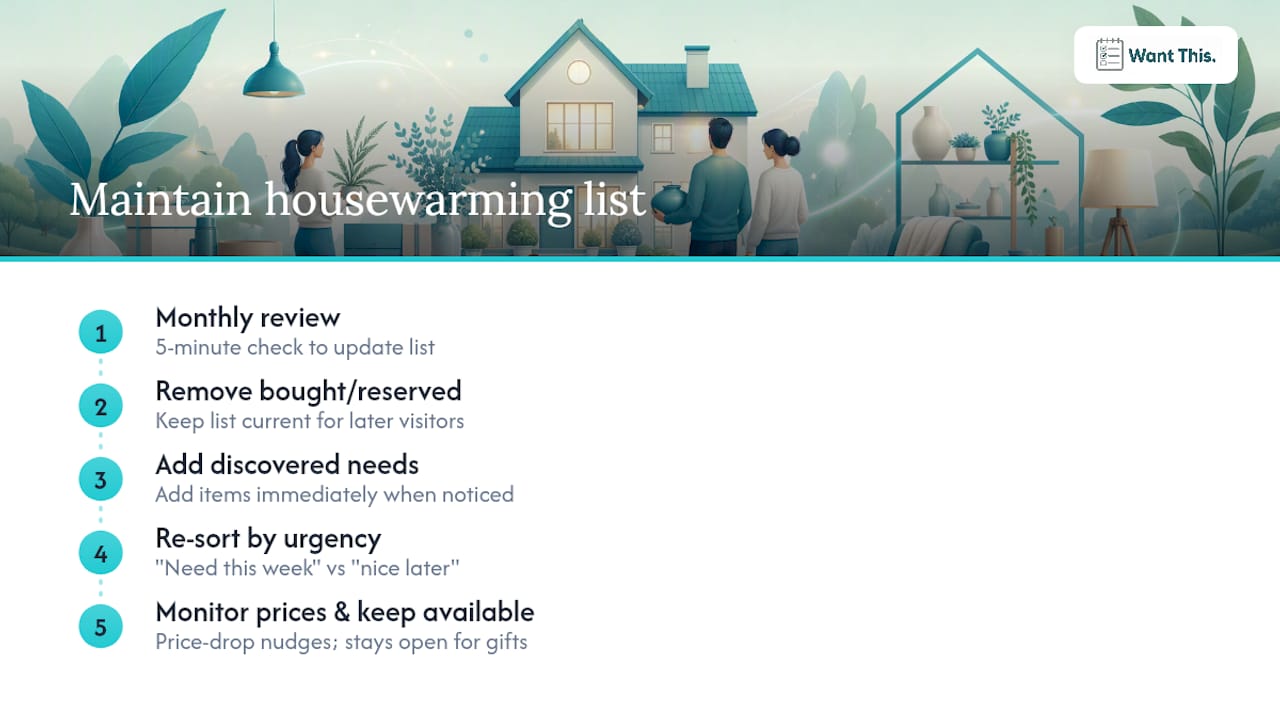
Anyone still adding to a list well after the housewarming party itself shouldn’t feel odd about it. Birthdays, Christmas, and “just because” visits all give guests a reason to check back in.
Examples of unique or creative gift ideas beyond typical categories
Beyond the standard cookware and cushions, a few less obvious ideas tend to land well precisely because they’re not what everyone else brings.
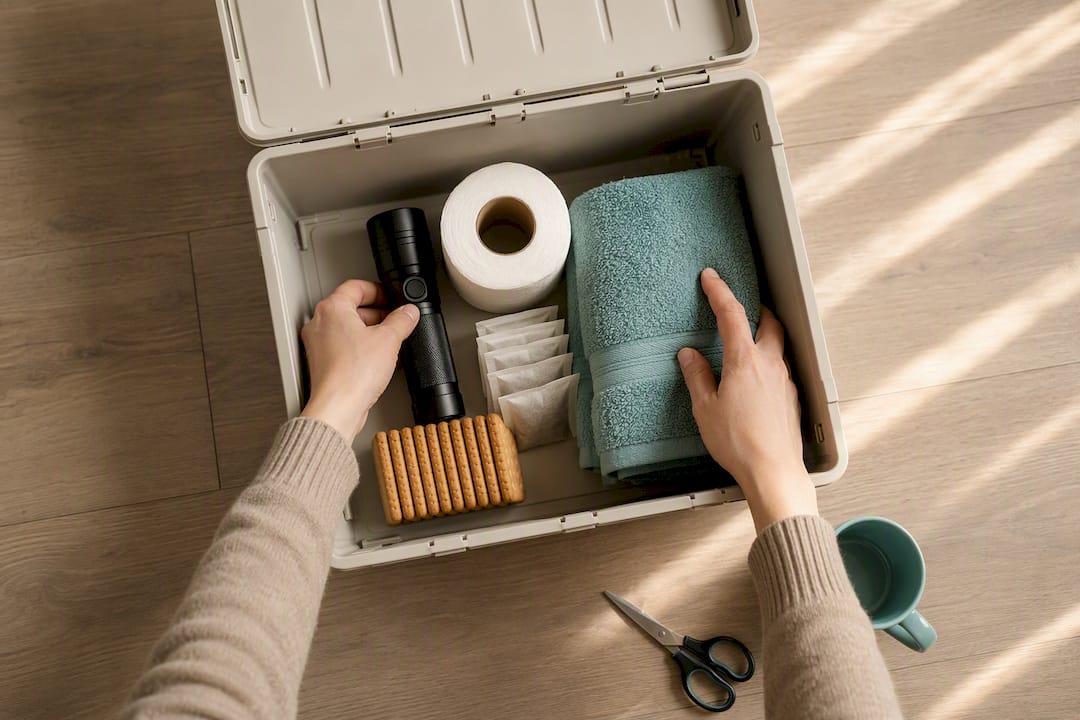
A local map print of the new area, framed, gives a new homeowner something to look at while they’re still learning the neighbourhood. A subscription to a local specialty food box (cheese, bread, coffee) introduces them to nearby suppliers rather than another supermarket voucher. A “first night” box, packed with basics like tea, biscuits, toilet roll, and a torch, solves the very real problem of moving day chaos when nobody can find where anything went.
For the more sentimental option, a custom house illustration or address print works well for people who’ve bought rather than rented, since it marks something more permanent. A tool-sharing arrangement with neighbours, gifted as a laminated card of “borrow anytime” items, is unconventional but genuinely appreciated in a new street where nobody knows anyone yet.
Practical humour has its place too: a doormat with a pointed phrase, a novelty bottle opener, or a “do not disturb, still unpacking” sign for the door cost very little and get more use as conversation pieces than as gifts. None of these need a big budget. What makes them work is that they say something about the new home specifically, rather than being generic enough to fit any address in the country.
Why organised lists matter more than people think
Duplicate gifts and awkward guesswork aren’t rare, they’re the default when there’s no shared list. Give guests clear reserve instructions and they use them; leave things vague and you end up with three cheese boards and no bedding. The starter lists above are a beginning, not a script. Swap items, drop categories that don’t fit, and let the list change as the new home actually gets lived in.
— Stuart
Build your housewarming list on Wantthis in minutes
Some platforms offer an alternative to juggling spreadsheets and group chat screenshots: paste a link from any UK retailer, and the title, image, and price load automatically, so lists can be ready to share in minutes rather than hours.
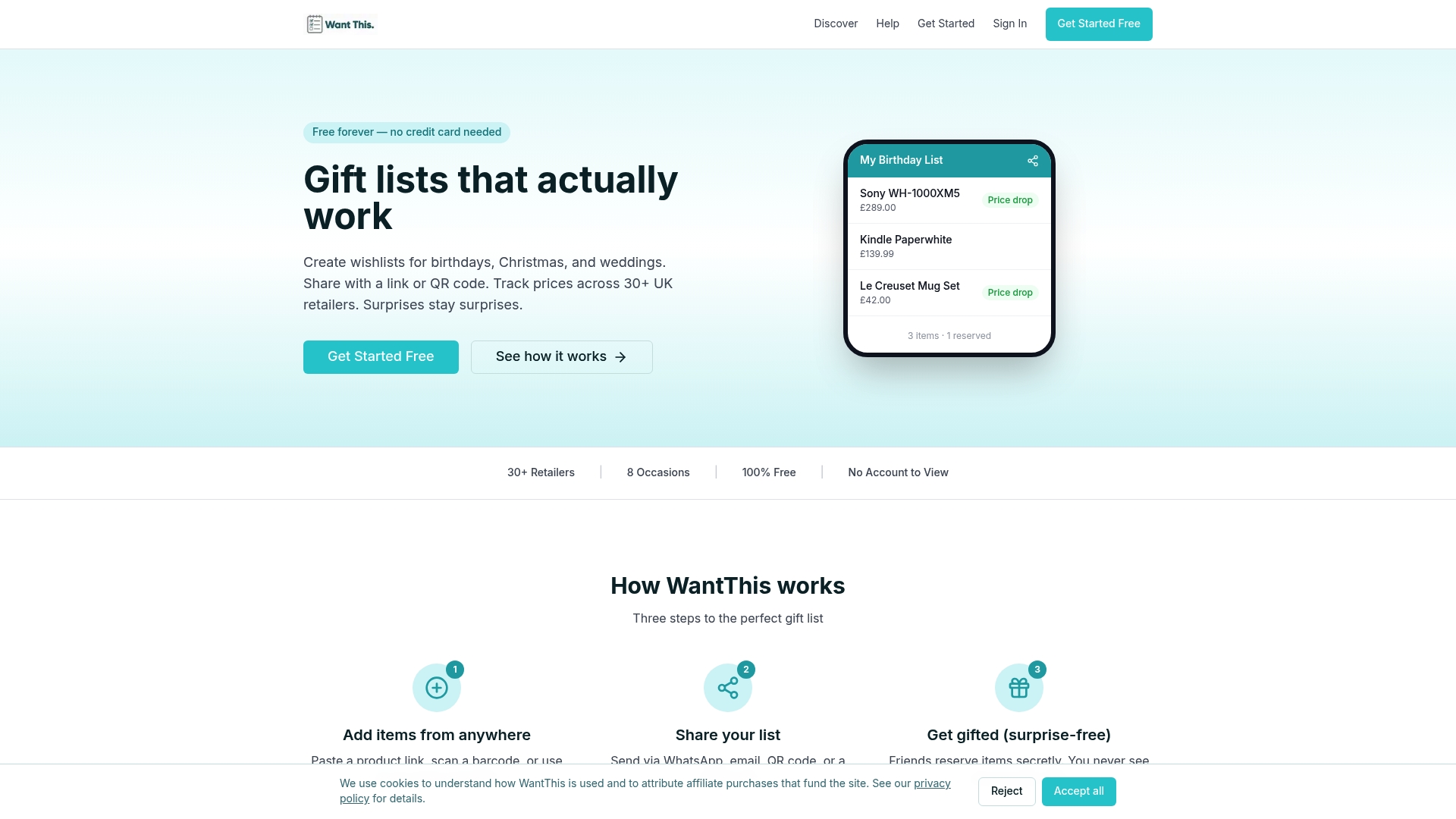
Getting started takes three steps. First, create a list and label it for the housewarming. Second, paste in items from the categories above, whether that’s a multicooker from one retailer or bedding from another; the platform pulls the details in regardless of where you shop. Third, share the link with guests, who can privately reserve or mark items as bought so nobody duplicates a gift or spoils a surprise. Price tracking may run in the background, flagging drops on items still sitting on the list.
Explore the full feature set, or start from one of the starter list ideas and adapt it to the home you’re buying for.
Sources
For further reading on well-reviewed picks, see the Wirecutter housewarming gift guide, food-focused ideas from Eater, and, for anyone repainting before guests arrive, these kitchen painting tips.
- The Best Housewarming Gifts
- 300+ Housewarming Gift Ideas Worth Giving in 2026
- The 37 Best Housewarming Gifts for Food Lovers | Eater
FAQ
What are typical housewarming gifts?
Kitchen items (cookware, small appliances), home comforts (towels, bedding), plants, and food or drink gifts are the most common, largely because they get used immediately and repeatedly.
What should I put on my housewarming list?
Mix practical items (cookware, cleaning supplies, storage) with a few personal or decorative touches, sorted into 3 to 5 categories with a mix of budgets so every guest can find something to give.
What are the best things to gift for a housewarming?
Multicookers, good frying pans, casserole dishes, and food or drink hampers consistently rank highest because they combine practicality with everyday use, according to multiple gift roundups.
What are some useful housewarming gifts?
Anything used weekly beats anything purely decorative. Storecupboard staples, towels, a decent kitchen tool, or a low-maintenance plant all tend to outperform ornaments in long-term satisfaction.
Is a housewarming gift registry considered rude?
Not when it’s framed as optional. Presenting a list as “ideas if you’d like them” rather than a requirement, alongside a note that turning up empty-handed is perfectly fine, avoids any awkwardness.