
Set up a wedding wishlist in minutes and ask for gifts politely

Asking for gifts is not rude when you lead with gratitude and make giving optional. Start by telling guests their presence matters most, then offer one simple way to give if they’d like to: a wishlist link, a QR code, or a wishing well at the reception. Explain the purpose briefly, a honeymoon, a first home, a chosen charity, rather than naming a figure.
TL;DR:
- Most guests prefer a casual, gratitude-first approach, with gift requests placed on a separate insert, website, or reception sign, not on the invitation itself.
- Clear guidance through a wish list or QR code encourages confident giving and reduces duplicate or unwanted gifts, especially when options are varied across price points.
- When requesting money, specify a meaningful purpose like a honeymoon or charity, and avoid suggested amounts or language that implies obligation.
- A short, warm message that emphasizes the guest’s presence as the greatest gift tends to land best across different generations and viewpoints.
- Using online tools for building and sharing wish lists simplifies the process, keeps contributions private, and helps accommodate various budgets without awkwardness.
Table of Contents
- Where to put your gift request politely
- Wording examples and templates you can copy
- How do you politely ask for money as a gift?
- Digital tools that make giving easy
- Accounting for different guests and budgets
- What to avoid when asking for gifts
- A short note on getting the tone right
- Build your wishlist without the awkward part
- Sources
- FAQ
Where to put your gift request politely
Your formal invitation has one job: telling guests when and where to turn up. Squeezing gift wording onto that card, especially anything mentioning money, tends to read as presumptuous before anyone’s even RSVPed. Keep the invitation about attendance and put your gifting notes somewhere guests actively choose to look.
A small insert card solves this neatly. It sits inside the envelope but reads as separate, supplementary information rather than a condition of coming. Your wedding website is the best home for anything longer: the story behind why you’re asking for money, links to your wishlist, or a mix of options for people to browse in their own time.
Where to place each type of information:
- Save-the-date or invitation insert: a single line pointing guests to your website, ideal for destination weddings or longer engagements where guests need advance notice.
- Wedding website: the full explanation, wishlist links, and any QR codes, because guests visit it voluntarily.
- Details card: a short, tasteful note alongside venue and dress code information.
- Reception wishing well or table sign: a discreet QR code for day-of contributions, useful for guests who decide last minute.
Timing matters as much as placement. Sending gift information with the invitation itself only works as a brief, easy-to-skip insert, never printed on the invitation card itself.
Wording examples and templates you can copy
Presence-first phrasing works because it removes pressure before it even starts. Dotty about Paper’s guidance on wedding gift wording confirms that leading with “your presence is the gift” and treating any list as optional extra help, not an expectation, reduces awkwardness on both sides.
Try these depending on your setting:
- Formal insert card: “Your presence at our wedding is the greatest gift of all. Should you wish to give something more, we’ve put together a small list at [website].”
- Wedding website: “We already share a home, so instead of a traditional registry, we’re saving towards our honeymoon. A link to contribute is below, entirely optional, and no pressure at all.”
- Group chat or casual email: “No pressure at all, but if you were thinking of getting us something, we’ve put a few ideas on our list here!”
- Social media post: “We’re not doing a traditional gift list this year, just come and celebrate with us! If you’d like to give something, our wishlist is linked in bio.”
Rhyming verses still appear on plenty of invitation inserts, and some couples enjoy the lighter tone they bring. That said, a short, sincere paragraph often lands just as well, sometimes better, because rhymes can feel like they’re trying too hard for a serious message.
Pro Tip: Read your wording aloud before printing anything. If it sounds like an instruction rather than an invitation, soften it further.
How do you politely ask for money as a gift?
Asking for money works the same way asking for anything else does: gratitude first, obligation never. Open with thanks for the guest simply attending, then mention that contributions towards something specific are welcome if they’d like to give.
Explaining the reason changes everything. The Knot’s etiquette guidance on cash gifts notes that naming a purpose, a honeymoon fund, a house deposit, a charity close to your heart, makes a monetary request feel meaningful rather than transactional. A vague “please give us money” invites awkward guesswork; “help us reach Japan for our honeymoon” gives people something to picture.
What to include and avoid:
- Do state the purpose in one warm sentence.
- Do offer a link, QR code, or wishing well so giving takes seconds.
- Don’t name a suggested amount, Pocketwell’s UK etiquette research confirms this remains widely accepted here, but only when the ask stays open ended.
- Don’t frame it as an expectation tied to attending.
Digital tools that make giving easy
A shareable wishlist solves the two problems every guest secretly worries about: buying something you already own, and not knowing what you actually want. Getting Married’s etiquette guide points out that clear guidance through a list increases the chance guests feel confident about their choice, rather than anxious about getting it wrong.
Practical mechanics that remove friction:
- A QR code on your details card or displayed at the reception lets guests contribute in seconds without hunting for a link.
- A wishlist that updates automatically as items are bought or reserved avoids the classic problem of three people turning up with the same toaster.
- Private reservations mean the couple never sees who bought what, keeping surprises intact until the day.
Tools like Wantthis let you build a list by pasting product links from any retailer, then share it as a single link or QR code guests can access from the invitation, website, or reception sign, no account needed on their end.
Accounting for different guests and budgets
Not every guest has the same means, and a thoughtful list reflects that without saying so out loud. Getting Married’s price-range guidance recommends mixing low, mid and higher priced items so nobody feels priced out of contributing.
- Include options from under £20 to £150 or more, plus a card-only or charity-giving alternative for anyone who’d rather not spend on an item, such as a thoughtful e-gift card from Purelight Coffee.
- For destination weddings, acknowledge travel costs explicitly, guests who’ve already spent hundreds on flights shouldn’t feel pressure to also buy a big gift.
- Close family often appreciate a direct, personal conversation about what would help most; wider guest lists work better with general, public-facing wording on your website.
What to avoid when asking for gifts
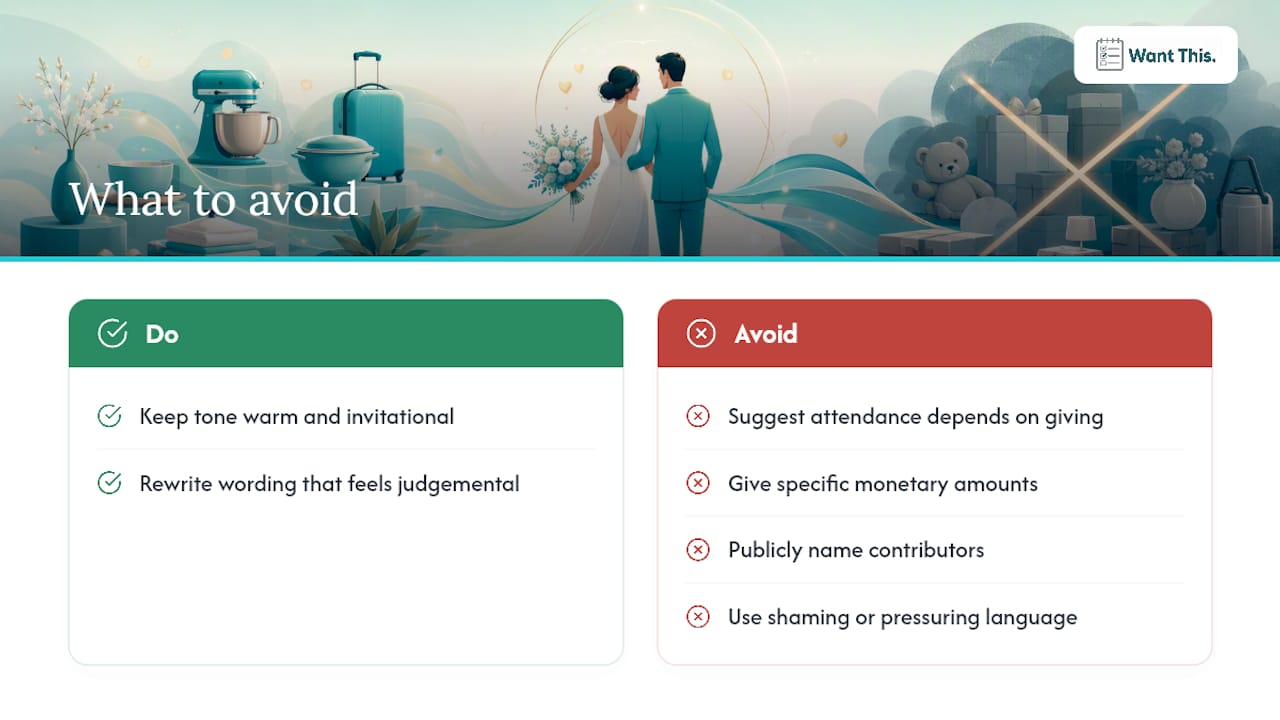
A few habits turn a warm request into something that feels like a demand. Never suggest attendance depends on giving, even as a joke. Skip specific monetary figures or “suggested amounts”, these read like an invoice rather than an invitation. Avoid public call-outs naming who has or hasn’t contributed, and steer well clear of any language that shames or pressures. The tone test is simple: if a guest would feel judged for giving nothing, rewrite it.
A short note on getting the tone right
Having watched thousands of couples build gift lists through Wantthis, the pattern is consistent: the requests that land best are the shortest and warmest, not the cleverest. One habit worth stealing before you send anything, read your wording to a friend from a different generation to your own. What sounds light and optional to you might land differently to someone else, and a second opinion catches that gap every time.
— Stuart
Build your wishlist without the awkward part
Some online wishlist platforms offer an alternative to a printed registry list photocopied at the local shop, free to set up, and designed so guests can give without duplicate purchases or spoiled surprises. Users can paste a product link from any online retailer and the tool pulls in the title, image and current price automatically, keeping the list accurate without hours of manual entry.
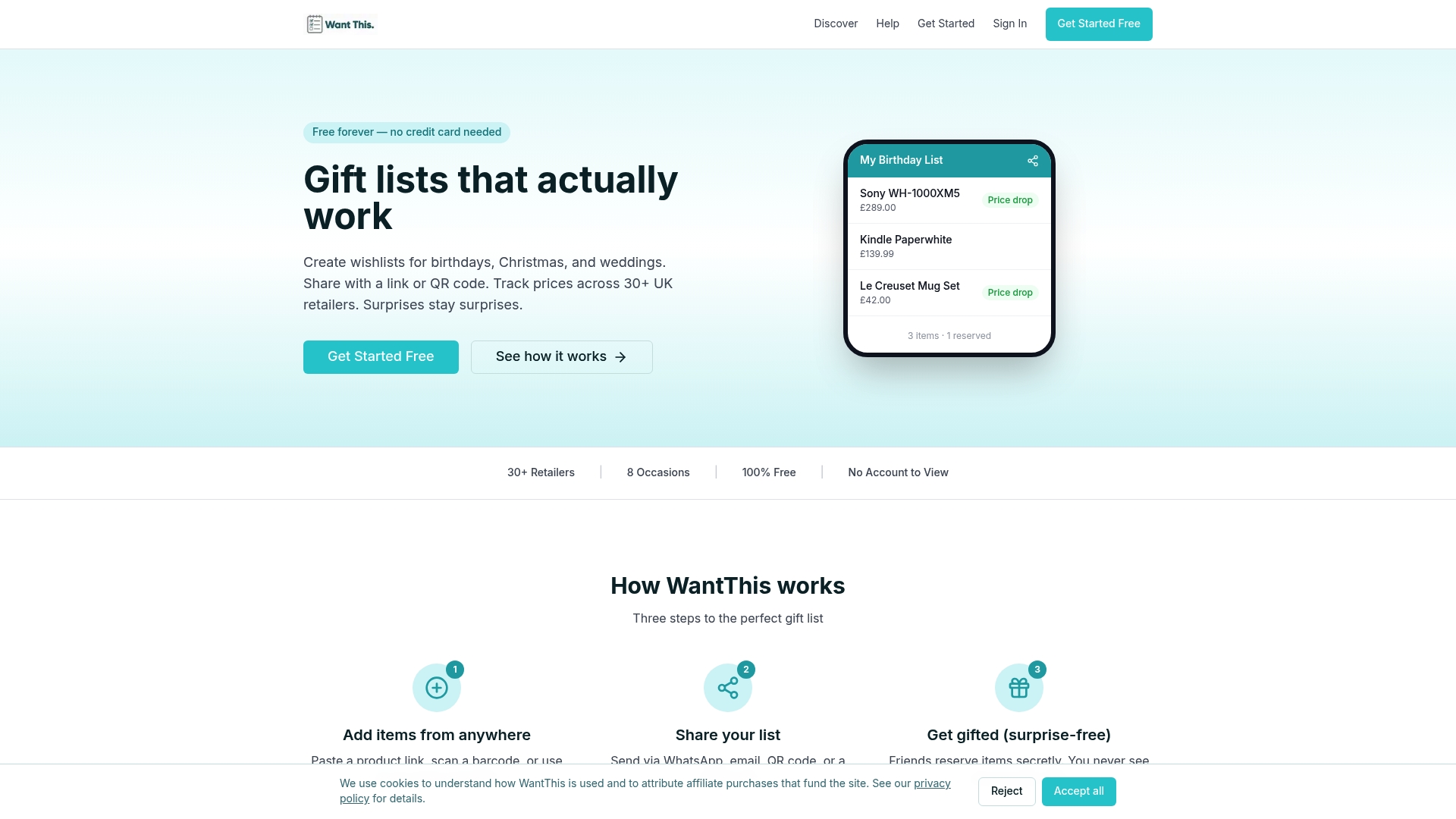
Guests reserve items privately, so nobody sees what’s already been bought, and you never end up with three identical toasters. Share the list as a single link or QR code through your wedding gift list, and mix in ideas across budgets using the gift ideas pages if you want inspiration beyond your own picks. Start building your list on Wantthis today, it takes a few minutes and there’s nothing to sign up for on your guests’ end.
Sources
- The Knot — Wedding gift etiquette for cash gifts
- Getting Married — Etiquette guide to asking for gifts
- Pocketwell — Ask for money instead of gifts (UK)
FAQ
What is the 7-gift rule?
There’s no single agreed definition of a “7-gift rule” in wedding etiquette, versions vary depending on the source. If you’ve seen it referenced for children’s gifts (something to wear, read, want, need, and so on), it doesn’t apply to wedding gift requests in the same way.
How do you politely ask for gifts on an invitation?
Keep the formal invitation focused purely on the event details, then add a small separate insert or point guests to your wedding website for gifting information. Lead with a line like “your presence is the greatest gift”, which research on wedding gift wording shows reduces pressure and reframes any list as optional help rather than an expectation.
What can I say instead of “gifts”?
Try phrases like “contributions”, “a little something towards our honeymoon”, or simply describe the purpose directly, “help us furnish our first home together”. These soften the ask by focusing on the outcome rather than the transaction itself.
How do you humbly ask for something?
Start with genuine thanks for the guest’s attendance, state clearly that giving is optional, then offer one easy way to contribute if they’d like to. Tools like a shareable Wantthis wishlist make this simple because the link does the explaining for you, no awkward conversation required.