
Catch Amazon UK Price Drops in 6 Steps, With ASIN Checks and Shared Gift Lists

The most reliable way to catch an Amazon price drop UK shoppers can trust is to track the exact listing itself and set a target-price alert tied to that specific ASIN, rather than relying on percentage-off badges. Confirm the variant and seller before you act on any alert. Then combine that automated monitoring with a quick check of the price history and, for gifts, a shared wishlist, so nobody buys the same thing twice.
TL;DR:
- Tracking the exact Amazon listing and confirming the seller ensures more reliable price drop detection than relying on badges or percentage discounts.
- Analyzing price history charts helps determine if a current discount is genuine or a manipulated or seasonal fluctuation.
- Setting target prices slightly above the last six-month low increases chances of receiving alerts without waiting forever for an unreachable bottom price.
- Combining automated tracking tools with community-sourced deal feeds maximizes chances to catch quick flash discounts that algorithms might miss.
- Using a shared wishlist with real-time price tracking prevents duplicated gifts and helps coordinate purchases across devices with minimal effort.
Table of Contents
- How price trackers and wishlists work
- Set reliable alerts: step-by-step checklist
- Browser extensions and mobile apps for tracking
- If the price drops after you buy: what Amazon UK policy actually says
- Where UK shoppers spot flash drops and community-sourced deals
- How Wantthis helps you catch Amazon UK drops without the manual effort
- Tips for timing purchases based on typical price drop cycles
- Practical perspective: automation versus watching the market yourself
- Track prices and share lists without the spreadsheet faff
- Sources
- FAQ
How price trackers and wishlists work
A price tracker does something quite specific: it records the listing price at intervals, notes which marketplace seller is currently winning the “buy box,” and flags whether the item is sold and dispatched by Amazon or by a third party. That last detail matters more than most shoppers realise, because a price drop from an unfamiliar marketplace seller doesn’t carry the same delivery guarantees as one from Amazon.co.uk directly.
Price history charts are the real value here. They show you the actual range a product has moved through over recent months, not just today’s headline figure. A “40% off” sticker means very little if the item was quietly marked up a fortnight earlier specifically to make that discount look bigger, something UK price indication rules are designed to discourage. A proper chart tells you whether today’s price is near a genuine historical low or simply back to where it sat most of the year.
That’s also why a target-price alert beats badge-watching. Rather than reacting to whatever Amazon chooses to badge as a “deal,” you set the number you’re actually willing to pay and get notified only when the listing crosses it.
- Trackers log listing price, seller identity, and stock status, not just the sale tag.
- Charts reveal historical lows so you can judge a “deal” against real data, not marketing.
- Target-price alerts filter out noise; percentage badges can be manipulated or misleading.
- Seasonal dips (Black Friday, Prime Day) often beat everyday “was/now” claims by a wide margin.
Pro Tip: If a chart shows a price barely moved for months before a sudden “reduction,” treat the discount with scepticism. It may be a manufactured baseline rather than a genuine drop.
Set reliable alerts: step-by-step checklist
Getting an alert that actually fires when it should comes down to precision. Sloppy tracking, the wrong ASIN, the wrong seller, the wrong bundle, produces false positives that either miss a real drop or send you chasing a “deal” that was never yours to have.
- Capture the exact listing. Copy the product URL or ASIN directly from the page you intend to buy from, not a similar-looking search result. Variants (colour, size, storage capacity, multi-packs) often carry entirely separate price histories.
- Confirm the seller and “sold by” line. Check whether it says “Dispatched from and sold by Amazon.co.uk” or a third-party marketplace name, since pricing behaviour and delivery promises differ between the two.
- Read the price history chart before setting a number. Look for the lowest point in the last three to six months and use that as your realistic benchmark rather than guessing.
- Set your target price and alert type. Choose email, push notification, or a browser extension pop-up depending on how quickly you need to act once the price hits your figure.
- Verify condition and delivery cost at the point of alert. A £5 saving is worthless if delivery adds £4.99 or the item ships in three weeks instead of tomorrow.
- Set separate alerts for separate sellers or conditions if you’d accept either a new or “like new” version, since they rarely move in price together.
Pro Tip: Set your target price slightly above the lowest historical point you’ve seen, not at it. Rock-bottom prices can sit unreached for months, and a realistic target gets you notified far more often.
Browser extensions and mobile apps for tracking
Desktop and mobile solve different problems, and most UK shoppers end up using both. A browser extension sits quietly in your toolbar while you browse and can pull up an on-page price history chart the moment you land on a product, useful for quick “is this actually a good price” checks before adding something to a list. A mobile app earns its place through push alerts that reach you anywhere, plus barcode scanning if you spot something in a physical shop and want to compare it against the online price instantly.
- Extensions excel at instant, on-page verification and one-click adding to a wishlist while shopping.
- Apps excel at push notifications and scanning barcodes on the move.
- Syncing between devices matters if you start a list on desktop and finish it on your phone.
- Check permissions before installing anything: an extension asking for broad access to “read and change all your data on all websites” deserves scrutiny, not automatic trust.
- For coordinated gift buying, a shared wishlist that both devices can access keeps everyone working from the same live price data.
Cross-device syncing is where a lot of casual tracking falls apart. If you add an item on your phone during a lunch break but only check alerts on your laptop in the evening, a fast-moving flash discount can vanish before you notice. Whichever tool you choose, confirm it syncs in real time rather than on a delay.
If the price drops after you buy: what Amazon UK policy actually says
Amazon UK does offer a form of post-purchase price protection, but it’s far narrower than most shoppers assume. The pre-order price guarantee applies only to eligible pre-orders sold by Amazon.co.uk, and it charges you the lowest price the item reached between when you placed the order and the end of its release day.
If you’ve already received your delivery and simply spot a lower price the next week, that’s a normal purchase, not a pre-order, and Amazon has no automatic obligation to refund the difference.
That distinction catches a lot of people out. Here’s a sensible sequence if it happens to you:
- Check whether your order actually qualified as a pre-order sold directly by Amazon.co.uk, not a marketplace seller.
- Weigh the cost and hassle of returning and rebuying, including postage, processing delays, and the risk of losing stock at the new price entirely.
- Contact the seller or Amazon customer service directly; some will offer goodwill gestures even without a formal entitlement.
- Keep screenshots of the original price and the new one as evidence, in case you need to escalate.
If you genuinely believe a price has been presented misleadingly, for instance a “was” price that was never really charged, that’s a matter for Consumer Protection Act guidance and, for repeat or serious cases, the CMA’s price transparency rules. Trading Standards is usually the right first port of call for individual complaints.
Where UK shoppers spot flash drops and community-sourced deals
Automated trackers are excellent at steady monitoring, but they don’t always catch a stock clearance that lasts ninety minutes. That’s where community-sourced deal feeds, UK deal forums, curated social groups, and deal-sharing accounts fill the gap, since human eyes often spot a mispriced or heavily discounted listing before any algorithm flags it.
- Deal forums and community feeds surface time-limited or low-stock drops that automated tools can miss entirely.
- Always verify the seller, exact variant, and price history yourself before trusting a community tip, since posts occasionally include errors or outdated links.
- Cross-check any community-flagged deal against Amazon’s own Deals page to confirm it’s still live and correctly priced.
- Use community sources for speed and automated alerts for consistency; the two work best together, not as substitutes for each other.
How Wantthis helps you catch Amazon UK drops without the manual effort
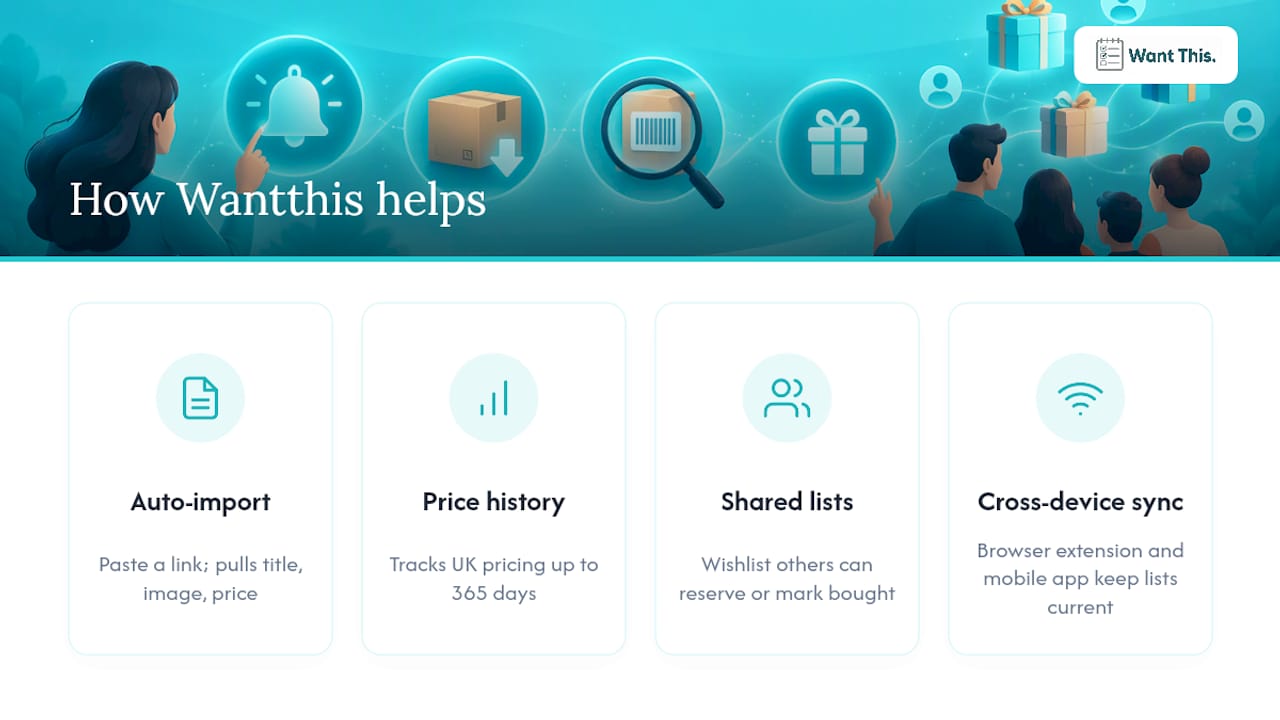
Wantthis lets you paste a link from Amazon or any other online retailer into a list, and it automatically pulls in the title, image, and current price, no manual copying required. It tracks price history across UK retailers, including up to 365 days of Amazon UK pricing, so you can judge whether today’s figure is genuinely low before you commit.
For group gifting, the real advantage is the shared list. Add items to a wishlist, share it with family or friends, and they can privately reserve or mark things as bought, helping to avoid duplicate purchases or spoiling a surprise. That solves a problem automated price alerts alone never touch: coordination. Combined with price tracking on saved items, it works across devices via browser extension and mobile app, so a list started on your laptop stays current wherever you check it next.
Tips for timing purchases based on typical price drop cycles
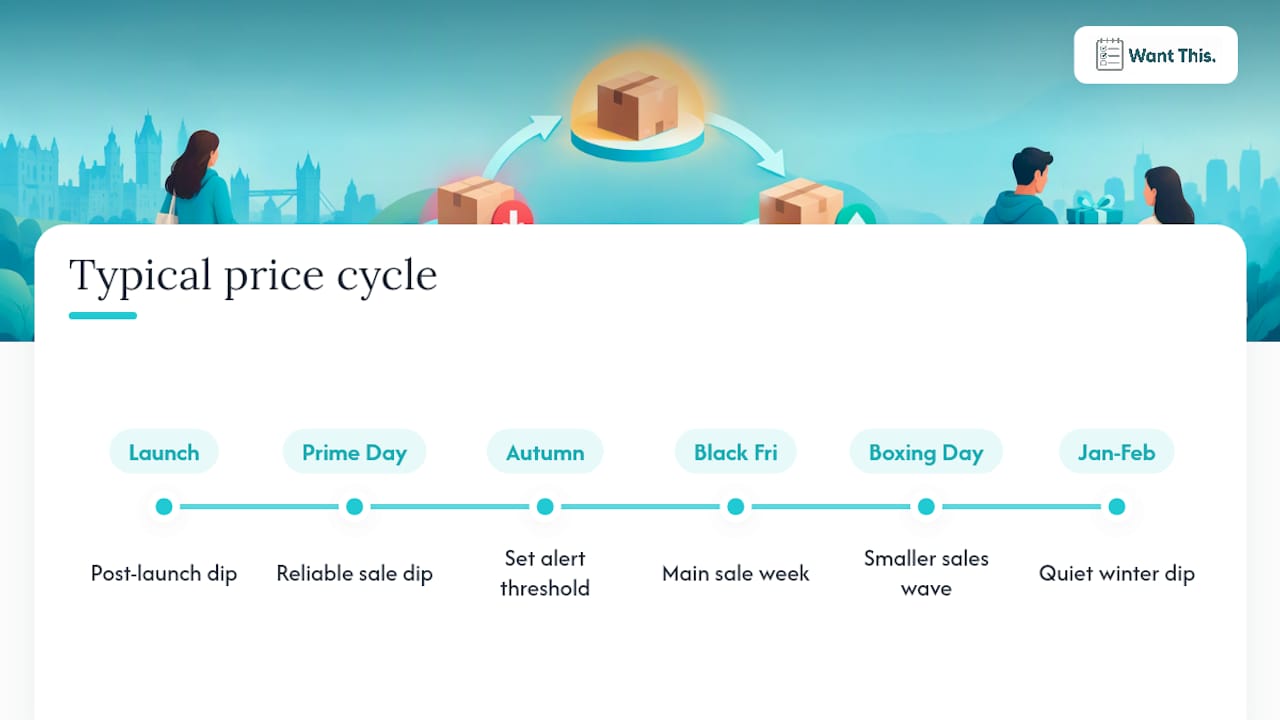
Amazon’s biggest, most reliable drops cluster around a handful of predictable windows: Prime Day in the summer, Black Friday and Cyber Monday in late November, and a smaller wave around Boxing Day into the January sales.
Outside those set-piece events, prices still drift. Many products follow a slow cycle: a gradual dip in the weeks after launch as initial hype fades, a brief rise around gift-heavy periods like the run-up to Christmas, then another dip in the quieter weeks of January and February when demand cools. If you’re not buying for a specific occasion, patience during those quiet months often pays off more than waiting for a headline sale event.
The mistake many shoppers make is assuming every “deal” during Black Friday week is actually the year’s lowest price. Some products dip lower a few weeks before or after the main event, once the initial rush has passed and retailers compete for leftover stock. This is exactly where a price history chart earns its keep: it lets you check whether this November’s badge really beats what the same item cost in August. If you’re buying for Christmas specifically, setting your alert threshold in early autumn gives you the best chance of catching a genuine early drop before demand pushes prices back up in December.
Practical perspective: automation versus watching the market yourself
Automated alerts win for anything you’re not in a rush to buy. They quietly catch incremental dips over weeks while you get on with life. Manual checking, and community deal feeds, still beats automation for flash stock clearances that vanish in an hour. For gifts specifically, a shared wishlist with tracked prices does something neither approach manages alone: it stops duplicate purchases while still catching the drop. The trade-off is simple. Wait too long chasing a lower price and you risk losing stock entirely; buy too early and you might see it drop the following week. Set a realistic target, not an ideal one, and let the alert do the waiting for you.
— Stuart
Track prices and share lists without the spreadsheet faff
Wantthis is an alternative to juggling browser bookmarks, screenshots, and a family group chat full of “has anyone got this yet?” messages. Paste an Amazon UK link, and it pulls the title, image, and price automatically, then tracks that exact item’s price history so you know when a genuine drop appears.
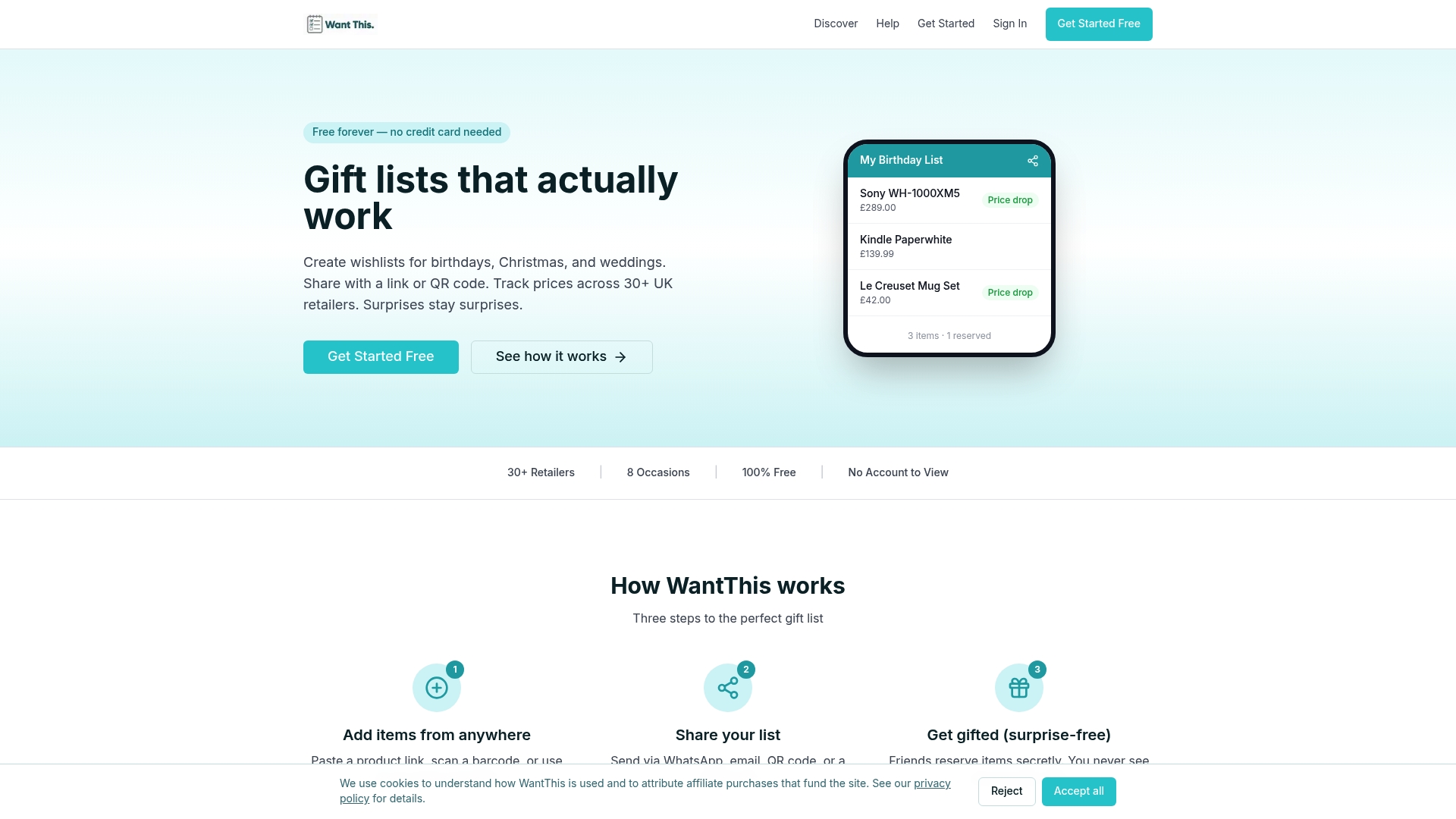
Where it earns its place for gift shoppers specifically is the sharing layer: build a list, send it to friends or family, and they can privately reserve items or mark them as bought without spoiling the surprise for anyone else. Pair that with price tracking on saved items and you get the alert without the awkward “did you already buy this?” text.
There’s no cost and no account required just to browse. Head to Wantthis, add an Amazon UK product to a list, and set your first alert to see how it works.
Sources
- Amazon
- The Consumer Protection (Code of Practice for Traders on Price Indications) Approval Order 2005
- CMA guidance: unfair commercial practices and price transparency
FAQ
Will Amazon refund you if the price drops after you buy?
Generally, no. Ordinary delivered purchases don’t receive an automatic refund if the price falls afterwards; only qualifying pre-orders sold by Amazon.co.uk benefit from its price guarantee, which charges the lowest price seen up to the end of release day.
Why do Amazon prices drop and rise so often?
Amazon adjusts prices frequently in response to competitor pricing, stock levels, seasonal demand, and promotional events like Black Friday or Prime Day. This is precisely why a price history chart matters more than a single “deal” badge, since it shows whether today’s figure is genuinely low.
What should I do if I spot a price drop on Amazon UK?
Check the seller, confirm you’re looking at the correct variant or ASIN, and compare the current price against its recent history before buying. A tool like Wantthis can track that exact listing and alert you automatically if you’d rather not check manually.
Is Amazon UK ever down or unavailable?
Amazon.co.uk experiences occasional short outages or slow-loading pages, usually resolved within minutes, though these are rare given the platform’s scale. If a deal page won’t load, refreshing after a short wait or checking Amazon’s Deals page directly usually resolves it.
How much does Wantthis cost to use?
The service is free to use, with no account required just to browse or build a wishlist. Users can add items, track prices, and share lists with friends and family at no cost.