
Why Surprises Get Spoiled Gifts (and How to Fix It)

Surprise gifts get spoiled primarily because the giver reveals them too early, buys impulsively, or misjudges what the recipient actually wants. These are not random failures. They follow predictable patterns rooted in gift psychology, and understanding why surprises get spoiled gifts is the first step toward planning one that lands well. Research into gift-giving behavior shows that the gap between what givers think will impress and what recipients genuinely want is wider than most people expect. The good news is that each failure mode has a practical fix.
Why surprises get spoiled gifts: the impulse problem
About 60% of gift purchases are driven by the desire to surprise someone. That statistic reveals a serious problem: most surprise gifts start with emotion, not research. Givers skip the planning stage, visit fewer stores, and spend less time comparing options than they do for non-surprise purchases.
The result is a gift chosen for visual appeal rather than actual fit. A beautifully packaged item catches the eye in a store or online, and the giver assumes the recipient will feel the same way. That assumption is where most surprises begin to fall apart.
- Impulse over research: Givers spend less time evaluating options when the goal is surprise, which raises the odds of a mismatch.
- Visual appeal bias: Packaging and aesthetics drive impulse picks, while the recipient cares more about usability.
- Novelty trap: Givers gravitate toward unique or unusual items to seem thoughtful, but recipients often prefer familiar, practical things.
- Fewer store visits: Surprise gift buyers make fewer comparison trips, reducing the chance of finding a genuinely good match.
The paradox here is real. The more a giver tries to create a memorable surprise, the more likely they are to skip the steps that would make the gift satisfying. Novelty feels impressive to the giver. Usefulness feels satisfying to the recipient. Those two goals rarely overlap without deliberate planning.
Pro Tip: Before buying a surprise gift, spend five minutes checking the recipient’s social media saves, browser bookmarks, or any shared wishlist. You get the surprise element without the guesswork.

How mismatched expectations ruin the moment
The expectation gap between givers and recipients is the single biggest reason gifts disappoint. Registry gifts score 8.4 out of 10 in recipient satisfaction, while surprise gifts from close friends score just 6.6 out of 10. That two-point gap represents real disappointment at real occasions.
The reason for this gap comes down to how each person thinks. Research published in the Journal of Consumer Research shows that givers think abstractly about impressiveness and uniqueness, while recipients think concretely about whether something is useful and convenient. These two mental modes produce very different gift choices.
| Giver’s mindset | Recipient’s mindset |
|---|---|
| “Will this impress them?” | “Will I actually use this?” |
| “Is this unique enough?” | “Does this fit my life?” |
| “Does this show effort?” | “Did they listen to what I said?” |
| “Will this create a moment?” | “Is this something I wanted?” |
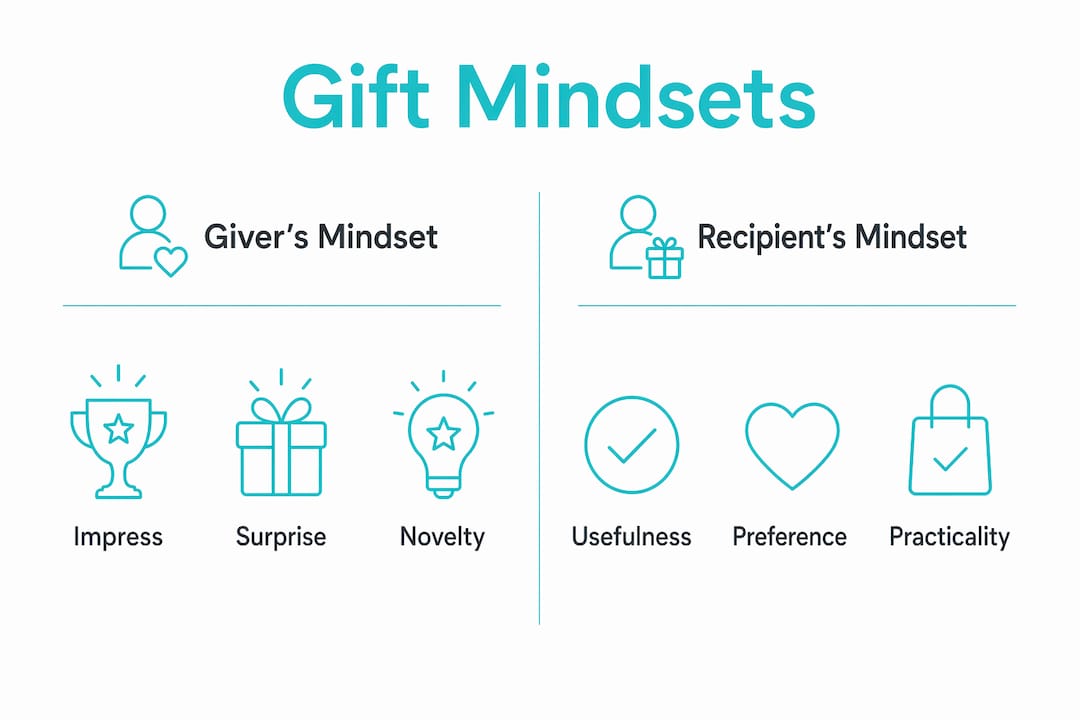
Close relationships make this worse, not better. Close friends diverge from gift lists 61% of the time because they feel pressure to go beyond the obvious and show creativity. The result is a gift the recipient never asked for and may not want. Ironically, the more someone cares about impressing you, the less likely they are to buy what you actually want.
Pro Tip: If you want to go off-list, anchor your choice to something the recipient mentioned in conversation, not something you personally find impressive. Their words are better data than your instincts.
Gift-giving research consistently shows that optimizing for the unwrapping moment rather than long-term utility is the core mistake. A gift that creates a big reaction on the day often fades quickly. A gift that gets used every week earns lasting appreciation.
What are the most common gift surprise spoilers?
Premature disclosure is the most direct way a surprise gets ruined. Telling someone about a surprise kills it outright. Hinting about it half-ruins it. These are not opinions. They reflect how anticipation works: once the recipient knows something is coming, the reveal moment loses its power.
The most common spoilers fall into four categories:
- Verbal hints: Saying “I’ve got something special planned” or “you’re going to love what I got you” creates anticipation that the actual gift may not satisfy.
- Visible preparations: Leaving packaging, receipts, or browser tabs open gives the game away before the moment arrives.
- Delivery conflicts: Gifts arriving at the wrong address or at a time when the recipient is home force an awkward early reveal.
- Allergy or schedule misses: Planning a surprise dinner or experience without checking dietary needs or calendar conflicts often requires disclosure to avoid a worse outcome.
There are three situations where telling the recipient in advance is the right call: when the surprise involves a schedule commitment they need to plan for, when it includes food or activities with allergy risks, and when the logistics require their participation to work. Outside those three cases, staying silent preserves the surprise and protects the reveal moment.
Wrapping also plays a role that most people overlook. Neatly wrapped gifts rate 7.69 out of 10 before opening, but after unwrapping, recipients rate sloppily wrapped gifts higher (6.86 versus 5.80 for neat). High expectations set by perfect presentation make average gifts feel like letdowns. Lower expectations make the same gift feel like a pleasant surprise.
Pro Tip: Skip the elaborate bow and tissue paper if the gift itself is modest. Understated wrapping sets realistic expectations and lets the gift exceed them.
Practical strategies for preventing spoiled gifts
Preventing a spoiled surprise requires planning in three areas: what you buy, how you conceal it, and when you reveal it. Getting all three right is what separates a memorable gift from a forgettable one.
- Use a wishlist as your starting point. A recipient’s gift list or wishlist tells you exactly what they want. You can still add a personal touch, such as a handwritten note or complementary item, without abandoning what they actually asked for.
- Conceal preparations through a trusted third party. Have gifts delivered to a friend’s address or a neighbor’s house. Ask a family member to handle any coordination that might tip off the recipient.
- Control the reveal timing. Choose a moment when the recipient is relaxed and not distracted. A rushed or poorly timed reveal undercuts even the best gift.
- Match the surprise style to the recipient’s comfort level. Private, low-key surprises work better for people who dislike public attention. A quiet moment at home often lands better than a staged group reveal.
- Avoid over-wrapping modest gifts. Let the gift set its own expectations rather than inflating them with elaborate presentation.
- Plan for logistics early. Book experiences, check availability, and confirm delivery windows well in advance so you never have to disclose the surprise to fix a last-minute problem.
The anxiety formula confirmed with 135 participants shows that planning directly reduces the stress of executing a surprise. More preparation means less chance of an accidental reveal and a better experience for both giver and recipient.
Key Takeaways
Surprise gifts fail most often because givers prioritize impressiveness over recipient preference, reveal plans too early, or skip the planning that prevents accidental disclosure.
| Point | Details |
|---|---|
| Impulse buying raises mismatch risk | Most surprise gifts skip research, leading to choices based on looks rather than fit. |
| Registry gifts outscore surprises | Recipients rate requested gifts 8.4/10 versus 6.6/10 for off-list surprises from close friends. |
| Hints and hints half-ruin surprises | Even vague hints reduce the impact of the reveal; stay silent unless logistics require disclosure. |
| Wrapping sets expectations | Neat wrapping raises the bar; modest wrapping lets the gift exceed it. |
| Planning reduces spoilage | Early logistics planning eliminates the situations that force premature disclosure. |
What I’ve learned from watching surprise gifts go wrong
The most common mistake I see is givers treating the gift as a performance for themselves rather than a service to the recipient. There is a real ego pull in choosing something unexpected and impressive. It feels creative. It signals effort. But the research is unambiguous: recipients consistently prefer what they asked for over what the giver thought would wow them.
The second mistake is confusing secrecy with planning. Keeping a gift secret is not the same as planning it well. I have watched people go to extraordinary lengths to hide a gift, only to buy the wrong thing entirely because they never stopped to ask what the person actually needed. Secrecy without research just delivers a well-concealed disappointment.
What actually works is using a wishlist or registry as a foundation, then adding one personal layer on top. Buy the item they listed, and include a handwritten note explaining why you chose that specific one. That combination gives the recipient what they wanted and shows you paid attention. It is not less thoughtful than a surprise. It is more thoughtful, because it puts their needs first.
Timing matters more than most people realize. A gift revealed at the wrong moment, when the recipient is stressed, distracted, or surrounded by the wrong people, lands worse than the same gift given quietly at the right time. The reveal is part of the gift. Treat it that way.
— Stuart
How WantThis helps you plan gifts without spoiling the surprise
Planning a surprise gift is easier when you know what the recipient actually wants. WantThis is a free UK gift list and wishlist platform where anyone can save items from any online retailer and share their list with friends and family.
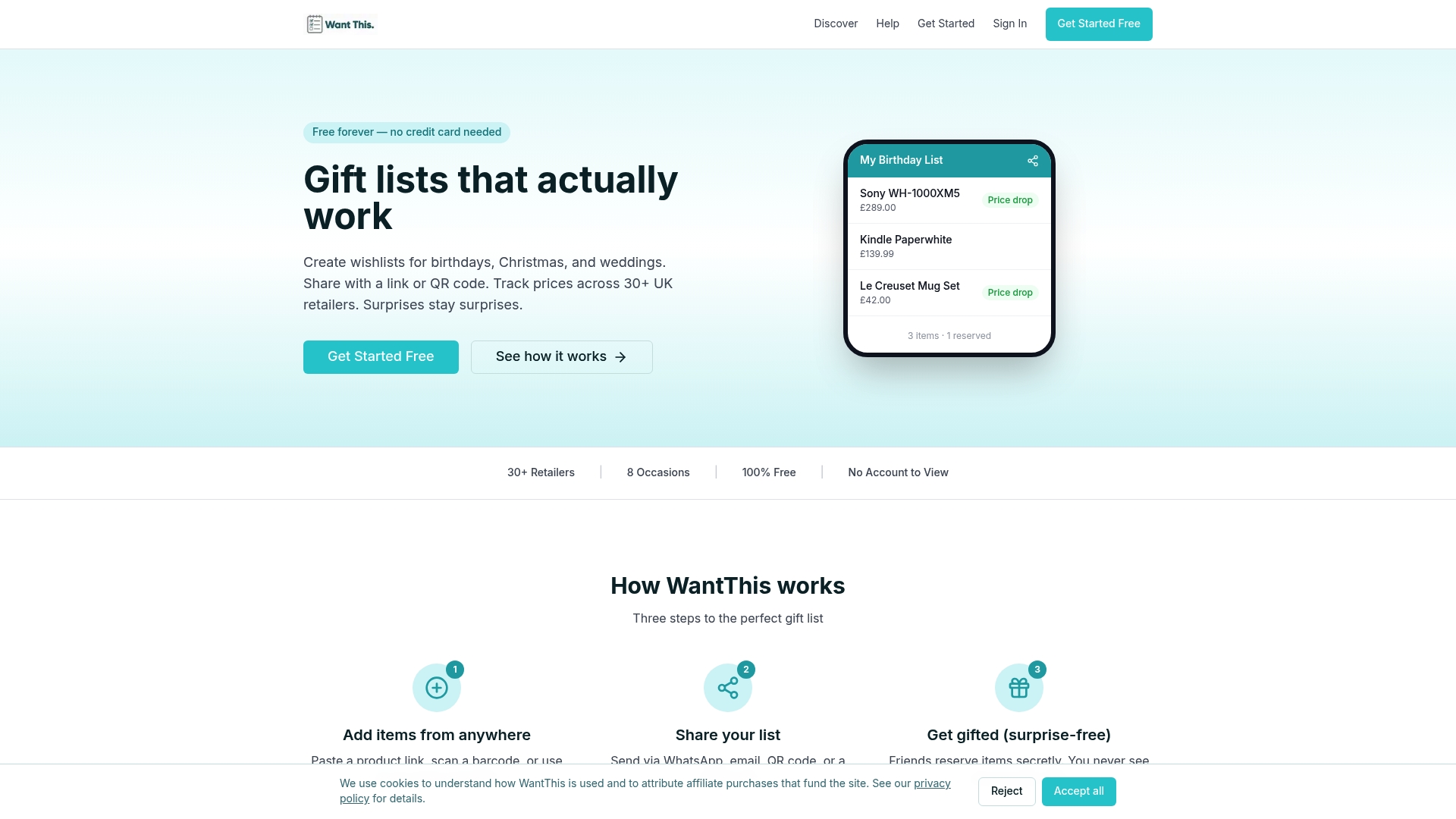
The private reservation feature lets friends and family mark items as claimed without the recipient seeing, so there is no duplication and no accidental reveal. Price tracking alerts notify you when a saved item drops in price, so you can buy at the right moment without rushing. For group occasions, the Secret Santa organizer handles the draw automatically and keeps assignments private. Whether you are planning for a birthday, Christmas, or a wedding, WantThis gives you the structure to buy with confidence and keep the surprise intact.
FAQ
Why do surprise gifts so often disappoint?
Surprise gifts disappoint because givers prioritize impressiveness over what the recipient actually wants. Research shows recipients rate requested gifts 8.4/10 versus 6.6/10 for off-list surprises.
What are the most common types of gift surprise spoilers?
The most common spoilers are verbal hints, visible gift preparations, delivery conflicts, and schedule or allergy misses that force early disclosure.
Does wrapping affect how a gift is received?
Neat wrapping raises expectations that average gifts often fail to meet. Sloppily wrapped gifts score higher after opening because they exceed lower expectations.
When is it acceptable to tell someone about a surprise gift?
Disclosure is appropriate when the surprise involves a schedule commitment, an allergy risk, or logistics that require the recipient’s participation to work correctly.
How do wishlists help prevent spoiled surprises?
Wishlists give givers a verified starting point based on what the recipient actually wants, reducing the mismatch that causes disappointment while still leaving room for a personal touch.