
Why Couples Need Wedding Lists: A 2026 Guide

A wedding list is a curated registry of gifts that guides guests toward items the couple genuinely wants, making the entire gift-giving process clear and purposeful. Without one, guests guess. Guessing leads to duplicates, unwanted items, and wasted money on both sides. Understanding why couples need wedding lists starts with recognizing that a good registry does more than collect gift ideas. It reflects the couple’s lifestyle, supports their financial goals, and removes stress from one of the most logistically complex events in their lives.
Why modern wedding lists differ from traditional registries
The classic wedding registry, built around china sets and matching towels, no longer fits most couples’ lives. More than 80% of couples live together before marriage, which means they already own the basics. That shift has fundamentally changed what belongs on a wedding list.
Today’s couples register for upgrades, experiences, and financial contributions rather than starter essentials. A couple who already owns a coffee maker does not need another one. They might, however, want a high-end espresso machine, a weekend getaway, or a contribution toward a home down payment. Couples now register for upgraded kitchen appliances, pet essentials, and items that reflect their established lifestyle rather than a household they are building from scratch.

The financial dimension of modern registries is significant. Nearly half of engaged couples use their wedding registry as a home fund, raising money toward a property purchase. One reported example raised around $30,000 through a wedding home fund in 2022. That figure shows how far the registry concept has moved beyond department store gift tables.
Modern wedding lists typically include three categories:
- Physical gifts: Upgraded appliances, quality cookware, home furnishings, or hobby gear
- Experience gifts: Honeymoon activities, restaurant vouchers, spa days, or travel funds
- Cash contributions: Home down payment funds, savings contributions, or honeymoon funds
Pro Tip: Include gifts across all three categories so guests with different budgets and preferences all find something that feels right for them.
What are the real benefits of having a wedding registry?
A wedding registry benefits couples in ways that go well beyond receiving nicer gifts. The process of building one forces couples to think clearly about what they actually need, what they already have, and where they want to invest as they start their shared life.
- Financial planning clarity. A wedding gift list can function as a financial dashboard during the planning period. Couples who plan their registry alongside their wedding budget gain a clearer picture of incoming cash flow and how gift funds will affect financial goals like home purchases.
- Reduced decision fatigue. Wedding registries reduce decision fatigue by helping couples identify and prioritize their most important needs. Limiting options makes the planning process less stressful and more focused.
- Alignment with lifestyle. A registry built around the couple’s actual life, rather than a generic household checklist, produces gifts that get used. Useful gifts feel meaningful. Meaningful gifts strengthen the connection between the couple and their guests.
- Avoiding overspending. When couples define their top priorities early, they spend less energy and money filling gaps that gifts will cover. Couples who identify three key priorities report fewer planning regrets overall.
- Mortgage documentation. Cash contributions through a registry require proper documentation when applying for a mortgage. Lenders require proof that gift funds are legitimate before counting them toward a down payment. A formal registry creates that paper trail automatically.
The emotional benefit is just as real as the financial one. Couples who build a thoughtful registry feel more in control of their wedding planning. That sense of control reduces stress at a time when there is no shortage of decisions to make.
How does a wedding list improve the guest experience?
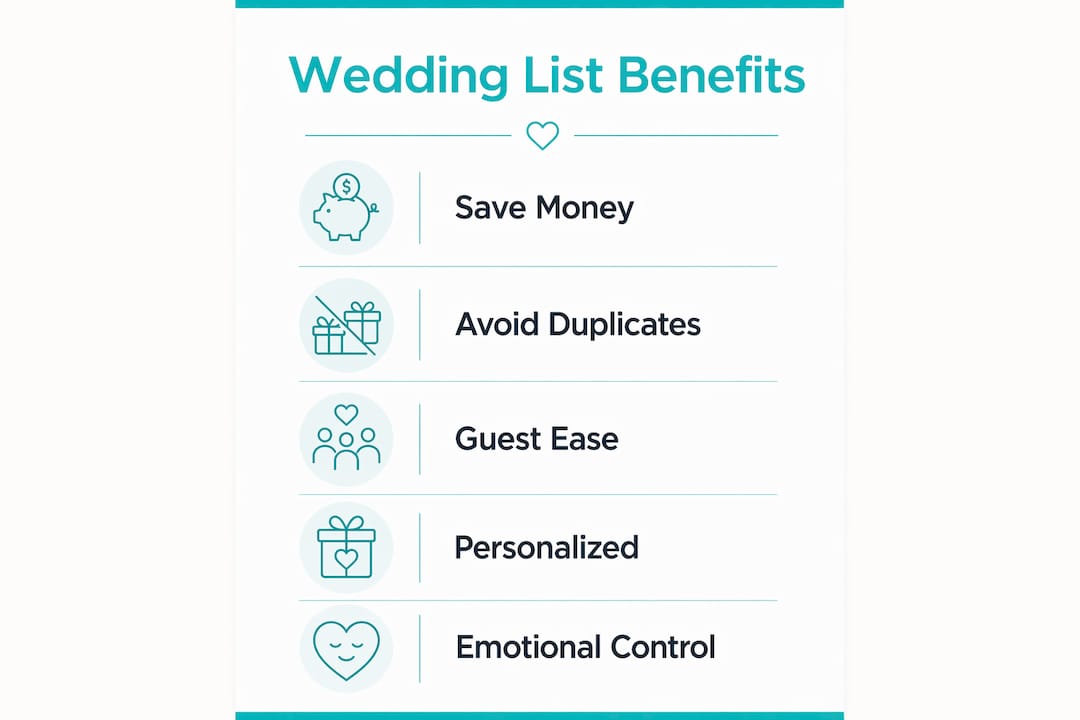
Guests want to give gifts that matter. A wedding list makes that possible without requiring them to guess, research, or risk buying something the couple already owns.
Guests appreciate a mix of physical gifts, cash funds, and experience options because it accommodates different budgets and personal preferences. A close friend might contribute to a honeymoon fund. A colleague might prefer buying a specific item from a list. An elderly relative might feel more comfortable choosing a physical gift from a curated selection. A well-structured registry serves all three.
The practical advantages for guests are clear:
- No duplicates. When guests can mark items as reserved or purchased, the couple receives each item only once. This is one of the most common frustrations with unmanaged gift-giving, and a registry solves it directly.
- Budget flexibility. A list with items at multiple price points means no guest feels priced out or pressured to overspend.
- Confidence in the choice. Knowing the couple selected an item removes the anxiety of wondering whether the gift will be appreciated.
- Convenience. Guests can shop from home, at any time, without visiting multiple stores or making phone calls to other guests.
Pro Tip: Share your wedding gift list link in your invitations and wedding website so guests have it before they start shopping. Early access reduces last-minute purchases and duplicate gifts.
How to make a wedding list that actually works
Building a wedding list that delivers results takes more than adding items to a spreadsheet. The structure, timing, and communication all affect how useful the registry becomes.
Start early. Build the registry at the same time you handle other major wedding planning tasks. Early registries give guests more time to plan purchases and give couples more time to refine their selections.
Cover a range of price points. A registry with only high-priced items discourages guests with smaller budgets. A registry with only inexpensive items may not reflect the couple’s actual priorities. Aim for a spread that includes gifts under $50, between $50 and $150, and above $150.
Update the list regularly. As items get purchased, add new ones to keep the registry fresh. A list that runs out of options forces guests back to guess.
Document cash contributions carefully. Financial experts advise documenting all registry cash contributions for mortgage lenders and tax purposes. Keep records of who contributed, when, and how much.
Communicate clearly. Include registry details on your wedding website, in save-the-date messages, and in invitations. Guests should not have to ask where to find the list.
The table below compares two common approaches to building a wedding list:
| Approach | Best for | Key limitation |
|---|---|---|
| Physical gifts only | Couples who want specific items | Excludes guests who prefer cash or experience gifts |
| Mixed list (physical, cash, experiences) | Most couples in 2026 | Requires more planning to organize well |
A mixed list is the stronger choice for most couples. Modern registries reflect a desire for gifts that feel useful and meaningful rather than wasteful, and a mixed format delivers that across the widest range of guests.
Wantthis makes this process straightforward. Couples paste a product link from any online retailer and Wantthis pulls in the title, image, and current price automatically. The platform also offers price tracking alerts so couples can monitor whether items drop in price before guests purchase them.
Key Takeaways
A wedding list is the single most effective tool couples have for turning guest goodwill into gifts that are genuinely useful, financially meaningful, and free of duplicates.
| Point | Details |
|---|---|
| Modern registries go beyond basics | Over 80% of couples already cohabit, so lists now focus on upgrades, experiences, and cash funds. |
| Registries support financial goals | Nearly half of couples use wedding funds toward a home purchase, making the list a financial planning tool. |
| Guests benefit as much as couples | A structured list removes guesswork, prevents duplicates, and accommodates every budget. |
| Mixed lists outperform single-format ones | Including physical gifts, experiences, and cash options serves the widest range of guests. |
| Documentation matters for cash gifts | Registry cash contributions need proper records for mortgage applications and financial planning. |
Why I think every couple should treat their registry as a planning tool
Most couples treat a wedding list as an afterthought. They build it quickly, share it once, and forget about it until gifts start arriving. That approach wastes one of the most practical resources available during wedding planning.
A registry built with intention tells you a lot about your priorities as a couple. When you sit down to decide what goes on the list, you are also deciding what matters most in your life together. That conversation is worth having early, not two weeks before the wedding.
The shift toward cash funds and experience gifts is not just a trend. It reflects a genuine change in how couples live. Most people getting married in 2026 have already built a functional home. What they need is not more stuff. They need financial momentum, memorable experiences, and gifts that fit the life they are actually living.
The couples I see get the most out of their registries are the ones who treat it like a couples wedding checklist for their future, not just a shopping list for their guests. They update it regularly, communicate it clearly, and use it to track what is coming in. That level of attention pays off, both on the wedding day and in the months that follow.
— Stuart
Wantthis and your wedding gift list
Wantthis is a free UK platform built for exactly this kind of planning. Couples add items from any online retailer by pasting a link, and Wantthis pulls in the product details automatically. Guests can privately reserve or mark items as bought, so surprises stay intact and duplicates never happen.
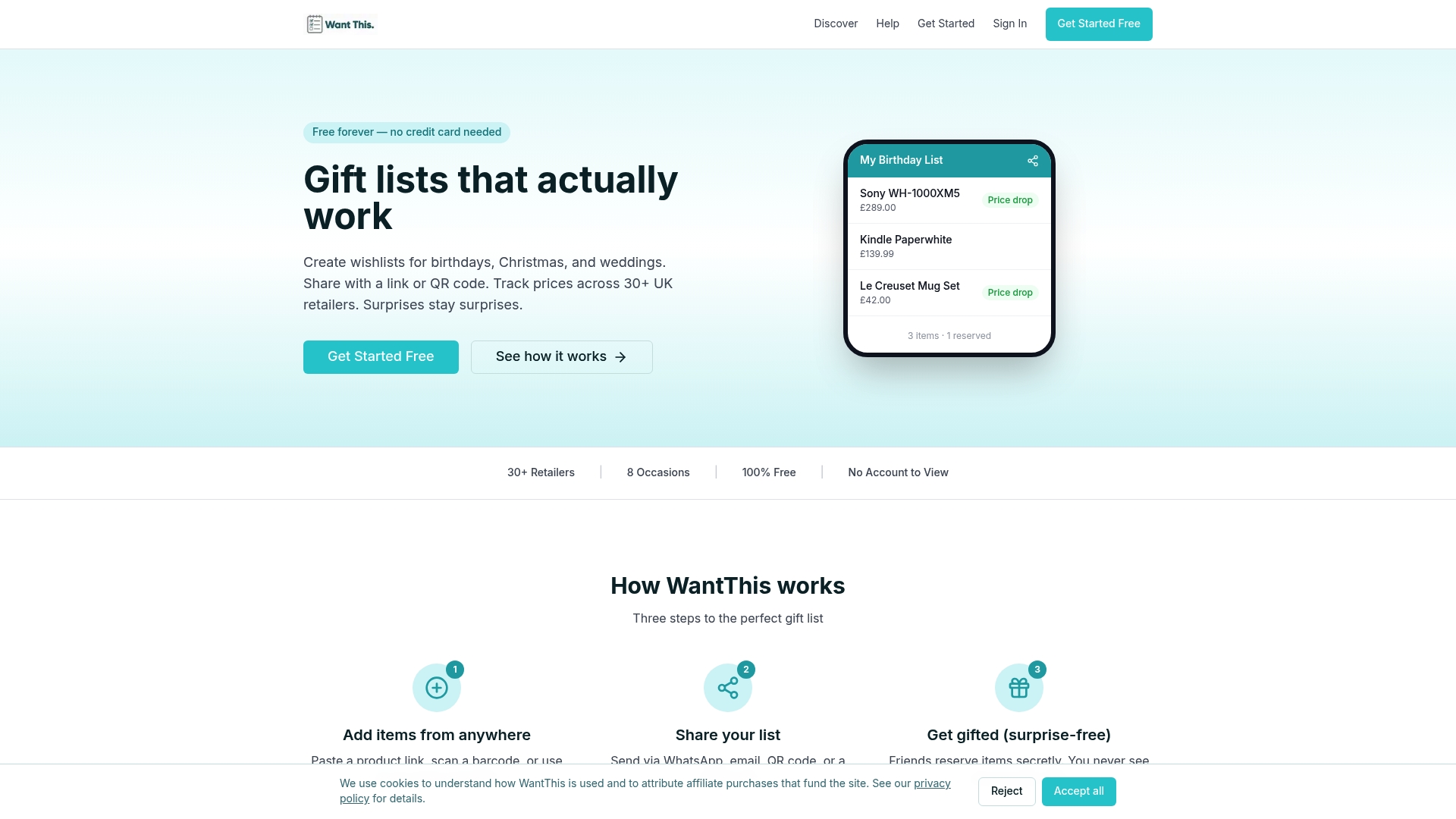
The platform handles sharing with guests through a single link, making it easy to include in invitations or a wedding website. Price tracking alerts notify you when saved items drop in price, which is handy for timing purchases or letting guests know about deals. Create your free wedding gift list on Wantthis and give your guests a clear, organized way to celebrate with you.
FAQ
Why do couples need a wedding list?
A wedding list guides guests toward gifts the couple genuinely wants, prevents duplicates, and accommodates different budgets. Without one, guests guess, which often results in unwanted or redundant gifts.
When should couples create a wedding registry?
Couples should build their registry early in the planning process, ideally at the same time they handle venue and invitation decisions. Early registries give guests more time to plan and allow couples to refine their selections.
Can a wedding list include cash contributions?
Yes. Cash contributions for honeymoon funds, home down payments, and savings are now standard registry features. Couples should document these contributions carefully for mortgage and financial planning purposes.
How many items should be on a wedding list?
A well-structured registry includes enough items to give every guest a choice, typically 50–80 items across multiple price points. Running out of options forces guests to buy off-list, which defeats the purpose.
What is the difference between a wedding list and a wedding registry?
The two terms describe the same concept. “Wedding registry” is the more common American term, while “wedding list” is widely used in the UK. Both refer to a curated selection of gifts that couples share with guests before the wedding.