
The Role of Gift Surprises Planning for UK Shoppers

Gift surprises planning is the deliberate process of coordinating recipient preferences, timing, and delivery format to create meaningful gifting experiences rather than relying on impulse. Research shows that recipients rate requested gifts 8.4 out of 10, compared to just 6.6 out of 10 for unrequested surprises. That gap tells you everything about why planning matters. The role of gift surprises planning is not to eliminate spontaneity but to make sure the surprise lands well, feels personal, and actually gets used. This guide gives you practical strategies to plan surprise gifts that delight rather than disappoint.
How does understanding recipient preferences influence surprise gift planning?
Knowing what your recipient actually wants is the single most powerful input in any gift planning strategy. Close friends diverge from wishlists 61% of the time, and satisfaction drops every time they do. That statistic is striking because it shows that even people who know each other well consistently misjudge preferences when they go off-script.
The fix is not to ask bluntly what someone wants and hand it over in a bag. The fix is to gather preference signals in advance and use them to guide your surprise. Wishlists, shared gift lists, and casual conversations about things the recipient has admired are all legitimate research tools. They give you a shortlist of items the recipient already wants, so your surprise becomes the delivery, not the guess.
Impulse-driven surprise gifting tends to reflect the giver’s taste more than the recipient’s needs. Givers spend less time researching and visit fewer sources when buying surprise gifts compared to requested ones. The result is a gift that looks good in the store but sits unused at home.
Key signals to gather before planning any surprise:
- Wishlist items: Check any shared lists the recipient has created, including those on platforms like Wantthis.
- Social media saves: Products people save or share publicly often signal genuine interest.
- Casual mentions: Pay attention when someone says “I’ve been meaning to get one of those.”
- Past purchases: Knowing someone’s preferred brands or categories narrows your choices quickly.
- Lifestyle cues: A runner, a home cook, or a keen reader each has a predictable set of useful gifts.
Pro Tip: Ask a mutual friend or family member to cross-check your gift idea before you buy. A second opinion from someone who knows the recipient well catches obvious mismatches before they become awkward moments.
What are effective strategies for planning creative surprise gifts?
The format of a surprise gift shapes how it is received just as much as the item itself. Effective formats in 2026 include video montages, scavenger hunts, and mystery boxes, all of which create a layered experience rather than a single moment of unwrapping. These formats work because they extend the emotional arc of the surprise.

Physical gifts work best when they are specific and personal. A generic candle set carries less weight than a book by an author the recipient mentioned once in passing. Digital gifts, such as subscriptions or online courses, suit recipients who prefer experiences over objects. Experiential gifts, like a cooking class or a spa day, create memories that outlast any product.
A numbered approach to format selection helps you match the gift type to the occasion:
- Identify the occasion type. A milestone birthday calls for something more considered than a casual thank-you gift.
- Choose physical, digital, or experiential. Match the format to the recipient’s lifestyle, not your own preference.
- Plan the reveal format. A scavenger hunt suits an adventurous personality. A heartfelt card with a single meaningful gift suits someone who values sincerity over spectacle.
- Build in a memory anchor. A photo book, a handwritten note, or a shared experience gives the recipient something to return to.
- Set a realistic budget before you shop. Budget constraints force creative choices, and creative choices often produce more memorable gifts than expensive ones.
Pro Tip: Experiences tend to outlast objects in memory. If you are torn between a physical item and an activity, choose the activity for milestone occasions and the physical item for everyday celebrations.
How can timing and logistics keep a surprise secret without creating stress?
Timing is where most surprise gift plans fall apart. A 7-day preparation protocol improves success by structuring the process across multiple stages: setting your emotional intent early, building a decoy narrative to mask the surprise, timing the reveal around the recipient’s routine, and preparing follow-up assets like photos or messages.
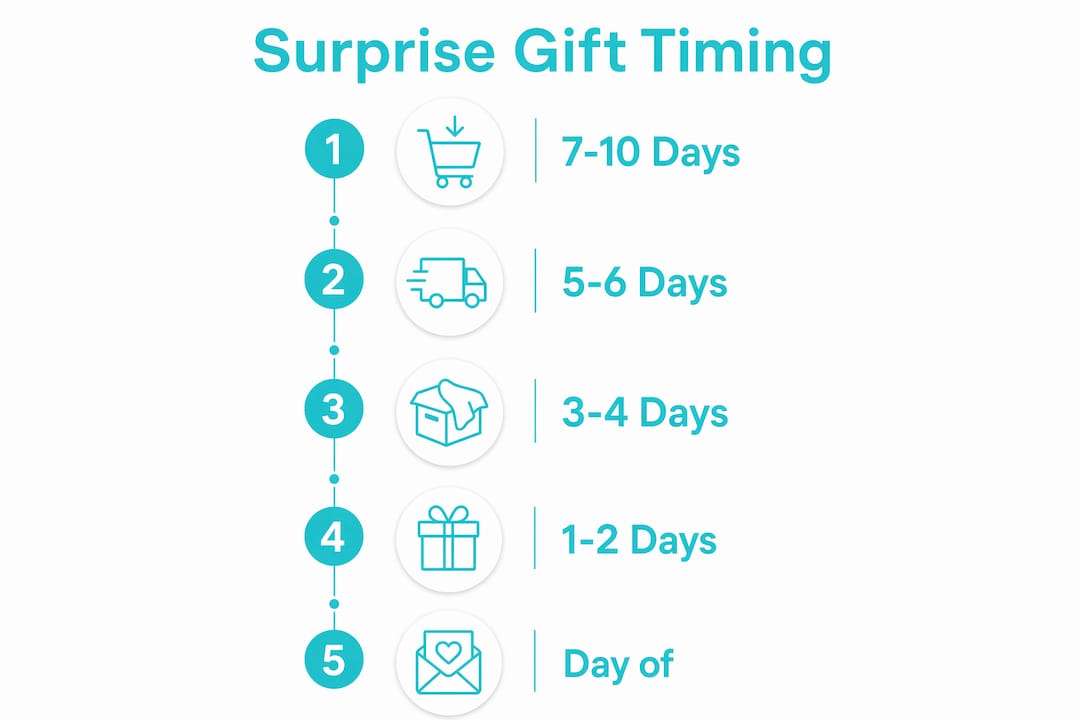
The decoy narrative is an underused tool. Telling someone you have “nothing special planned” while quietly organizing something meaningful keeps expectations low and impact high. The key is to make the decoy believable without outright lying in a way that damages trust after the reveal.
Logistics checklist for coordinating a surprise gift:
- Set a delivery window. Order gifts at least 7–10 days before the occasion to allow for delays.
- Use a neutral delivery address. Have gifts sent to a trusted friend or your workplace to avoid spoiling the surprise.
- Create a communication channel. Use a group chat that excludes the recipient for coordinating with others.
- Build in a time buffer. Plan the reveal 30 minutes later than you think you need to, because something always runs late.
- Prepare a backup plan. If the main gift is delayed, have a smaller placeholder ready so the occasion is not left empty.
| Timing stage | Action | Purpose |
|---|---|---|
| 7–10 days before | Order and redirect delivery | Avoid spoiling the surprise |
| 5–6 days before | Brief any helpers | Align everyone on the plan |
| 2–3 days before | Confirm delivery and prepare reveal | Reduce last-minute stress |
| Day of | Execute decoy narrative | Keep recipient unaware |
| After reveal | Share photos or follow-up message | Extend the emotional impact |
Not everyone enjoys surprises equally. Some people prefer knowing a gift is coming, even if the details remain hidden. Reading the recipient’s personality before committing to a full surprise is a practical step that prevents the reveal from feeling overwhelming rather than joyful.
What common pitfalls do surprise gift plans encounter?
The most common mistake in surprise gifting is buying on impulse without research. Design-driven impulse purchases look appealing in the moment but lack the substance that comes from knowing the recipient’s actual needs. Verifying an impulse idea against third-party reviews and the recipient’s known preferences reduces this risk significantly.
A second pitfall is excessive secrecy. Keeping a surprise so tightly guarded that it creates anxiety in the recipient defeats the purpose. Communicating intentions early reduces stress for both giver and receiver, even when the specific gift remains hidden. Framing the experience as a “gift of ease” rather than a dramatic reveal shifts the tone toward warmth.
| Common pitfall | Why it happens | How to avoid it |
|---|---|---|
| Impulse buying | Visual appeal overrides research | Check wishlists and reviews before purchasing |
| Ignoring preferences | Giver projects their own taste | Use shared gift lists to gather real signals |
| Over-secrecy | Fear of spoiling the surprise | Signal that something is planned without revealing details |
| Poor timing | Last-minute planning | Follow a 7-day preparation protocol |
| Wrong format | Choosing based on convenience | Match format to recipient personality and occasion |
Using shared wishlists transforms gift planning from a guessing game into a collaborative process. When recipients add items they genuinely want, givers can select from that list and still deliver the gift as a surprise, because the reservation system keeps purchases private. That combination of informed choice and maintained secrecy is the most reliable path to a gift that lands well.
Key Takeaways
Effective surprise gift planning combines recipient preference research, deliberate timing, and the right delivery format to produce gifts that are both meaningful and actually used.
| Point | Details |
|---|---|
| Preferences beat pure surprise | Recipients rate requested gifts 8.4/10 vs 6.6/10 for unrequested ones, so research matters. |
| Format shapes impact | Experiential and layered formats like scavenger hunts create stronger memories than single-item reveals. |
| Timing requires structure | A 7-day preparation protocol with a decoy narrative and delivery buffer prevents last-minute failures. |
| Impulse buying reduces satisfaction | Givers who skip research produce gifts that reflect their own taste, not the recipient’s needs. |
| Wishlists maintain surprise and accuracy | Shared lists let givers choose items recipients want while keeping purchases private until the reveal. |
Why I think most surprise gifts miss the point entirely
Most people treat surprise gifting as a performance. They focus on the reveal, the reaction, the moment. What they underestimate is the week before and the research that never happens. I have watched genuinely thoughtful people buy genuinely wrong gifts because they trusted their instincts over their knowledge of the recipient.
The most satisfying gifts I have seen given are the ones where the giver did quiet homework. They noticed something the recipient mentioned months earlier. They checked a shared gift list and picked an item the recipient had saved but not yet bought for themselves. The surprise was in the delivery, not in the guesswork.
There is also a personality dimension that most gifting advice ignores. Some people genuinely do not enjoy surprises. They find the uncertainty stressful rather than exciting. For those recipients, the best approach is to signal that something is coming and let the gift itself do the work. That is not a lesser form of gifting. It is a more considerate one.
The uncomfortable truth is that the best surprise gifts are not really surprises at all. They are carefully researched gifts delivered in a way that feels spontaneous. Planning is what makes that possible.
— Stuart
How Wantthis makes gift surprise planning easier
Planning a surprise gift is much less stressful when you have the right tools behind you. Wantthis is a free UK platform where anyone can create and share a gift list by pasting a product link from any retailer. The platform pulls in the title, image, and current price automatically.
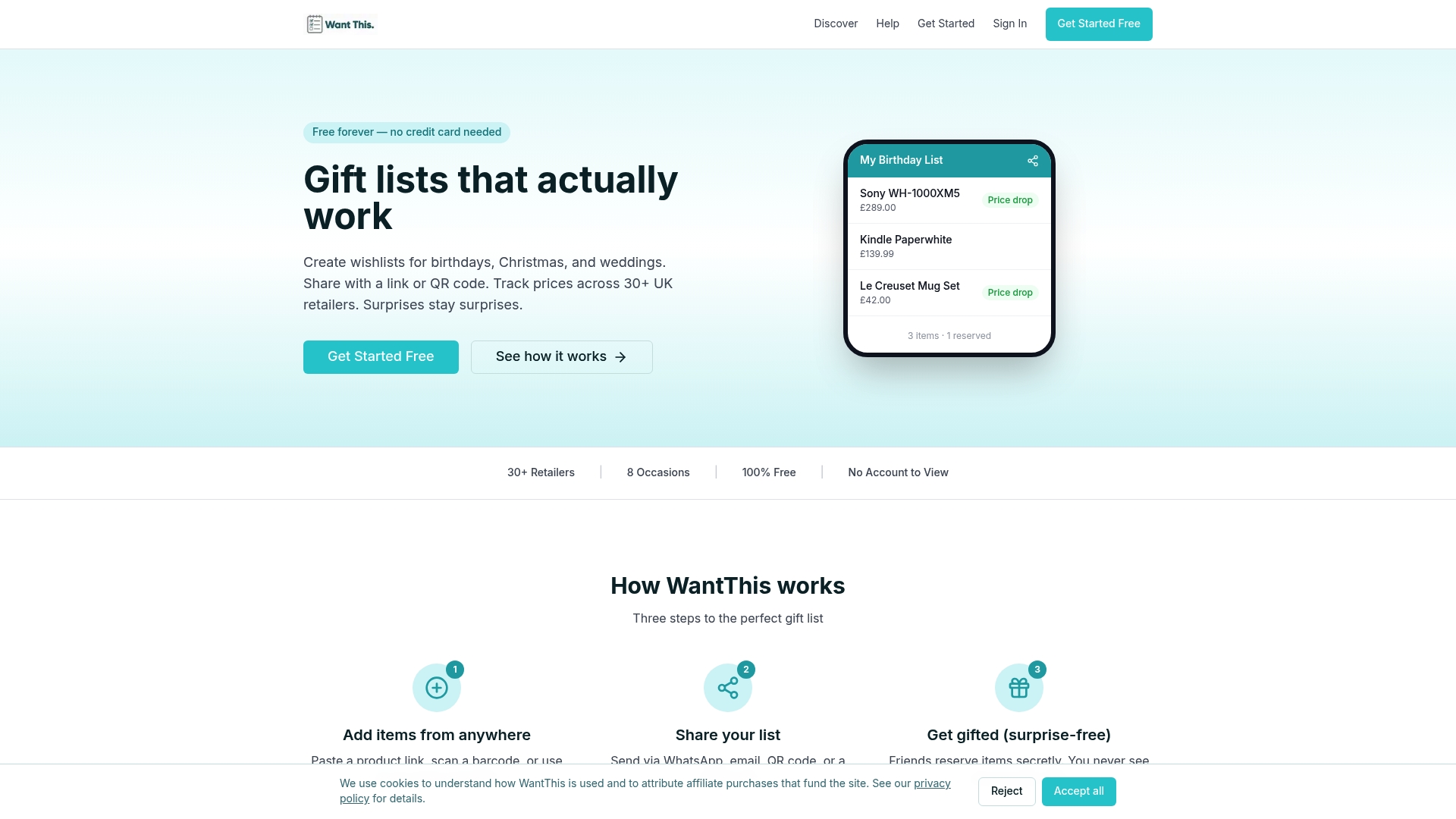
Friends and family can privately reserve or mark items as bought, so gifts are never duplicated and surprises stay intact. The price tracking feature alerts you when a saved item drops in price, which is handy for timing a purchase to get the best value. Wantthis also runs a Secret Santa organizer with an automatic draw, making group gift planning straightforward. Whether you are planning a birthday, Christmas, or a wedding gift, Wantthis gives you a clear, organized starting point.
FAQ
What is the role of gift surprises planning?
Gift surprises planning is the process of coordinating recipient preferences, timing, and delivery format to produce gifts that are meaningful rather than impulsive. It reduces the risk of disappointment and increases the likelihood that a gift is genuinely used and appreciated.
Why do recipients prefer requested gifts over surprises?
Research shows recipients rate requested gifts 8.4 out of 10 compared to 6.6 out of 10 for unrequested surprises. The gap exists because requested gifts align with actual needs, while surprises often reflect the giver’s taste instead.
How far in advance should you plan a surprise gift?
A 7-day preparation protocol is the recommended minimum, covering ordering, logistics, decoy narratives, and reveal preparation. Milestone occasions benefit from two to three weeks of planning to allow for personalization and delivery contingencies.
What types of surprise gifts create the most lasting memories?
Experiential gifts, such as cooking classes, spa days, or event tickets, tend to create stronger memories than physical items. Layered formats like scavenger hunts or video montages also extend the emotional impact beyond a single unwrapping moment.
How do wishlists help maintain the element of surprise?
Shared wishlists let recipients save items they genuinely want, while platforms like Wantthis allow buyers to reserve items privately. The giver selects from a list of real preferences, and the recipient still experiences the gift as a surprise on the day.