
How to Organize Your Christmas Gift List in 2026

A well-organized Christmas gift list is defined as a master record that tracks every recipient, budget, gift idea, and purchase status in one place. Getting that structure right before December arrives is the single most effective way to avoid duplicate gifts, forgotten names, and last-minute panic. The good news is that you do not need a complex system. A simple, phased approach to organizing your Christmas gift list cuts stress and keeps every gift thoughtful and on budget.
What tools do you need to start your Christmas gift list?
The right tool is the one you will actually use. Simple tools outperform complex spreadsheets for most people because they reduce the barrier to getting started and make consistent use far more likely. A basic notes app, a printed table, or a dedicated gift list platform all work well. The key is picking one format and sticking to it.
Before you write a single gift idea, gather this information first:
- All recipients: Family, close friends, colleagues, neighbors, and service providers. Users customize 10–20% of their holiday checklists to account for people like office contacts or regular tradespeople. That figure shows how easy it is to forget people outside your immediate circle.
- Per-person budget: Set a firm number for each recipient before you start browsing. This prevents overspending on one person and underspending on another.
- Gift preferences and hints: Note any wish lists, hobbies, sizes, or things the person has mentioned wanting. Include dislikes too.
- Lead times: Custom, personalized, or internationally shipped gifts need weeks of lead time. Store-bought items can wait longer.
A typical holiday gift list covers around 34 items across 5 categories. That number is higher than most people expect, which is exactly why a written list beats memory every time.
| Information to Capture | Why It Matters |
|---|---|
| Recipient name and relationship | Prevents anyone being missed |
| Budget per person | Keeps total spend predictable |
| Gift idea and backup idea | Reduces last-minute scrambling |
| Purchase status | Avoids buying the same gift twice |
| Lead time required | Flags what to buy first |

Pro Tip: Add a “wrapped” column to your list alongside “purchased.” Knowing something is bought but not yet wrapped is useful data, especially in the final week before Christmas.
How to build a phased Christmas gift planning schedule
Breaking gift planning into four phases — planning, researching, purchasing, and wrapping — produces a calmer and more organized holiday season. Each phase has a clear job, and completing them in order prevents the bottlenecks that cause last-minute stress.
Phase 1: Planning (September to October). Confirm your full recipient list. Set your total Christmas budget and divide it across recipients. Note any gift ideas you have already heard or spotted. This is also the time to flag anyone who needs a personalized or custom gift, since those require the most lead time.
-
Phase 2: Researching (October to early November).** Browse gift ideas for each person on your list. Add backup options for anyone where your first idea feels uncertain. Check delivery windows for anything shipped from overseas or made to order. Experts recommend a quarterly budget review at this stage to catch any drift before purchasing begins.
-
Phase 3: Purchasing (mid-november to mid-december). Buy high-lead-time gifts first. Custom prints, engraved items, and gifts from small independent retailers all need extra time. Standard retail purchases can follow in early december. Reserve the final two weeks for low-risk, easily replaced gifts only.
-
Phase 4: Wrapping and storage (ongoing from phase 3). Progressive wrapping means wrapping each gift as it arrives rather than saving everything for one exhausting session. This spreads the workload, keeps your list accurate, and prevents the common problem of losing track of what has been wrapped.
Pro Tip: Set a weekly 10-minute check-in with your list every Sunday from november onward. A quick scan of purchase and wrapping status catches problems early and keeps the plan on track.
How do you avoid duplicate gifts and make thoughtful choices?
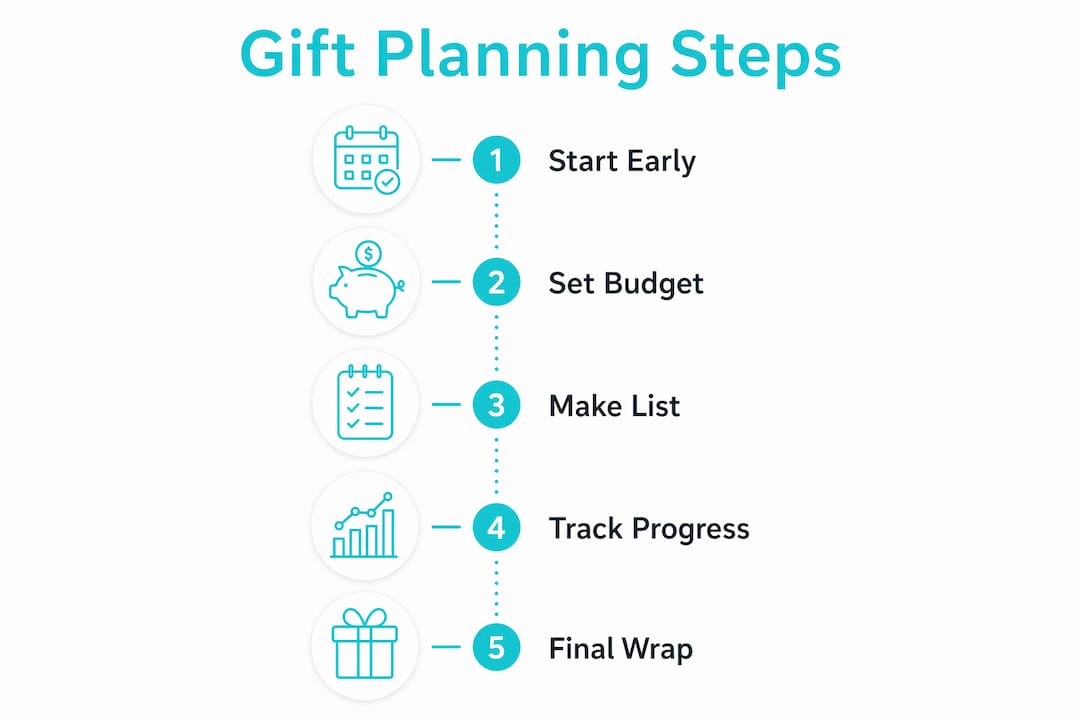
Duplicate gifts are the most common failure in group gift-giving, and they are entirely preventable. A systematic checklist reduces forgotten gifts by 30–50% compared to relying on memory or informal coordination. The same structure that prevents forgetting also prevents doubling up.
These four practices eliminate duplicates and raise the quality of every gift:
- Centralize everything. One shared list, not separate lists held by different family members. When everyone can see what has been claimed or purchased, overlap disappears.
- Include recipient preferences and dislikes. A gift that reflects what someone actually wants is always more meaningful than a generic choice. Note specific brands, sizes, colors, and things to avoid.
- Share your list with family and friends. Platforms like Wantthis let family members privately reserve or mark items as bought, so no one else buys the same thing and the surprise stays intact. This is the digital version of the old “I’ve got that covered” phone call, but without the risk of miscommunication.
- Keep a backup list of general gifts. Candles, books, quality food items, and experience vouchers work for almost anyone. When a primary gift falls through or a delivery fails, a backup list means you are never empty-handed.
Pro Tip: When sharing a wishlist with family, ask each person to add at least three items at different price points. That gives buyers real choice and prevents the awkward situation where every item on the list is out of budget.
Occasion-based gifting, the practice of organizing wishlists by event rather than by person, adds another layer of clarity. When you organize your wishlist by occasion, you can see at a glance which events are covered and which still need attention.
How do you track progress and fix common gift list problems?
Progress tracking is what separates a gift list from a gift plan. A list tells you what to buy. A tracked plan tells you where you stand right now.
Run a weekly check against these four areas:
- Purchases: What has been ordered, what has arrived, and what is still outstanding?
- Deliveries: Are any packages delayed? Flag anything that has not arrived within the expected window and contact the retailer immediately.
- Wrapping: What is wrapped and stored, and what still needs attention?
- Budget: Is spending on track, or has one category crept over its limit?
| Problem | Fix |
|---|---|
| Budget overrun on one recipient | Swap to a backup gift at a lower price point |
| Delivery delay close to Christmas | Order a digital or local alternative immediately |
| Forgotten recipient discovered late | Use your backup list of general gifts |
| Duplicate gift spotted | Check shared list and coordinate a return or exchange |
When a delivery delay hits in the final week, a digital gift card or a local purchase is almost always the fastest solution. The key is catching the delay early through weekly tracking rather than discovering it on Christmas Eve.
A post-Christmas audit is one of the most underused planning tools available. Recording which gifts landed well, which missed the mark, and which retailers caused shipping problems gives you a concrete starting point for next year. Most people skip this step and repeat the same mistakes in december.
Key Takeaways
Organizing your Christmas gift list with a phased approach, simple tools, and a shared tracking system is the most reliable way to avoid duplicates and gift stress.
| Point | Details |
|---|---|
| Start with a master list | Capture every recipient, budget, preference, and lead time before buying anything. |
| Use four planning phases | Plan, research, purchase, and wrap in sequence to prevent last-minute bottlenecks. |
| Buy high-lead-time gifts first | Custom and shipped gifts need weeks; prioritize them in mid-november. |
| Share lists to prevent duplicates | A shared, centralized list lets family coordinate privately without spoiling surprises. |
| Run a post-Christmas audit | Note what worked and what failed to make next year’s planning faster and calmer. |
What I’ve learned from years of organizing Christmas lists
The single biggest mistake I see is treating the gift list as a one-time document. People write it in november, then ignore it until they are standing in a shop on december 23rd wondering whether they already bought something for their sister. A list only works if you check it regularly.
The second mistake is choosing tools that feel impressive but never get used. A color-coded spreadsheet with conditional formatting sounds great in theory. In practice, most people open it twice and then revert to sticky notes. Simple tools win because they remove friction. If your system takes more than 30 seconds to update, you will stop updating it.
Progressive wrapping genuinely changes the experience of Christmas preparation. I used to save all wrapping for a single weekend in mid-december, and it was exhausting every time. Wrapping gifts as they arrive, even just one or two at a time, spreads the work across weeks and keeps the list accurate. You always know exactly what is done.
The post-Christmas audit is the habit that compounds over time. Spending 20 minutes in january writing down what went well, what was late, and who was hardest to buy for pays off every following year. The post-season review is not glamorous, but it is the closest thing to a shortcut that Christmas planning has.
— Stuart
Wantthis makes Christmas gift planning easier
Keeping your Christmas gift list organized across a whole family is where most plans fall apart. Wantthis is built specifically for this problem.
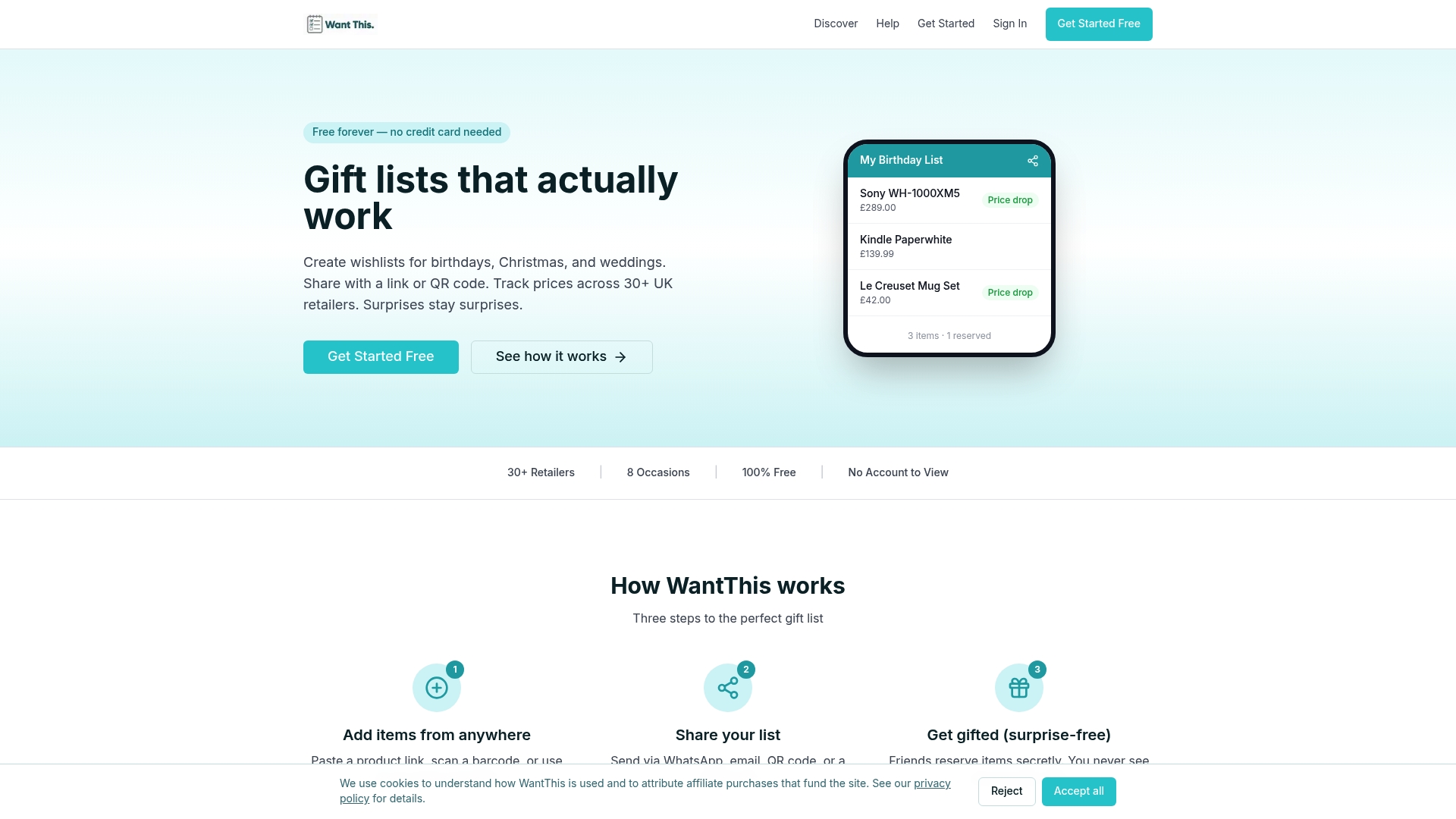
With Wantthis, you paste any product link from any UK retailer and the platform pulls in the title, image, and current price automatically. You can organize your list by occasion, share it with family and friends, and let them privately reserve or mark items as bought so duplicates never happen and surprises stay intact. The price tracking feature alerts you when a saved item drops in price, which is genuinely useful for staying within budget across a long gift list. Wantthis also runs a Secret Santa organizer with an automatic draw, perfect for office groups or large families. Start your free Christmas list at wantthis.co.uk.
FAQ
How early should I start my Christmas gift list?
Start building your recipient list and budget in september or october. Gifts that require custom work or international shipping need the most lead time and should be purchased by mid-november.
What is the best way to avoid duplicate gifts in a family?
Use a shared, centralized gift list where family members can privately mark items as reserved or purchased. Platforms like Wantthis handle this automatically without revealing surprises to the recipient.
How do I organize Christmas gifts by occasion?
Create a separate list for each occasion, such as Christmas, birthdays, or Secret Santa, and tag each item with the recipient and event. Wantthis supports occasion-based gifting natively, letting you switch between lists without confusion.
What should I do if a gift delivery is delayed?
Flag the delay as soon as you spot it during your weekly tracking check. Order a digital gift card or a local alternative immediately rather than waiting to see if the original order arrives in time.
Is a spreadsheet or an app better for tracking Christmas gifts?
Simple tools consistently outperform complex spreadsheets for most people. A notes app, a printed table, or a dedicated gift list platform all work well as long as you update them weekly.